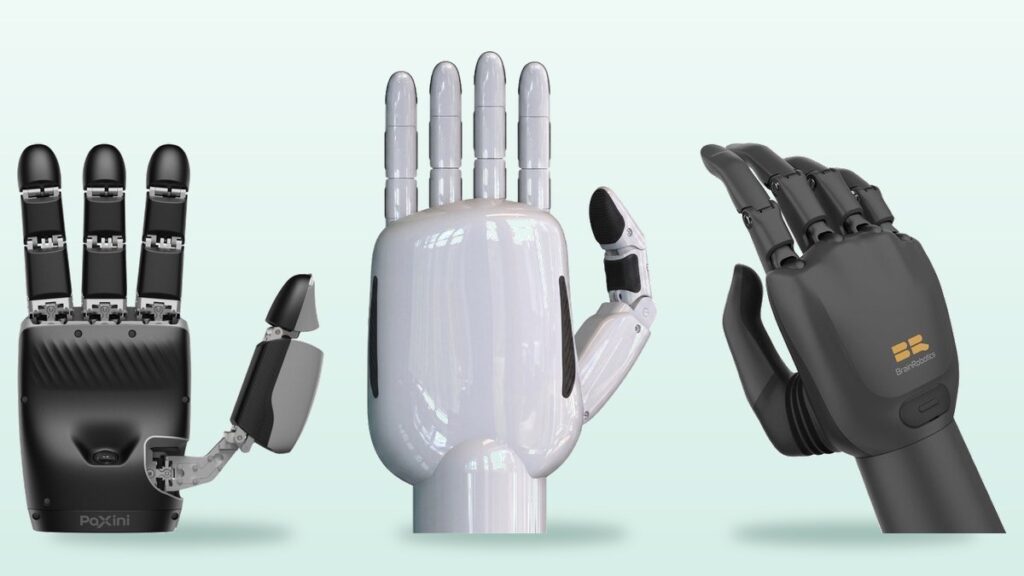
Humanoids are only as useful as their hands. A two-finger gripper can pick a box, but folding cloth, using tools or handling a cup needs fingers, tactile sensing and fine control. Dexterous robot hands have become one of the hottest areas in embodied AI research, and European labs can now choose from a wide range of models.
This guide compares dexterous hands available from Robots Europa. It is part of our education and research robots guide.
Contents
Why dexterous hands matter now
Large learning-based models for manipulation need hands that can execute what they learn. Teleoperation and imitation learning collect data through hands that mirror a human operator, so more degrees of freedom and better tactile sensing directly translate into richer datasets.
What to compare
1Degrees of freedom
Simple hands use 6 active joints with linked fingers; research hands reach 16 to 24 degrees of freedom.
2Tactile sensing
Fingertip or full-surface tactile arrays enable contact-rich tasks and safer grasping.
3Interfaces and software
CAN, CAN FD, RS485 or EtherCAT, and ROS support determine how easily the hand fits your stack.
4Weight and mounting
A heavy hand eats into the arm’s payload; check flange compatibility with your robot arm or humanoid.
Dexterous robot hands compared
| Hand | Published highlights | Best for |
|---|---|---|
| Shadow Dexterous Hand | 24 DoF, 20 motors, tendon driven | High-end manipulation research |
| PaXini DexH13 | 16 DoF (13 active), 1,140 tactile units, 3,420 channels, 8 MP hand camera | Tactile and contact-rich learning |
| Xynova Flex 2 | 23 DoF bionic configuration, 400 g palm | Humanoid integration |
| Inspire RH56F1 with tactile sensors | 6 DoF, 12 joints, ±0.2 mm, closes in 0.8 s or less | Humanoid hands, teleoperation |
| Linkerbot Linker Hand L20 | About 1 kg, CAN and EtherCAT, ROS SDK | Research and integration |
| BrainCo Revo 1 | 6 active joints, CAN FD and RS485, rated to 30 kg | Bionics, education, development |
| Unitree Dex3-1 | Three-fingered hand for Unitree G1 | G1 manipulation |
Specifications come from Robots Europa product pages and manufacturer listings.
The hands in detail
Shadow Dexterous Hand is the long-standing reference for research: 24 degrees of freedom with 20 tendon-driven motors, available in Lite and DEX-EE variants.
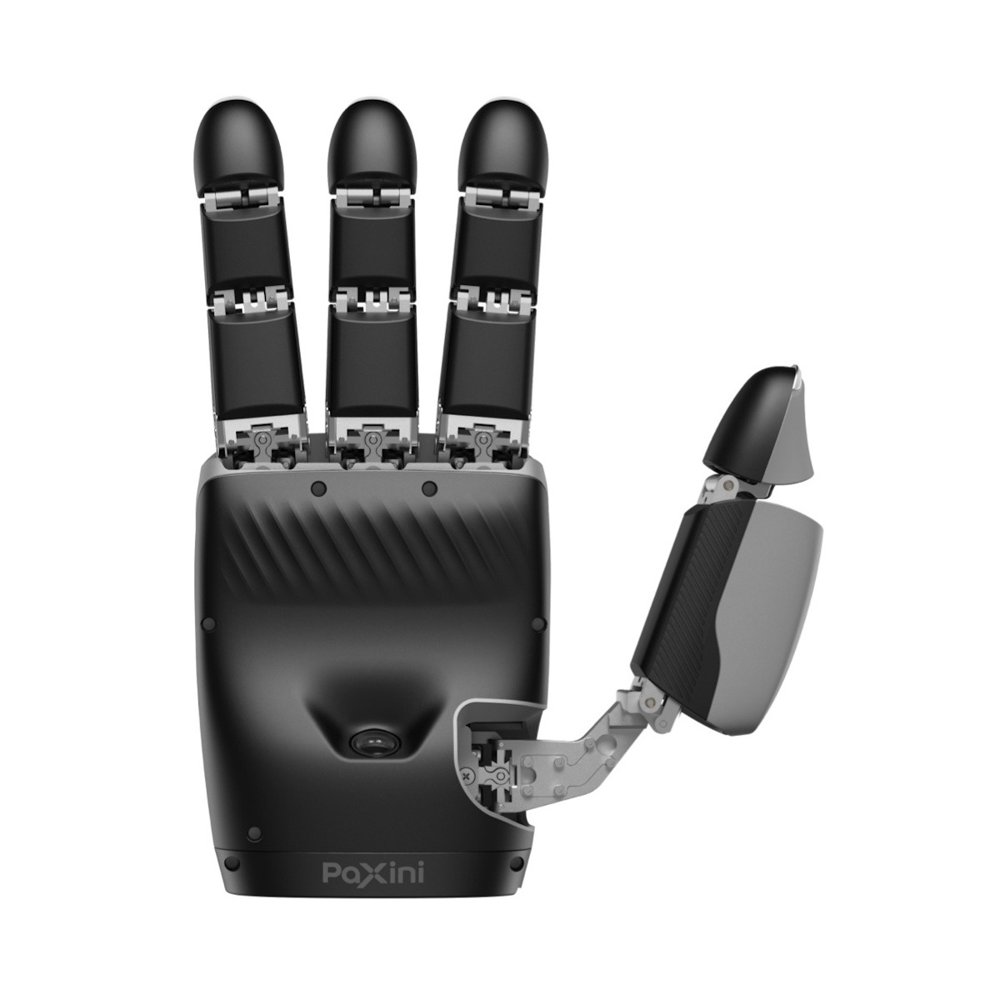
PaXini DexH13 focuses on touch: four fingers, 16 degrees of freedom of which 13 are active, 1,140 tactile units with 3,420 signal channels and an 8 MP hand-eye camera. Xynova Flex 2 offers a 23-DoF bionic configuration with a 400 g palm for humanoid builds.
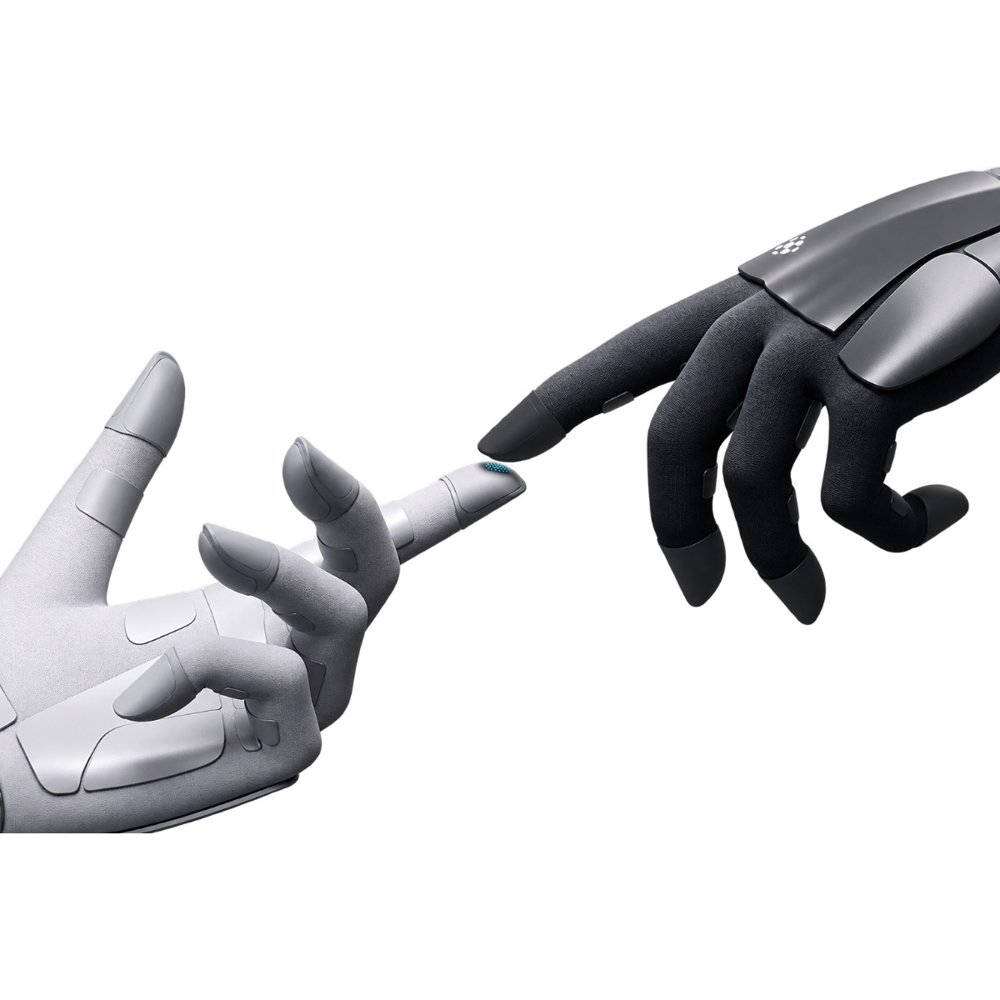
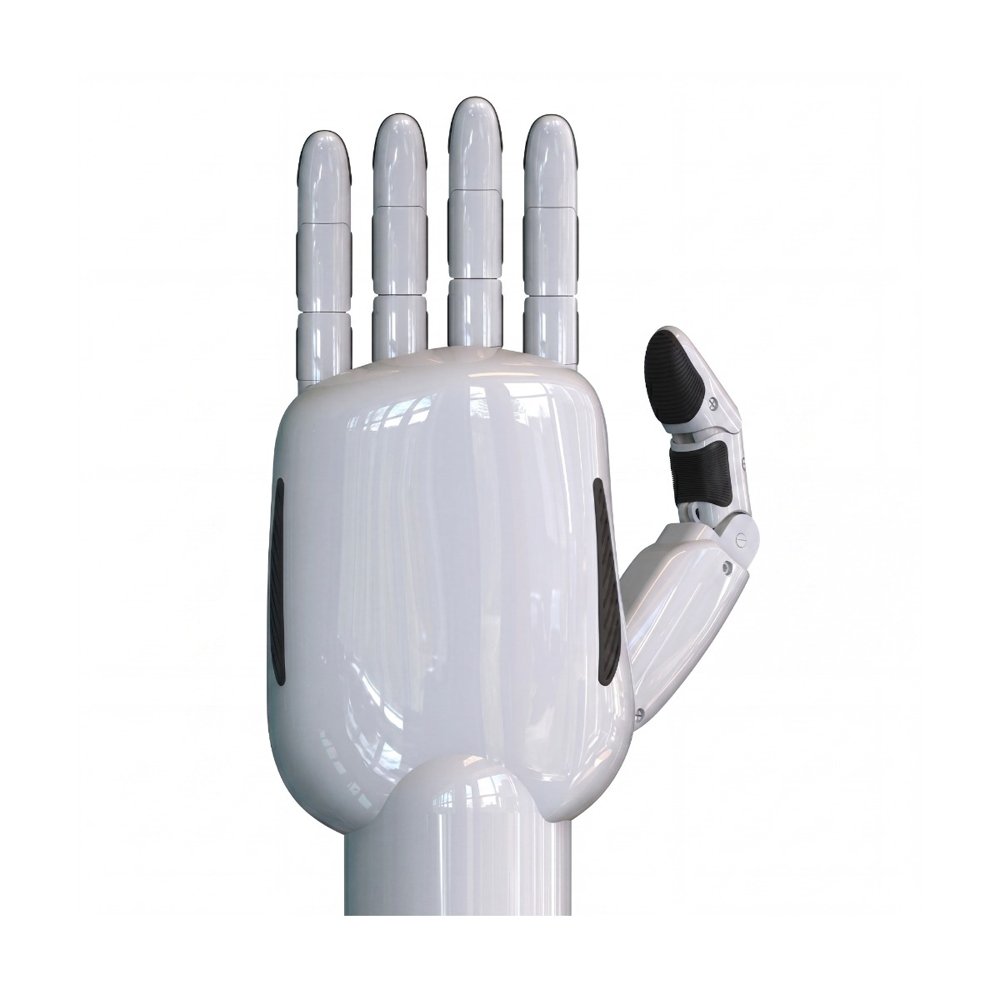
Linkerbot Linker Hand L20 weighs around 1 kg, supports CAN and EtherCAT and has a ROS-oriented SDK; the range spans L10 to cable-driven L30. Inspire RH56F1 is a compact 6-DoF hand with 12 joints, widely used on humanoids, available with tactile sensors.
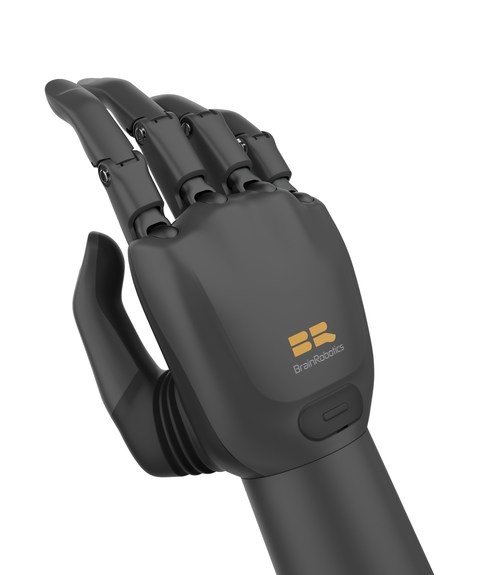
BrainCo Revo 1 comes from a brain-computer-interface company and bridges bionics and robotics: six active joints, CAN FD and RS485 connectivity and secondary development support. For Unitree G1 owners, Dex3-1 is the native option.
Integration tips
Confirm mechanical and electrical compatibility with your arm or humanoid, plan cable routing, and check whether your teleoperation setup (gloves, VR or exoskeleton) maps to the hand. For arms to mount hands on, see our education robot arms guide; for humanoids, our humanoid comparison.
Referral note: When you request a quote from Robots Europa, mentioning Dijipedya and referral code 08AF5658 helps your enquiry be tracked correctly.
Frequently asked questions
What is a dexterous robot hand?
A multi-fingered robotic hand with several independently controlled joints, often with tactile sensing, designed for human-like manipulation.
How many degrees of freedom do I need?
Six active joints cover many grasps. Research on in-hand manipulation benefits from 16 to 24 degrees of freedom.
Why does tactile sensing matter?
It lets the robot feel contact and slip, which is essential for fragile objects and learning contact-rich skills.
Can I fit these hands to any robot arm?
Not automatically. Check flange, weight, power and communication compatibility with your arm or humanoid.
Compare dexterous robot hands and request a quote for your lab.
Affiliate link: we may earn a commission if you buy through it, at no extra cost to you.
More from Dijipedya English