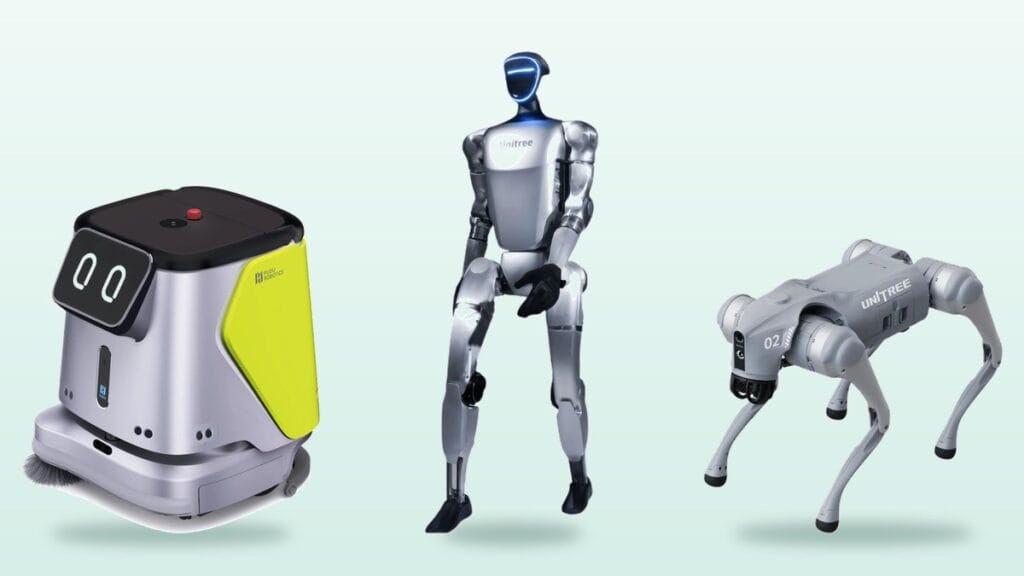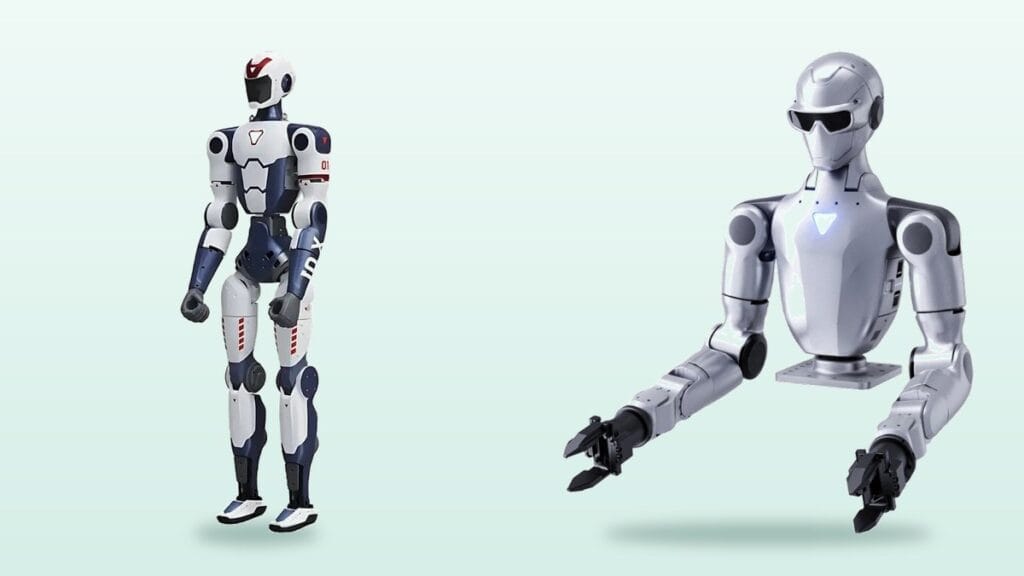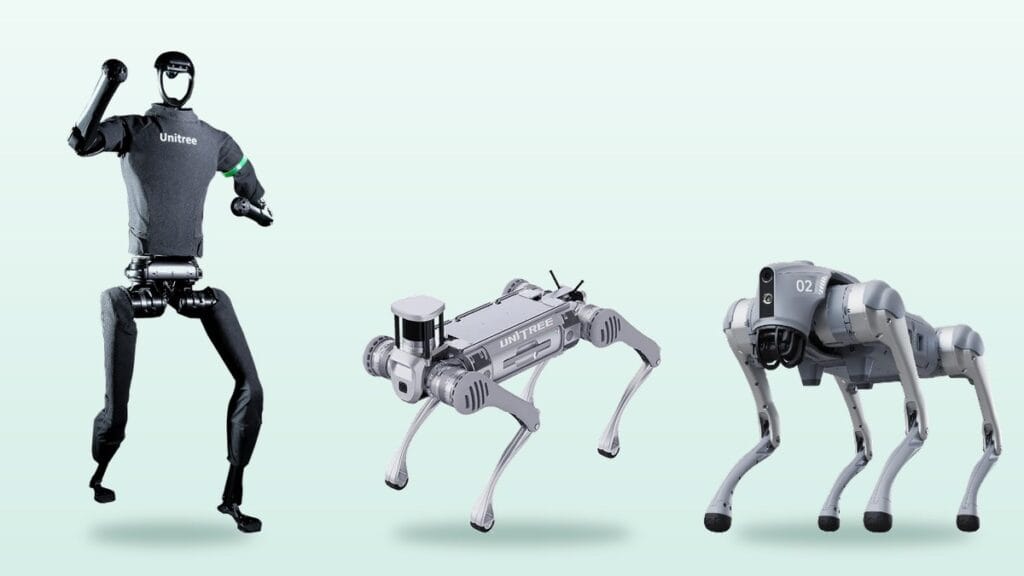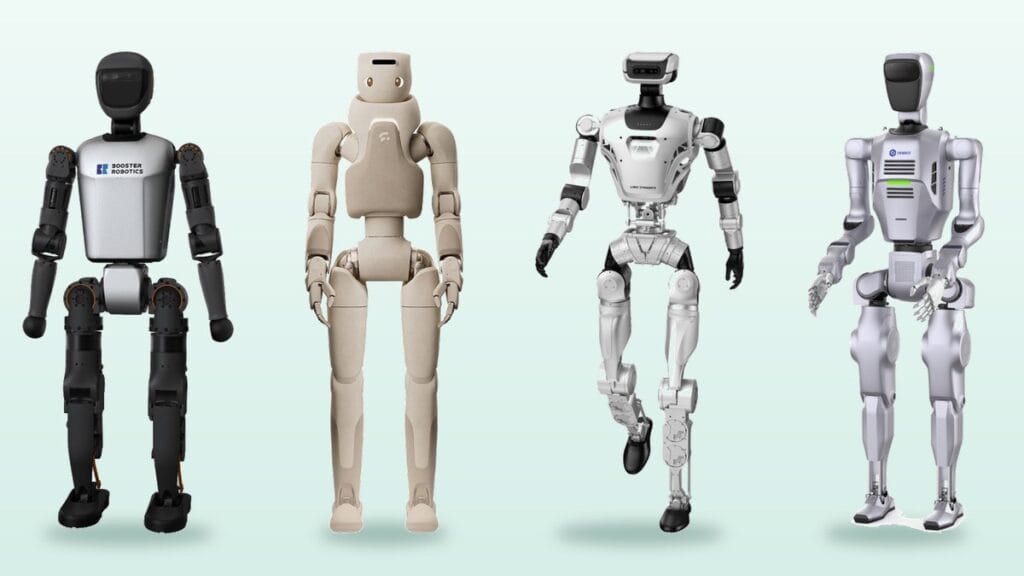
Unitree dominates the conversation about affordable humanoid robots, but it is far from the only option. In 2026 European buyers can order humanoids from Booster Robotics, EngineAI, Fourier, LimX Dynamics, Noetix and Dobot, ranging from 94 cm educational robots to full-size platforms built for research, care and industry.
This guide compares nine Unitree alternatives on size, software openness and intended use, so you can see where each one fits. If you are still deciding between Unitree models, start with our Unitree G1 vs R1 vs H1 comparison. For the full picture of business robots, see our business robot buyer’s guide.
Contents
Why look beyond Unitree?
There are three good reasons to compare. First, specialisation: some alternatives are built for a specific niche, such as robot football, elder care or full-size manipulation research, and do that job better than a general platform. Second, software: several brands make developer access, ROS 2 support and onboard compute part of the standard package rather than an upgrade. Third, supply: having more than one supplier reduces the risk of long lead times or a single point of failure for a lab or pilot programme.
Unitree alternatives at a glance
| Model | Size class | Highlights | Best suited to |
|---|---|---|---|
| Booster T1 | About 1.2 m | 23 force-controlled DoF, 200 TOPS onboard compute, ROS 2 | Research labs, robot football |
| Booster K1 EDU | About 0.9 m | Low-level joint access plus high-level motion APIs | Teaching, robot sports |
| Noetix N2 | Child-size | Up to 3.2 m/s, 150 N·m knee torque, quick-swap battery | Demos, dynamic locomotion |
| Noetix BUMI | About 94 cm, 12 kg | Consumer-oriented, open programming | Schools, hobbyists |
| EngineAI PM01 | 138 cm, about 40 kg | 24 DoF, about 2 m/s | Agile mid-size platform |
| EngineAI T800 | About 173 cm | Full-size, power and mobility focus | Pilots, high-impact demos |
| LimX Oli EDU | Full-size | 3 kg per arm, dual RealSense depth cameras | Manipulation research |
| Fourier GR-3 Care-Bot | 165 cm, 71 kg | Up to 55 DoF, 31 touch sensors, about 3 h per hot-swap pack | Care and social interaction |
| Dobot Atom Max | Full-size | 41 DoF, 6-DoF dexterous hands, Full HD 60 FPS vision | Dexterous manipulation, industry R&D |
Figures come from manufacturer and retailer pages and may change between versions. Always confirm the exact package on your quote.
The models in detail
Booster T1 and K1: built for developers
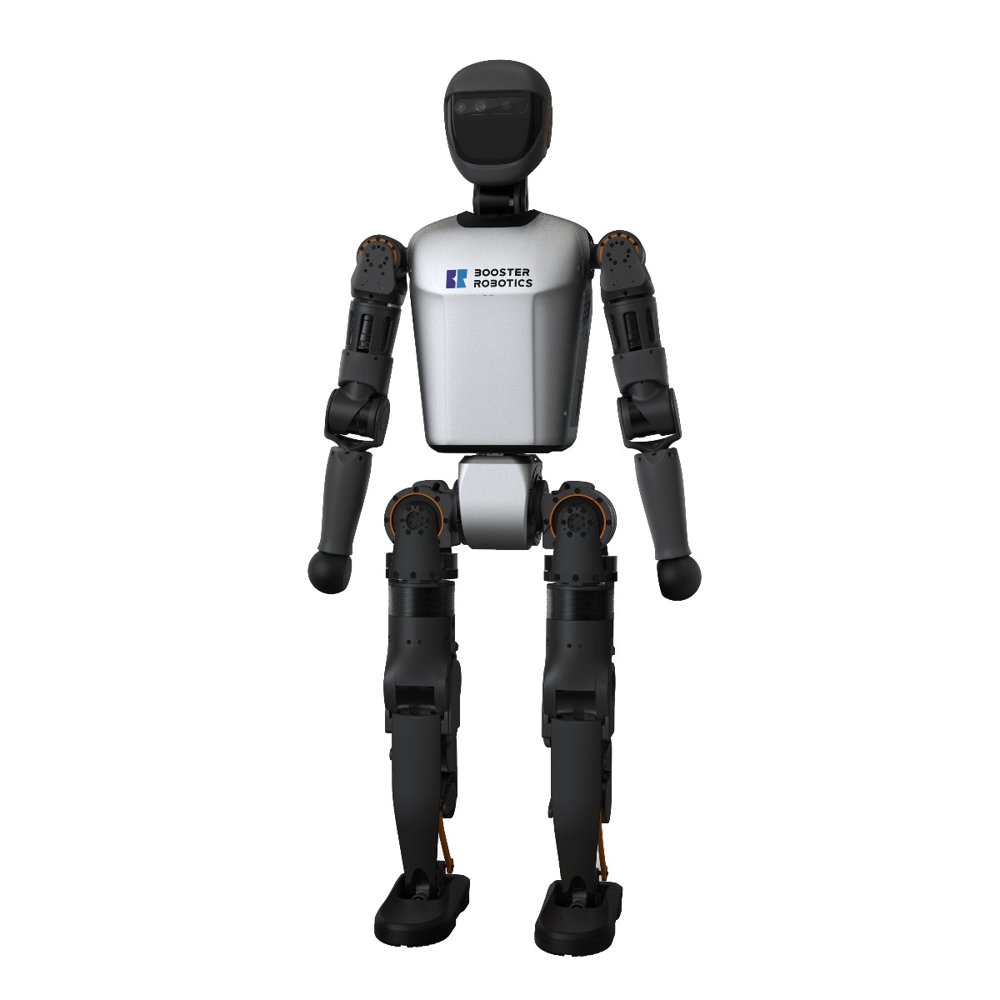
Booster Robotics describes its robots as “made for developers”. Booster T1 Standard is an approximately 1.2 m biped with 23 force-controlled degrees of freedom, dual onboard computers delivering 200 TOPS and a ROS 2-based software stack for secondary development. According to Booster, the T1 won the 2025 RoboCup Soccer AdultSize category, and it is used by many university teams. Versions with grippers or dexterous hands extend it to manipulation.
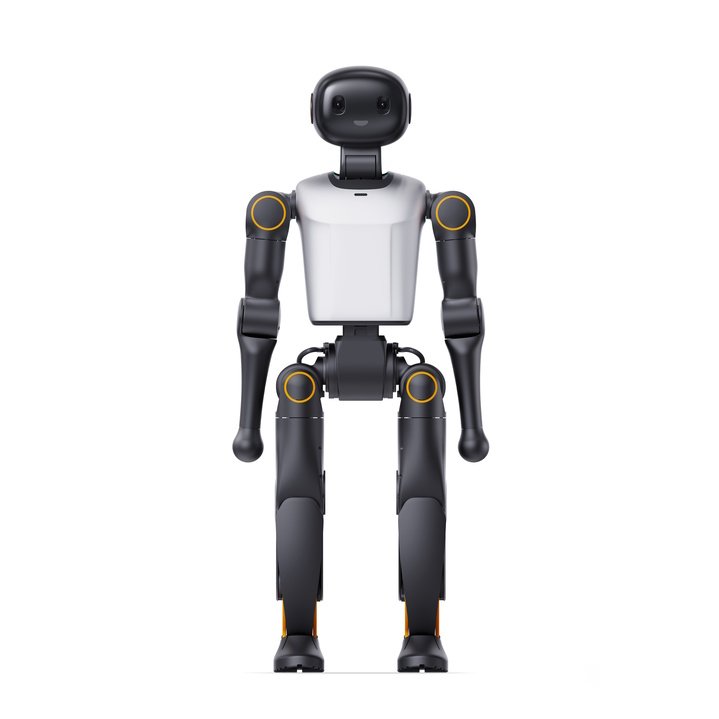
Booster K1 EDU is the compact sibling at about 0.9 m. It exposes low-level joint and sensor interfaces alongside high-level motion APIs, so the same robot can serve a first-year class and a postgraduate locomotion project. For teams entering robot football leagues, the K1 and T1 are natural candidates.
Noetix N2 and BUMI: affordable entry points
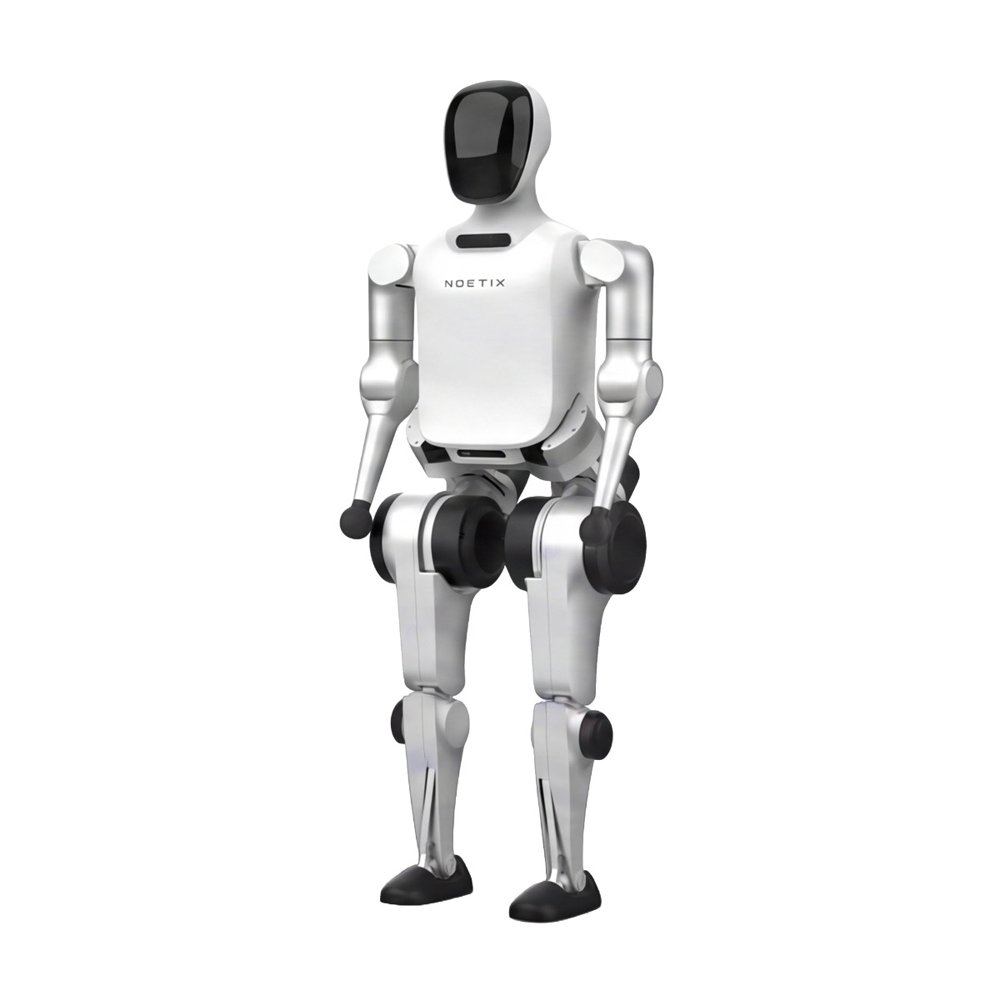
Noetix N2 is a fast, child-size humanoid: Noetix lists a top speed of 3.2 m/s, 150 N·m peak knee torque and 1 to 2 hours of runtime on a quick-swap 48 V battery. Base compute is modest, with an NVIDIA Jetson Orin Nano Super option on the N2 EDU version. Noetix BUMI, about 94 cm and 12 kg, is one of the most accessible bipedal humanoids on the market, aimed at schools, hobbyists and early prototyping.
EngineAI PM01 and T800: agile mid-size to full-size
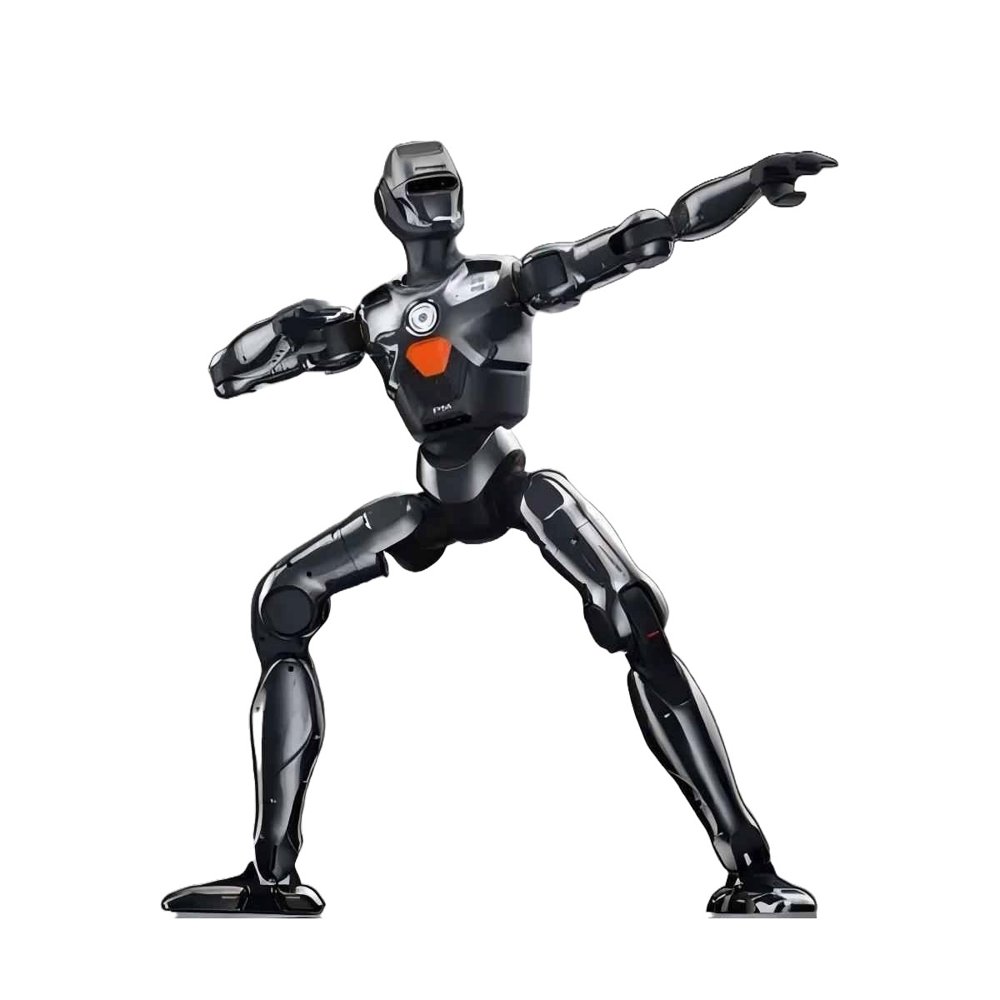
EngineAI PM01 is 138 cm tall, weighs about 40 kg and has 24 degrees of freedom; it has been shown running at around 2 m/s. An Education Edition is available for teaching and research.
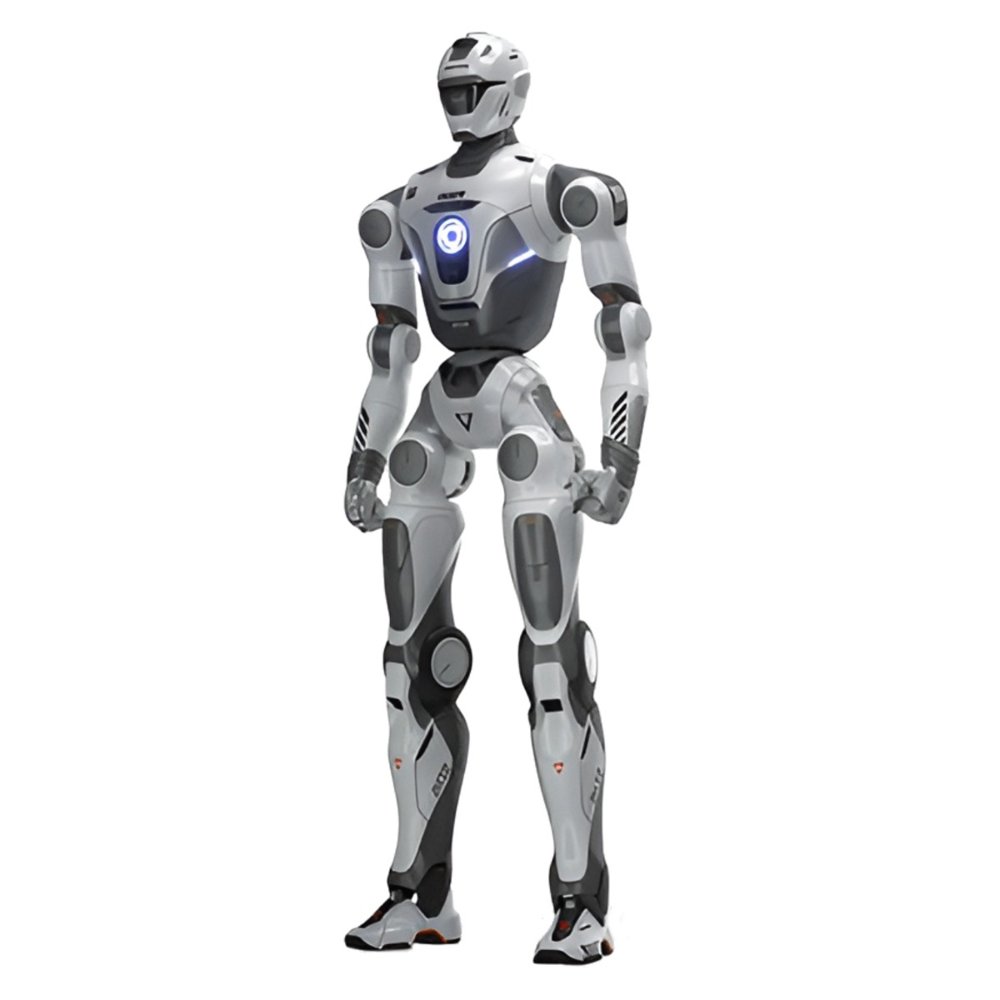
EngineAI T800 is EngineAI’s full-size general-purpose humanoid, about 173 cm tall, launched in late 2025 with balance and martial-arts demonstrations. It is offered in several editions, including an Open Source Edition for developers.
LimX Oli: full-size manipulation research
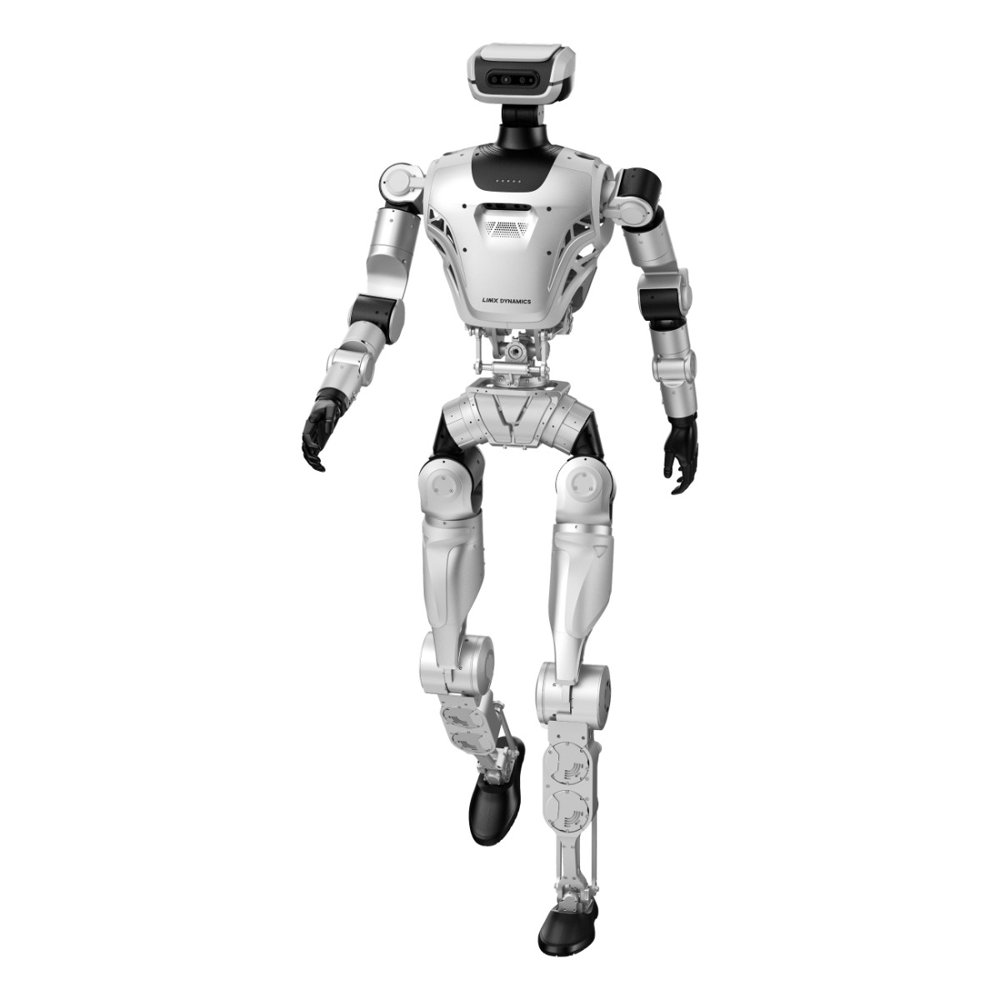
LimX Oli EDU is a full-size, open-source-oriented humanoid. LimX lists a 5 km/h top speed, 3 kg payload per arm and two Intel RealSense D435i depth cameras, one in the head and one in the chest, which reduces occlusion when the hands block the head camera during manipulation.
Fourier GR-3: designed for care and interaction
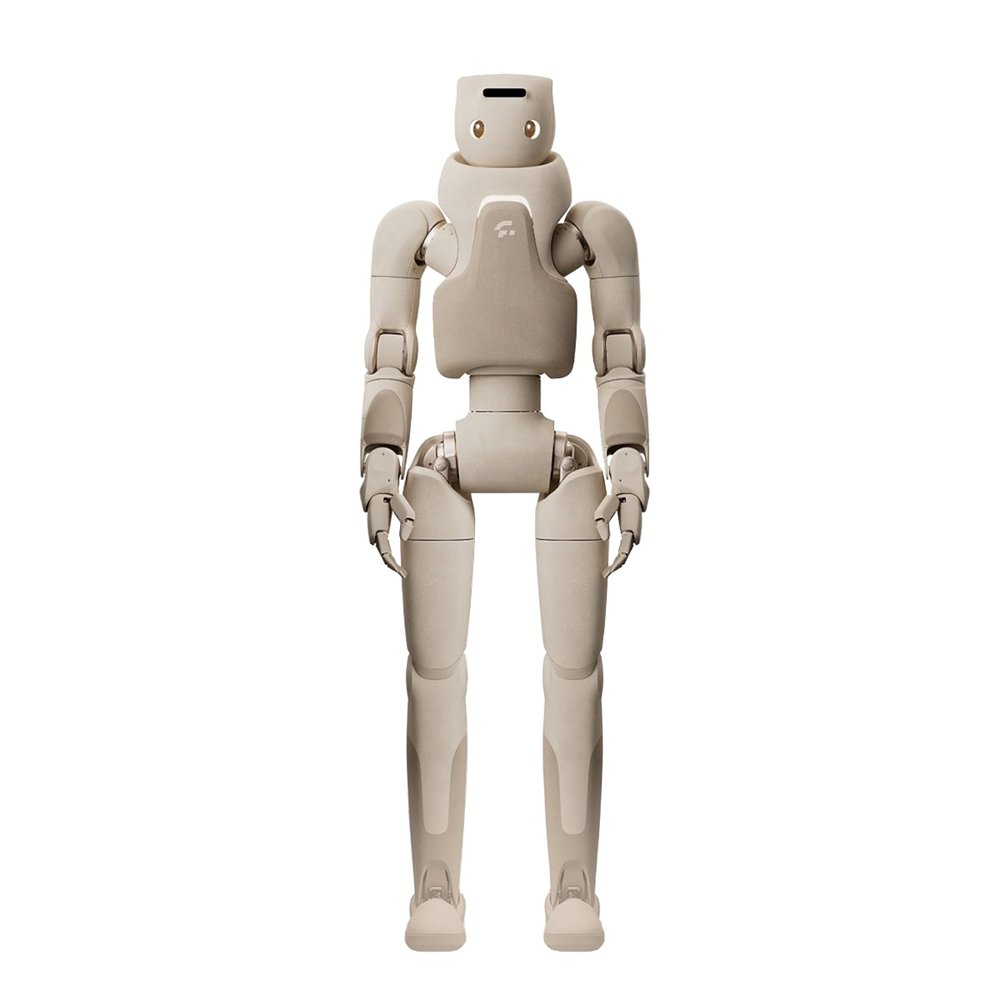
Fourier GR-3 Care-Bot takes a different direction. At 165 cm and 71 kg with up to 55 degrees of freedom, it focuses on social interaction: a four-microphone array, facial recognition and dynamic tracking, and 31 pressure sensors for whole-body touch detection. Hot-swappable packs give about three hours each. It targets care homes, rehabilitation and companionship research, an area of growing interest given Europe’s ageing population.
Dobot Atom Max: dexterous hands as standard
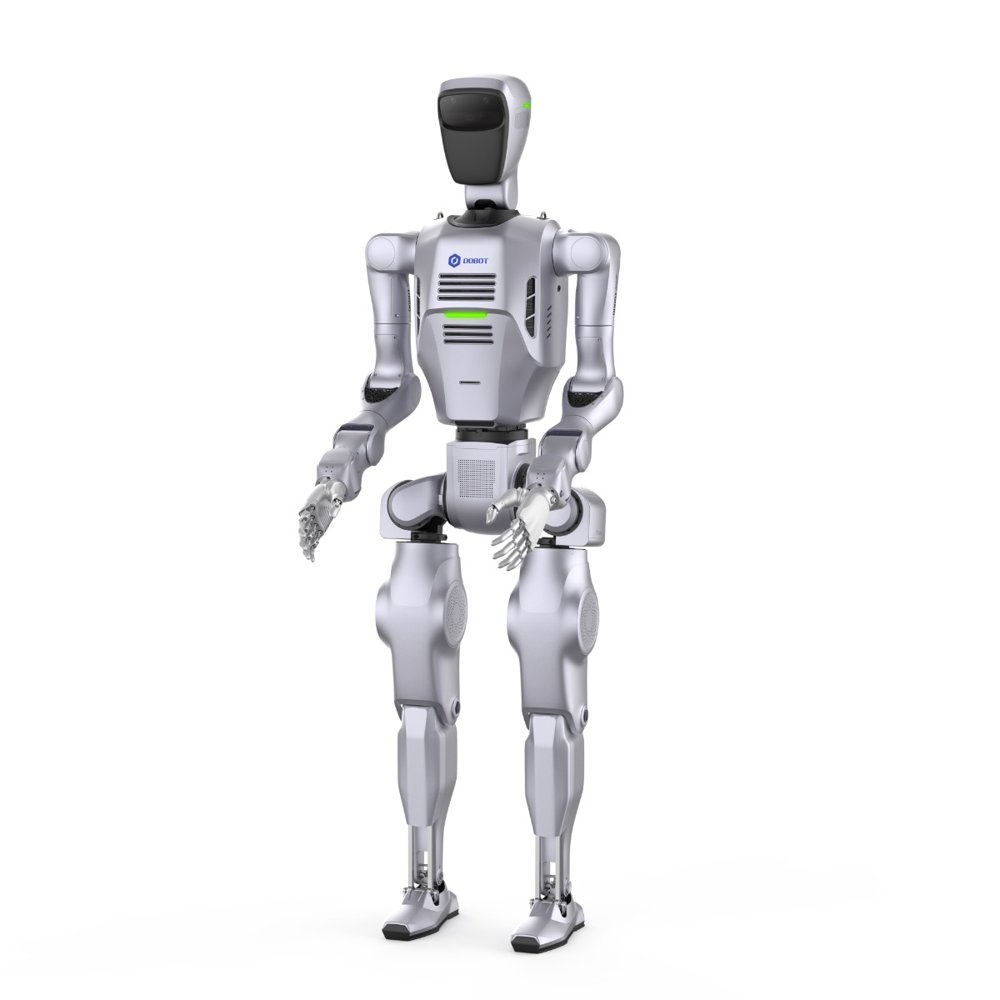
Dobot Atom Max brings 41 degrees of freedom and 6-DoF dexterous hands, with Full HD 60 FPS vision. Dobot, known for its industrial and collaborative arms, positions it for dexterous manipulation research and industrial R&D. An upper-body Atom D version suits tabletop work.
Which alternative for which buyer?
1University robotics and RoboCup teams
Booster T1 or K1, for their developer-first software and competition pedigree.
2Schools and makerspaces on a budget
Noetix BUMI or Booster K1. Compare them with Unitree R1 in our G1, R1 and H1 guide.
3Manipulation and embodied AI labs
LimX Oli EDU or Dobot Atom Max. For lab planning, see our robotics lab guide.
4Care, healthcare and social robotics research
Fourier GR-3, which is built around touch, voice and gaze rather than speed.
5Trade fairs and high-impact demos
Noetix N2 for speed, EngineAI T800 for full-size presence. See our renting vs buying guide.
What to check before choosing a less familiar brand
With newer brands, ask about software maturity and documentation in English, SDK and ROS 2 access on the exact package, spare parts lead times, firmware update policy and who provides support in Europe. Check the EU declaration of conformity and battery shipping documents too; our guide to buying a robot in Europe explains what to request, and our warranty checklist lists the questions to send.
Referral note: When you request a quote from Robots Europa, mentioning Dijipedya and referral code 08AF5658 helps your enquiry be tracked correctly.
Frequently asked questions
What is the best alternative to the Unitree G1?
It depends on your goal. Booster T1 suits developer-led research and robot football, EngineAI PM01 is a similar mid-size class, and LimX Oli or Dobot Atom Max suit full-size manipulation work.
Which humanoid robot is cheapest to start with?
Compact models such as Noetix BUMI and Booster K1 are among the most accessible bipedal humanoids. Check current prices on the quote pages.
Are Chinese humanoid brands supported in Europe?
Robots Europa distributes these brands from Dublin with a European support team. Confirm warranty and spare parts terms for each model.
Which alternative is best for elderly care research?
Fourier GR-3 Care-Bot is designed specifically for interaction, touch and companionship.
Compare all humanoid brands and request a quote for delivery in Europe.
Affiliate link: we may earn a commission if you buy through it, at no extra cost to you.
More from Dijipedya English