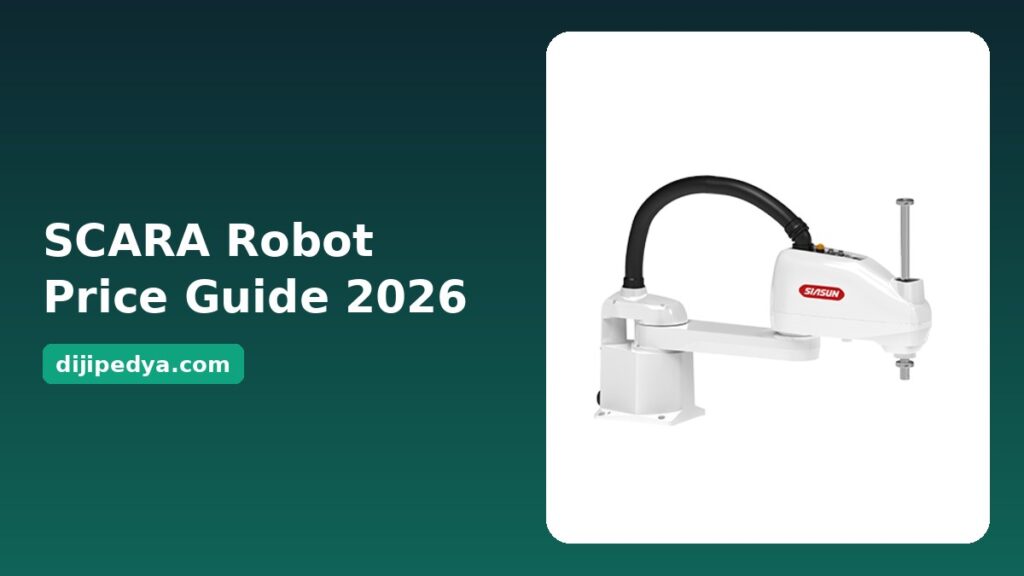
A new SCARA robot typically costs USD 10,000 to 40,000 for the arm and controller, with high-speed, long-reach or cleanroom models above USD 60,000. A complete pick-and-place or assembly cell, with a feeder, vision, fixtures and guarding, usually costs two to three times the robot price.
SCARA prices are rarely published, because Epson, FANUC, Yamaha and others sell through integrators. This guide gathers the reference figures that are public, the SIASUN SCARA range you can request in the US, and the extra costs to budget for.
Contents
How much does a SCARA robot cost?
| Class | Typical price (arm and controller) | Typical use |
|---|---|---|
| Entry-level, small reach | About USD 10,000 to 20,000 | Light pick and place, lab automation |
| Mid-range | USD 20,000 to 40,000 | Electronics assembly, packaging |
| High-speed or large payload | USD 40,000 to 60,000+ | High-volume assembly, heavier parts |
| Used or refurbished | From about USD 5,000 | Budget projects, spare cells |
These bands come from published industry pricing guides and integrator quotes, and match the starting price of about USD 10,000 often cited for a basic Epson SCARA. Treat them as planning figures; the quote for your application can differ widely depending on reach, payload, speed and options.
Epson, FANUC and other SCARA brands
- Epson: the largest SCARA maker by volume, with entry models such as the T-series aimed at low-cost automation. Prices come through Epson distributors and integrators.
- FANUC: SR-series SCARAs integrate with FANUC controllers already used in many plants. Mid-tier models are commonly quoted in the USD 40,000 range with options.
- ABB: the IRB 910 and 920 SCARAs are positioned as entry to mid-range options.
- Yamaha, Denso, Mitsubishi, Stäubli: strong in electronics and cleanroom work; all quoted.
- Chinese makers: SIASUN and others offer lower-cost alternatives, mostly through direct quotes.
SIASUN SCARA robots in the US
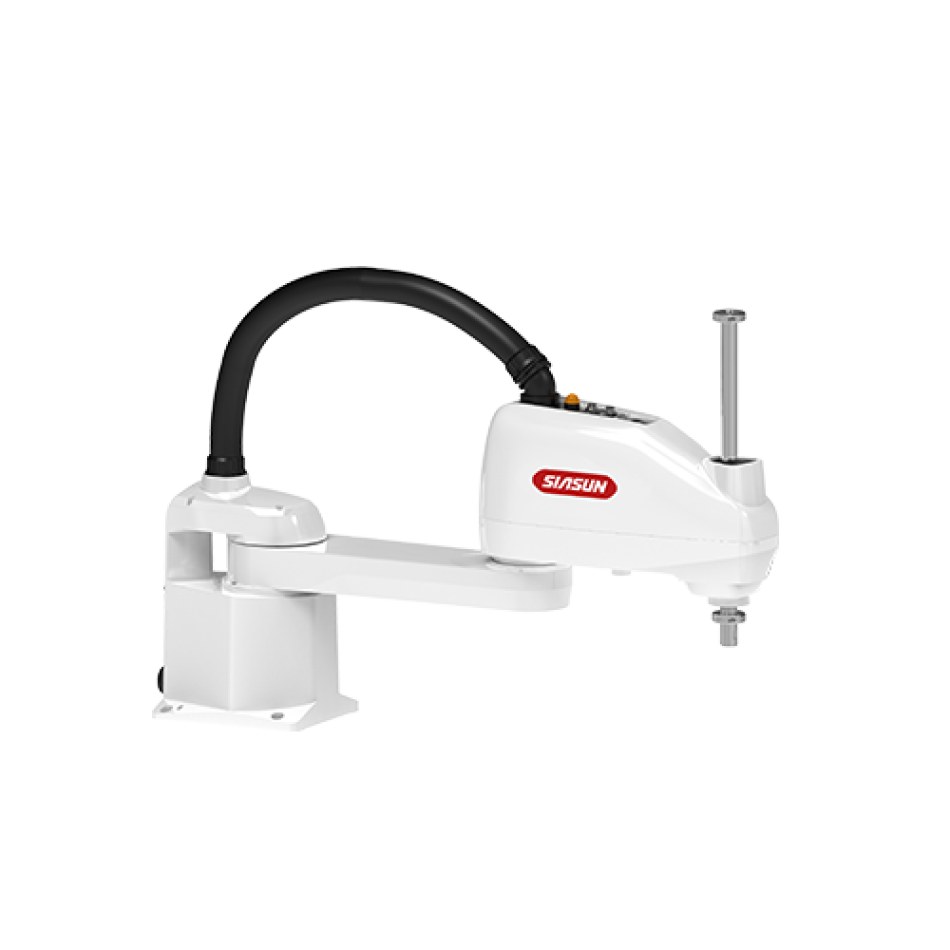
| Model | Payload | Reach | US price |
|---|---|---|---|
| SIASUN SA4A | 4 kg | 400 mm | On quote |
| SIASUN SA7A | 7 kg | 500 mm | On quote |
| SIASUN SA7A | 7 kg | 600 mm | On quote |
| SIASUN SA7A | 7 kg | 700 mm | On quote |
| SIASUN SA10A | 10 kg | 600 mm | On quote |
| SIASUN SA10A | 10 kg | 800 mm | On quote |
| SIASUN SA20A | 20 kg | 800 mm | On quote |
| SIASUN SA20A | 20 kg | 1,000 mm | On quote |
Store links are affiliate links; Dijipedya may earn a small commission if you buy, at no extra cost to you.
All SIASUN SCARAs are in the RobotsUSA SCARA category; ask for the controller, teach pendant and software to be itemised in the quote.
What a complete SCARA cell costs
- End effector: vacuum cups, grippers or screwdrivers.
- Part feeding: vibratory bowls, flexible feeders or trays, often the biggest single extra.
- Vision: cameras and software to locate parts.
- Guarding and safety: enclosures or light curtains, since SCARAs move too fast to share space with people.
- Integration and programming: engineering hours, commissioning and training.
SCARA vs cobot vs 6-axis arm
SCARAs are the fastest and most precise option for flat, top-down jobs such as placing components, screwing and sorting. If you need the robot to work next to people without guarding, a cobot is easier to deploy, and published cobot prices start around USD 5,000 to 16,000 for the arm (see our cobot guide). For angled approaches, palletizing or welding, a 6-axis arm is the better fit; our robot arm price guide covers those.
Frequently asked questions
How much does a SCARA robot cost?
A new SCARA robot typically costs about USD 10,000 to 40,000 for the arm and controller, and high-speed or large models can exceed USD 60,000. A complete cell costs two to three times more.
How much is an Epson SCARA robot?
Epson does not publish list prices. A basic Epson SCARA is commonly cited from about USD 10,000, with the final price set by the distributor.
How much is a FANUC SCARA robot?
FANUC SCARAs are quoted through integrators. Mid-tier models are commonly quoted around USD 40,000 including options.
Are SCARA robots cheaper than 6-axis robots?
For small payloads, usually yes, and they are faster for top-down pick and place. Six-axis arms are more flexible for complex motions.
New robots, price changes and buying guides, once a week in your inbox.
Related guides on Dijipedya
Sources: Published SCARA pricing guides from industrial robot vendors and integrators (2024 to 2026); RobotsUSA SIASUN product pages (19 October 2026).