Small and mid-sized manufacturers across Europe face the same squeeze: rising labour costs, hard-to-fill shifts and customers expecting smaller, more varied batches. Collaborative robots, or cobots, were designed for exactly that situation. They are lighter, easier to program and safer to work beside than traditional industrial robots, and a first cell can often be up and running in weeks rather than months.
This guide explains how to choose a cobot and compares the Fairino and SIASUN cobot families with education-focused arms from AgileX and Elephant Robotics. For other business robots, see our business robot buyer’s guide.
Contents
What makes a cobot different from an industrial robot?
Traditional industrial robots are fast and powerful but usually work inside fenced cells. Cobots are built to share space with people: they limit force and speed, detect collisions and can be guided by hand during teaching. That makes them practical for small batches, frequent changeovers and tasks where a person and a robot work at the same station.
The trade-off is speed and payload. When you need very high throughput or heavy loads, a fenced industrial robot or a dedicated machine may still be the better choice.
How to choose: payload, reach and precision
1Payload
Add up the heaviest part, the gripper or tool and any adapter. Choose a cobot with headroom, because rated payload usually falls as the arm extends.
2Reach
Measure the distance from the robot base to the furthest point it must reach, including pallet corners or machine doors. Palletising usually needs long reach; tabletop assembly does not.
3Repeatability
Assembly, dispensing and inspection need tight repeatability, often ±0.02 to ±0.05 mm. Palletising and machine tending tolerate more.
4Environment and integration
Check the IP rating for dust and coolant, the tool flange standard, I/O and fieldbus options, and whether your PLC or MES can talk to the controller.
Cobots compared
| Model | Payload | Reach | Repeatability | Typical use |
|---|---|---|---|---|
| Fairino FR3 | 3 kg | 622 mm | ±0.02 mm | Electronics assembly, dispensing, inspection |
| Fairino FR5 | 5 kg (max 7) | 922 mm | ±0.02 mm | Light assembly, machine tending; IP54, IP65 optional |
| SIASUN GCR5-910 | 5 kg | 917 mm | ±0.02 mm | Tabletop cells, assembly, inspection |
| Fairino FR10 | 10 kg | About 1,380 to 1,400 mm | Per datasheet | Machine tending, packaging |
| SIASUN GCR10-1300 | 10 kg | 1,300 mm | ±0.05 mm | Machine tending, handling; IP54 |
| Fairino FR20 | 20 kg (max 25) | 1,854 mm | Per datasheet | Palletising, long-reach handling |
| SIASUN GCR20-1400 | 20 kg | 1,400 mm | ±0.05 mm | Heavier handling, multi-part picks |
| Fairino FR30 | 30 kg (max 35) | 1,403 mm | ±0.1 mm | Heavy handling, end-of-line palletising |
Specifications are manufacturer-published values listed by Robots Europa. Real cycle times depend on tooling, motion profiles and safety settings.
The cobot families in detail
Fairino FR series
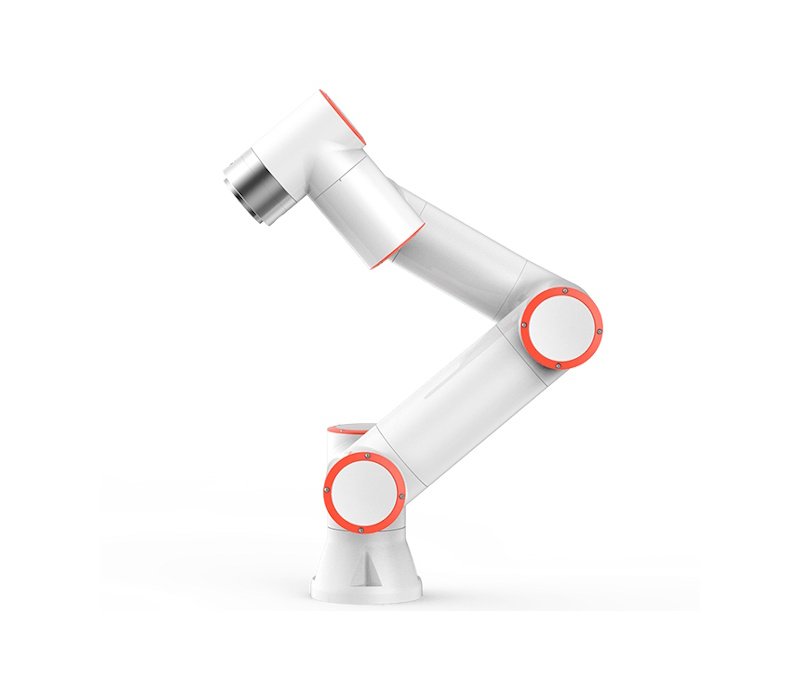
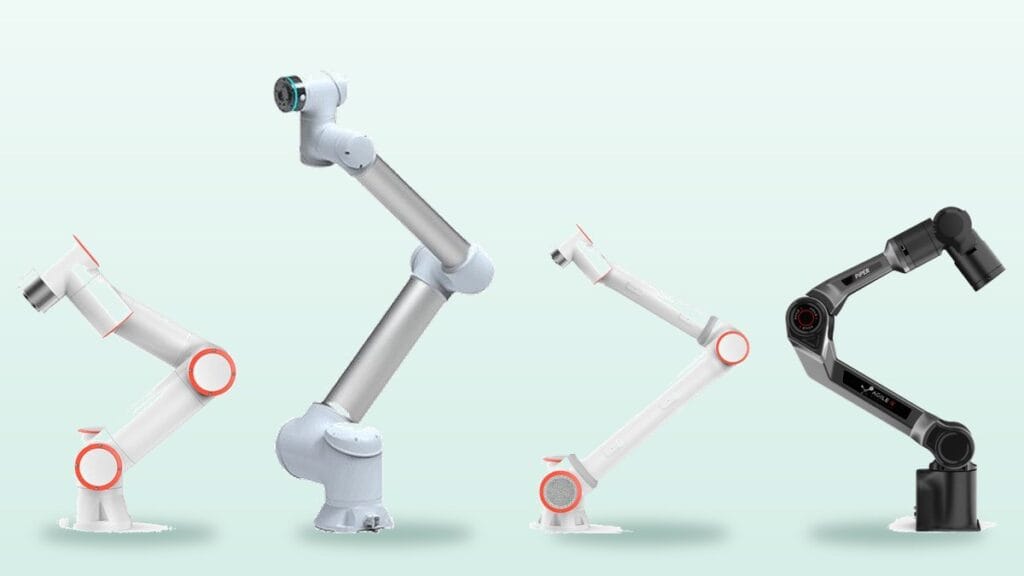
Fairino’s FR family runs from the compact FR3 to the heavy FR30, sharing one programming environment with teach pendant and web-based programming. FR5 is the all-rounder: 5 kg payload, 922 mm reach, ±0.02 mm repeatability, a typical TCP speed of 1 m/s and under 65 dB of noise. Standardising on one family lets a factory train staff once and reuse integration patterns across payload classes. Welding-focused versions are also available.
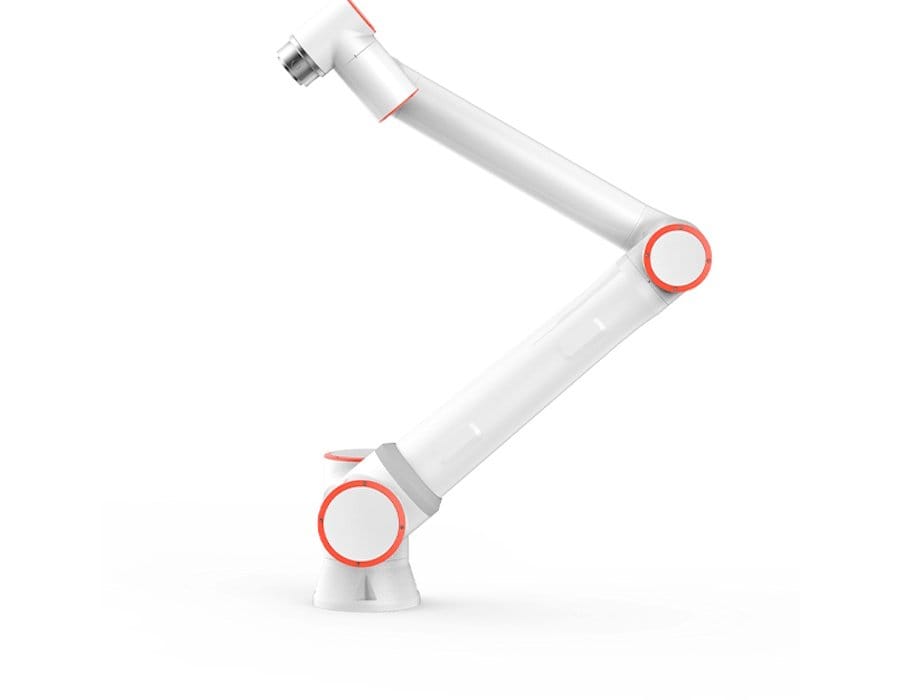
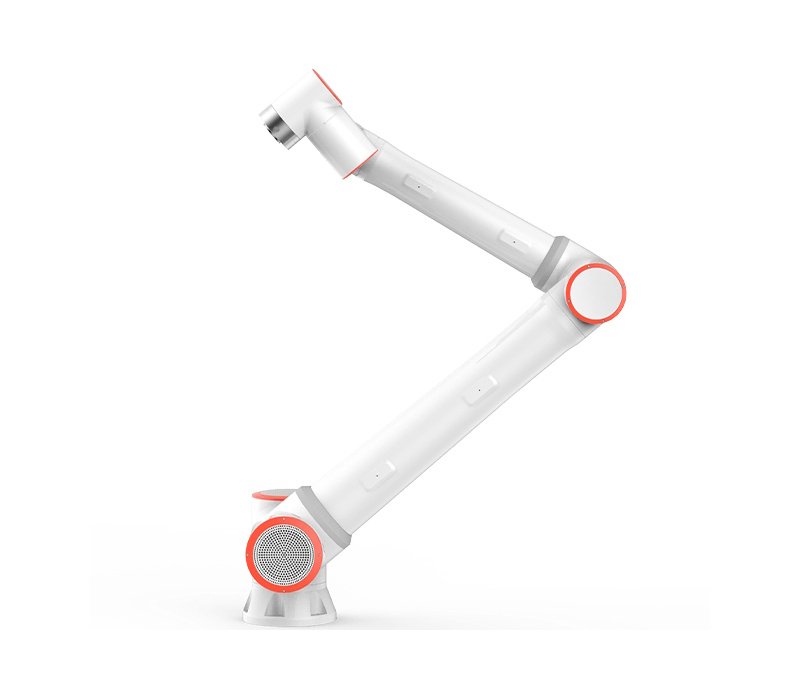
FR10 moves into the 10 kg class with around 1.4 m reach for larger parts and heavier grippers, while FR20 combines 20 kg with 1,854 mm reach, the combination that makes cobot palletising practical.
SIASUN GCR series
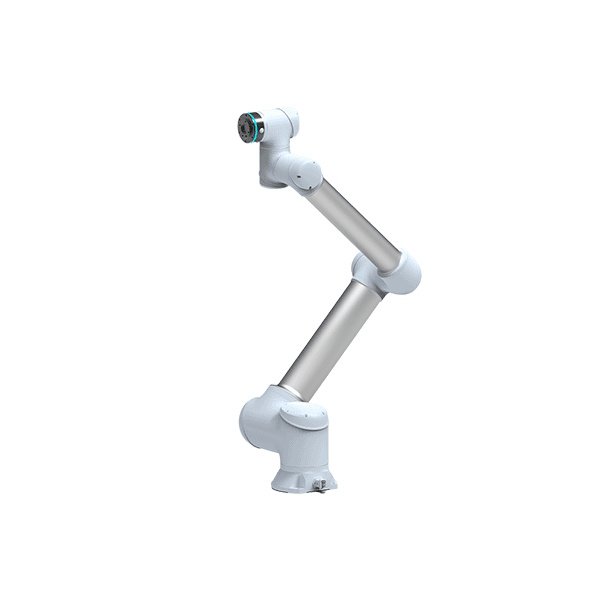
SIASUN is one of China’s largest industrial robot makers. GCR5-910 offers 5 kg, 917 mm reach, ±0.02 mm repeatability and up to 3.6 m/s end-effector speed. GCR10-1300 adds 10 kg and 1,300 mm reach with an IP54 rating, an ISO 9409-1 tool flange and industrial fieldbus options, while GCR20-1400 handles 20 kg at 1,400 mm. The range runs up to GCR30-1100 for 30 kg loads.
Training and education arms
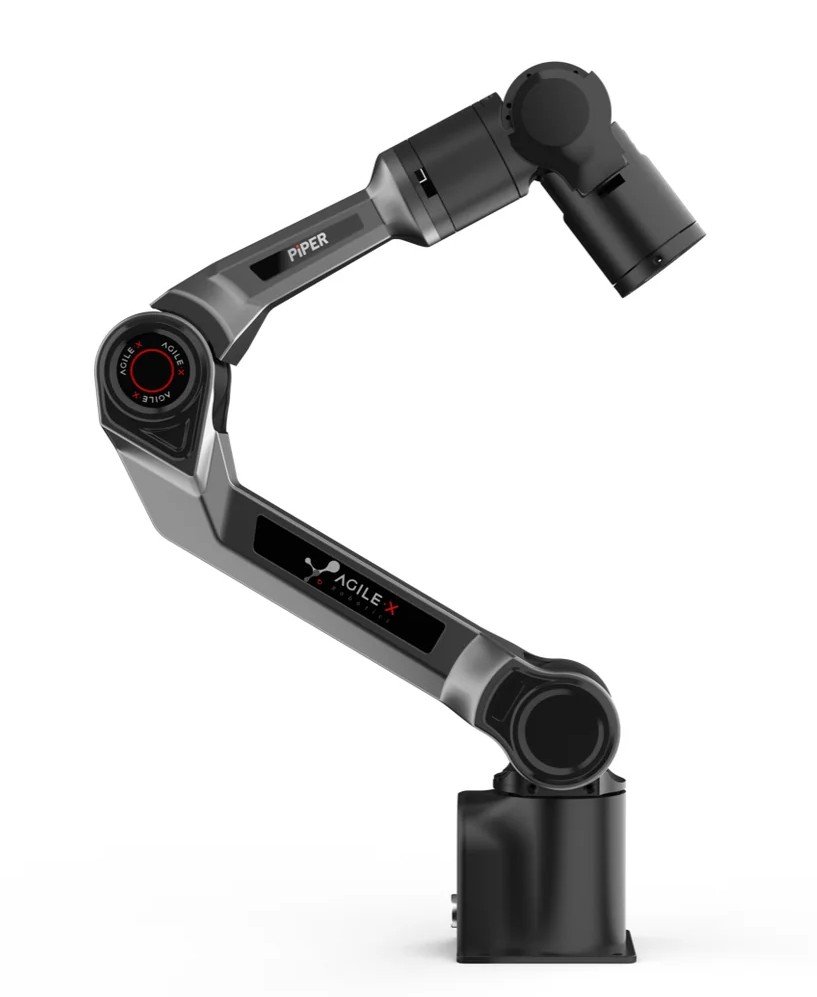
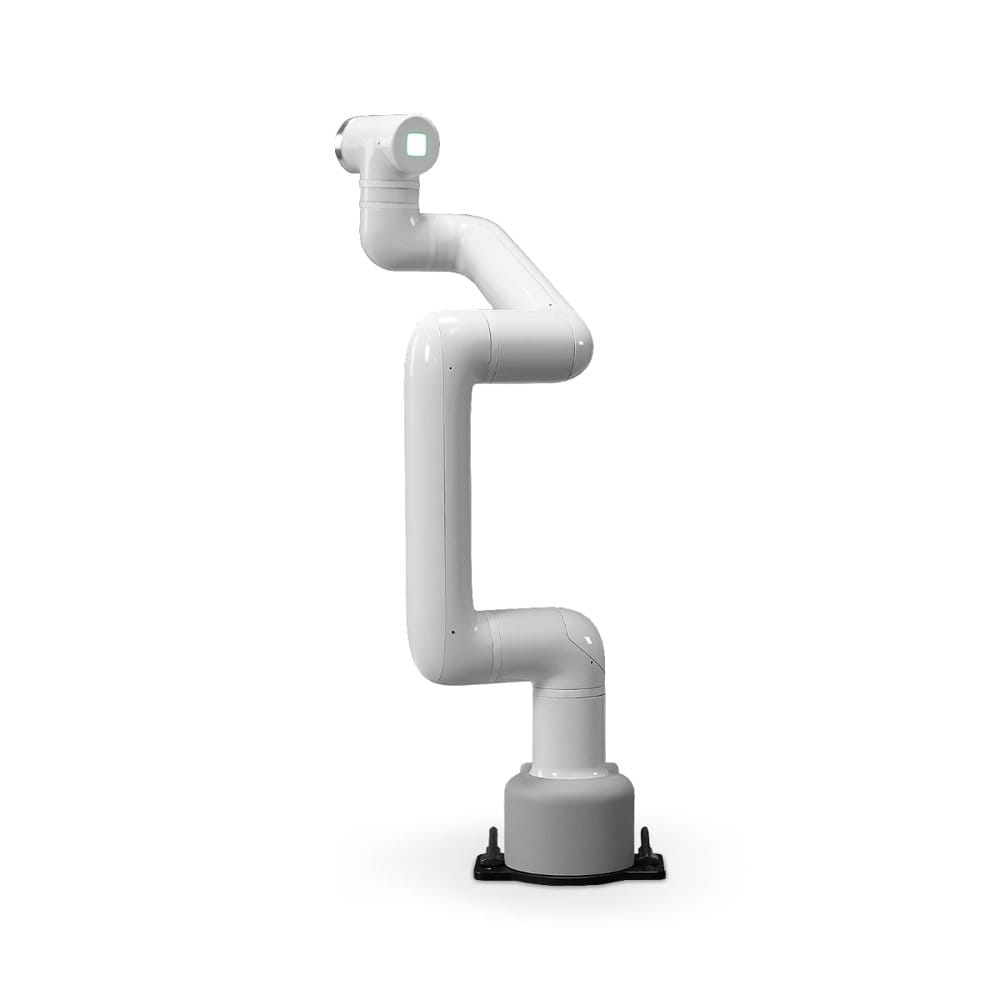
Before committing to a production cobot, many companies and vocational schools train staff on smaller arms. AgileX PiPER is a 4.2 kg, six-axis arm with 1.5 kg payload, about 626 mm reach and ±0.1 mm repeatability, popular for teaching and teleoperation research. Elephant Robotics myCobot Pro 630 is a six-axis commercial cobot with 2 kg payload for light tasks and training.
Safety and CE in Europe
“Collaborative” describes the application, not just the robot. A cobot holding a sharp tool still needs guarding. In Europe, the robot must carry CE marking, and your integrated cell needs a risk assessment under the machinery rules, with ISO 10218 and the collaborative guidance in ISO/TS 15066 as the usual references. From 20 January 2027, the EU Machinery Regulation (EU) 2023/1230 replaces the Machinery Directive.
Involve your safety officer early and, where relevant, staff representatives. CE, VAT and delivery are covered in our guide to buying a robot in Europe.
Planning your first cobot project
1Start with one boring, repetitive task
Machine tending, packing, screwdriving or end-of-line palletising are classic first projects: repetitive, measurable and often hard to staff.
2Budget for more than the arm
Gripper or tool, mounting base, safety devices, integration and training often add as much as the arm itself.
3Measure before and after
Record cycle times, scrap and overtime before the pilot so you can prove payback. Many European regions offer SME digitalisation or automation grants that can cover part of the cost.
4Think beyond one station
A cobot on a mobile base or an AMR can serve several machines. Our humanoid vs AMR guide covers mobile options.
Referral note: When you request a quote from Robots Europa, mentioning Dijipedya and referral code 08AF5658 helps your enquiry be tracked correctly.
Frequently asked questions
What is the best cobot for a small business?
For light assembly and machine tending, 5 kg class cobots such as Fairino FR5 or SIASUN GCR5-910 are common starting points. Palletising usually needs a 20 kg class arm with long reach.
Do cobots need safety fences?
Not always. A risk assessment decides. Force-limited cobots can often work without fences, but sharp tools, heavy parts or high speeds may still require guarding or scanners.
How long does it take to deploy a cobot?
Simple applications can run within weeks. Integration, safety validation and staff training determine the real timeline.
Can cobots be used for welding?
Yes. Fairino offers welding-focused FR3 versions, and welding cobots are common in small fabrication shops.
Compare collaborative robot arms and request a quote for delivery in Europe.
Affiliate link: we may earn a commission if you buy through it, at no extra cost to you.
More from Dijipedya English