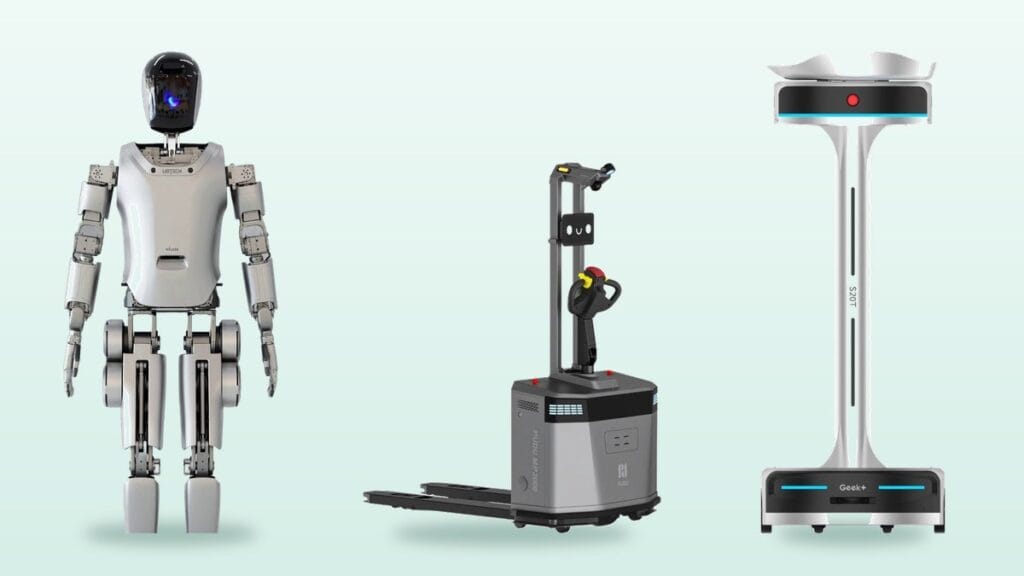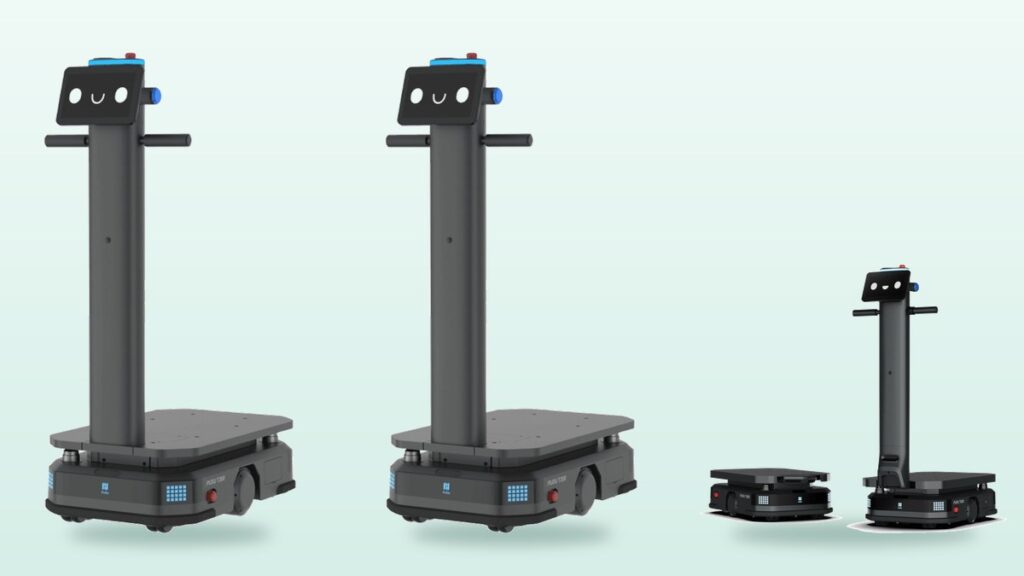
Between the warehouse and the production line, factories move thousands of small loads a day: kits, bins, finished parts and tools. Industrial delivery robots take over these repetitive runs, carrying trays, carts or racks between stations without fixed tracks.
This guide compares PUDU T-series and Alpha Robotics Panda AMRs. For pallet-scale loads, see our autonomous forklift guide, and for the wider picture our industrial robots guide.
Contents
What industrial delivery robots do
These robots are AMRs built for internal logistics. They navigate with SLAM rather than floor tape, so routes can change when production layouts change. Top modules turn the same base into a tray carrier, lifting robot, towing robot or conveyor-equipped robot.
Industrial delivery robots compared
| Model | Payload class | Highlights |
|---|---|---|
| PUDU T150 | 150 kg | 835 x 500 x 1,350 mm, 65 kg robot, 30 Ah battery |
| PUDU T300 | 300 kg | VSLAM+ and LiDAR SLAM, high-ceiling sites up to 30 m |
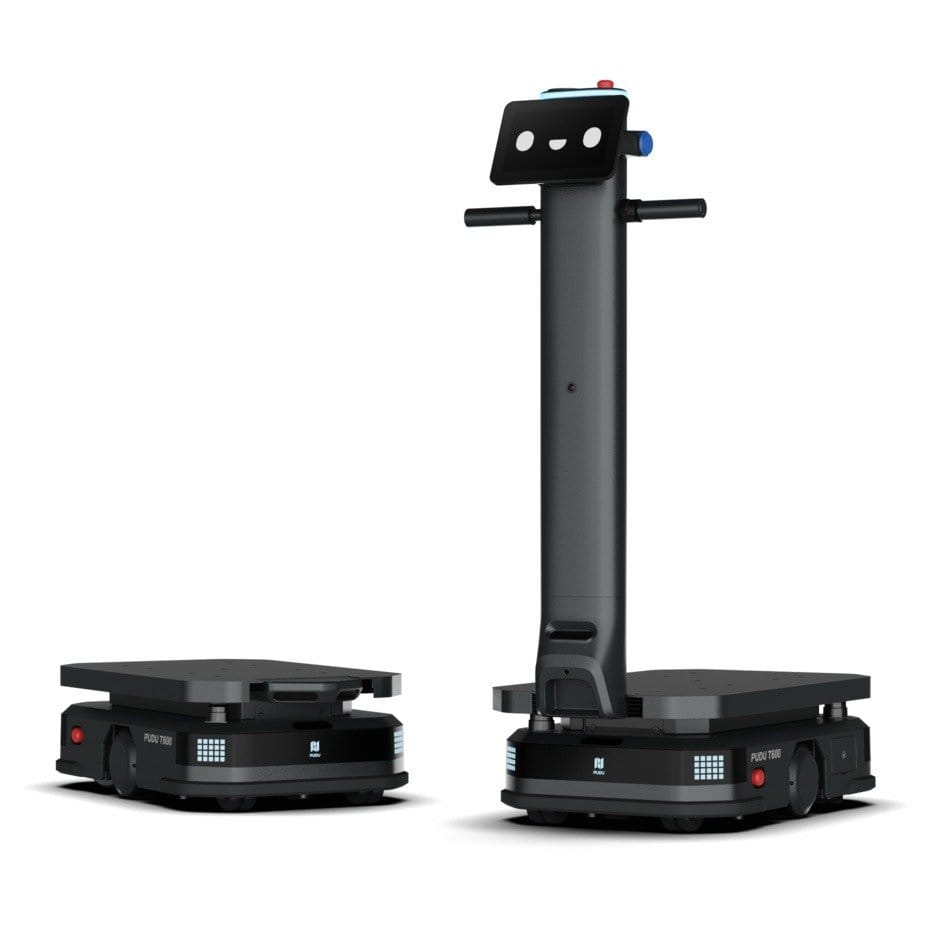
| PUDU T600 | 600 kg | VSLAM and LiDAR SLAM; underride version available |
| Alpha Robotics Panda AMR F300 | Mid payload | Industrial and logistics transport |
The models in detail
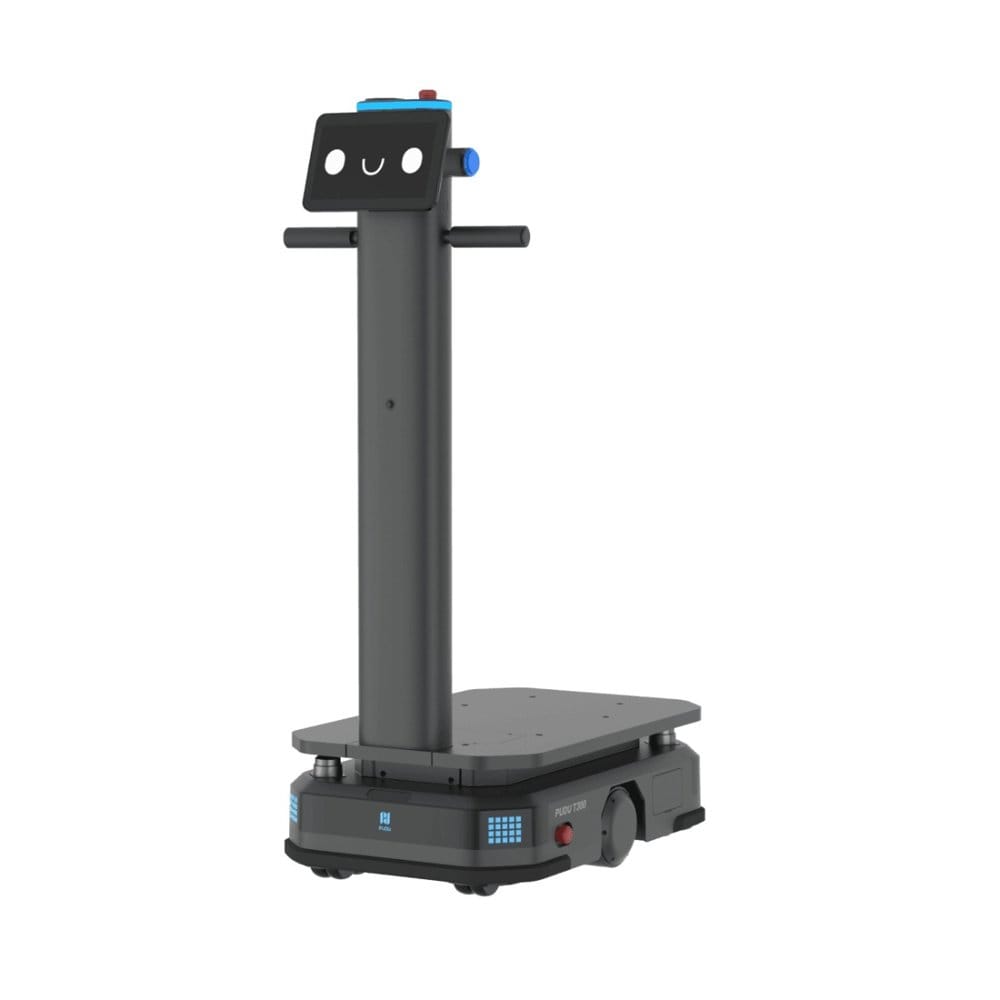
PUDU T300 uses PUDU’s VSLAM+ positioning with LiDAR SLAM, which the brochure says works in high-ceiling buildings up to 30 m, where laser-only robots can struggle. Top modules include tray, lifting, towing and conveyor versions.
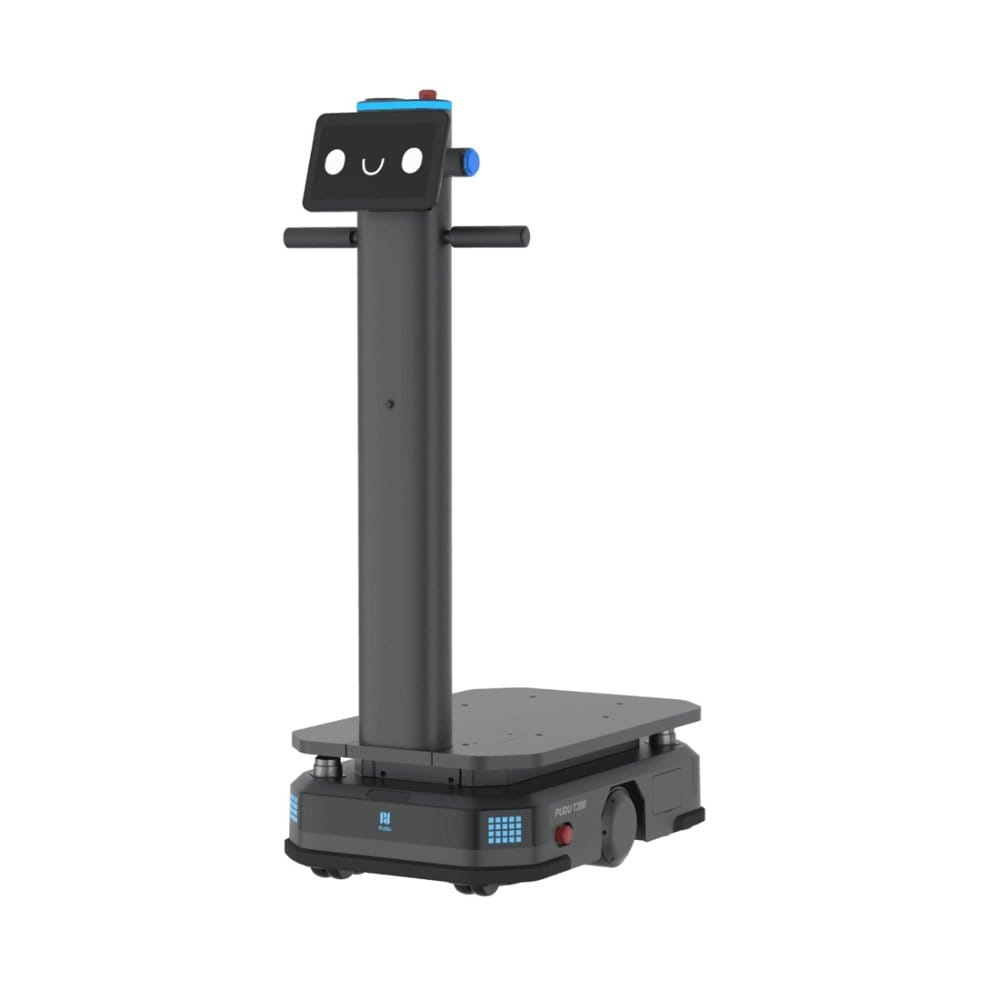
PUDU T150 carries up to 150 kg and measures 835 x 500 x 1,350 mm, suiting lighter kits and electronics. PUDU T600 moves up to 600 kg, and the T600 Underride drives under carts to lift and carry them.
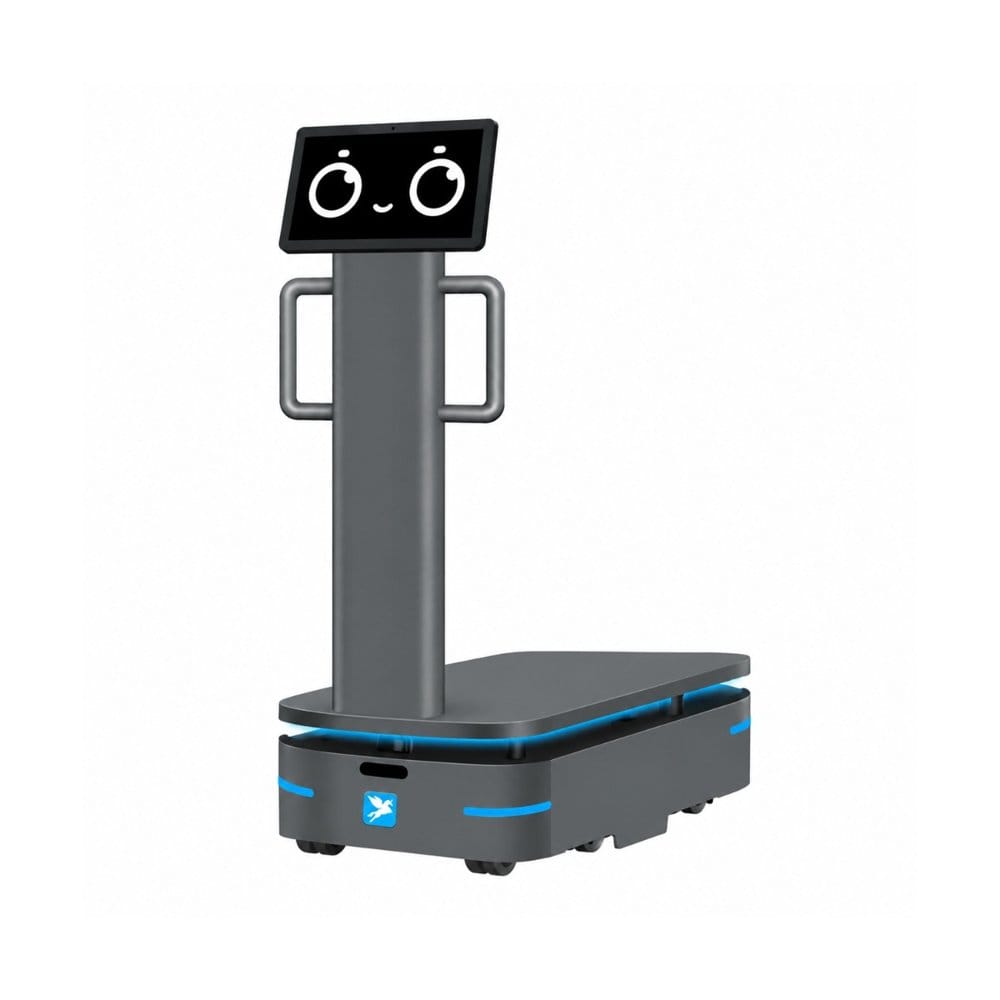
Alpha Robotics’ Panda AMR range covers F150, F300 and F600 payload classes for internal industrial and logistics transport.
Where they fit
1Line-side delivery
Kits and parts from the warehouse to assembly stations on a schedule.
2Work-in-progress transport
Moving parts between machining, assembly and testing.
3Finished goods
Taking finished products to packing or the dock.
4Cart towing
Towing carts with existing trolleys avoids changing containers. For heavier stacking, see our palletizing guide.
Safety in Europe
AMRs carrying loads are generally assessed against ISO 3691-4 together with the machinery rules behind CE marking; the EU Machinery Regulation applies from 20 January 2027. A site risk assessment, speed zones and pedestrian routes are part of every deployment. VAT and delivery are covered in our buying guide.
Referral note: When you request a quote from Robots Europa, mentioning Dijipedya and referral code 08AF5658 helps your enquiry be tracked correctly.
Frequently asked questions
What is the difference between an industrial delivery robot and an autonomous forklift?
Delivery robots carry trays, bins and carts up to a few hundred kilograms; autonomous forklifts lift and move pallets.
Can one robot do several jobs?
Yes. PUDU T300 accepts tray, lifting, towing and conveyor top modules.
Do they need floor markers?
No. They use SLAM navigation, so routes can be changed in software.
Which standard applies in Europe?
ISO 3691-4 for driverless industrial trucks is the main reference, alongside CE machinery rules.
Compare industrial delivery robots and AMRs and request a quote for your plant.
Affiliate link: we may earn a commission if you buy through it, at no extra cost to you.
More from Dijipedya English