Industrial robots are programmable machines that do manufacturing and logistics work: welding, painting, assembling, packing, palletising, moving goods and inspecting equipment. The classic industrial robot is a six-axis arm bolted to the factory floor, but the term now also covers cobots, autonomous mobile robots (AMRs), autonomous forklifts and inspection robots that walk through plants.
This guide explains how industrial robots work in factories, the main types, what they cost and how to choose a first robot. It also links to our detailed guides for warehouses, palletising, fire scenes, farms and building sites. Prices are Robots store list prices checked on 16 October 2026; heavy industrial models are usually sold on quote.
Contents
What is an industrial robot?
The international standard ISO 8373 defines an industrial robot as an automatically controlled, reprogrammable, multipurpose manipulator, programmable in three or more axes, used in industrial automation. In plain words: a machine you can reprogram for a new job without rebuilding it. That is the difference between a robot and a fixed special-purpose machine.
According to the International Federation of Robotics, more than four million industrial robots are working in factories worldwide, with China, Japan, the United States, South Korea and Germany as the largest markets. Car and electronics plants were the first big users; food, metal, plastics and logistics are growing fastest.
How industrial robots work in factories
1The robot
An arm with servo motors in each joint, or a mobile base with wheels and lifting gear. Encoders report positions so the controller knows exactly where every axis is.
2The controller
A cabinet or built-in computer that runs the program, plans motion paths and talks to the rest of the line through industrial networks such as PROFINET, EtherNet/IP or Modbus.
3The tooling
Grippers, vacuum cups, welding torches, spray guns or screwdrivers. Tooling is designed for each product and is often what makes or breaks a project.
4Sensors and safety
Vision cameras find parts, force sensors control pressing and polishing, and safety scanners, light curtains or fences protect people. Cobots add joint torque sensing so they can share space with workers.
5The program
Engineers teach positions with a pendant, program offline in simulation software or, for cobots, guide the arm by hand. The program repeats the same motions with high repeatability, often around ±0.02 to ±0.1 mm.
Types of industrial robots
| Type | How it moves | Typical jobs | Example |
|---|---|---|---|
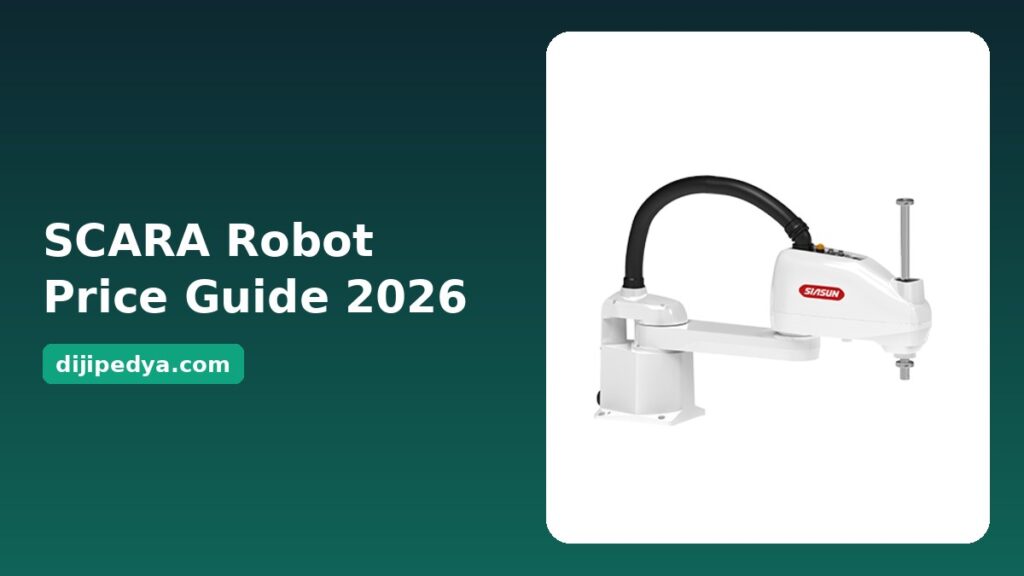
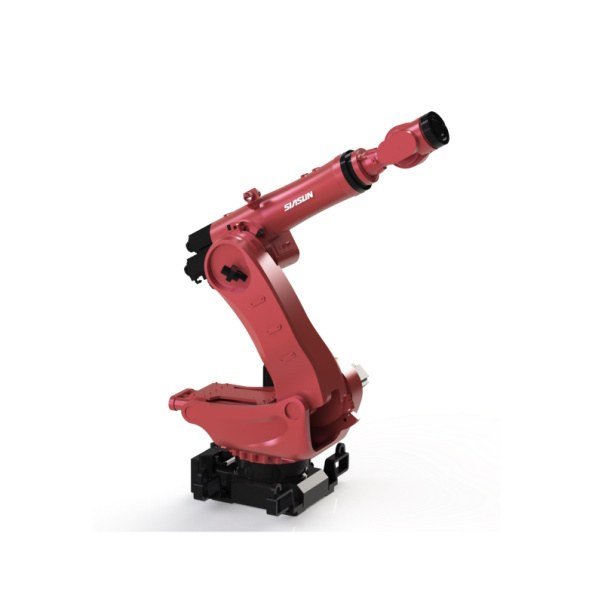
| Articulated arm | Six rotating joints | Welding, handling, machine tending, painting | SIASUN SR12A |
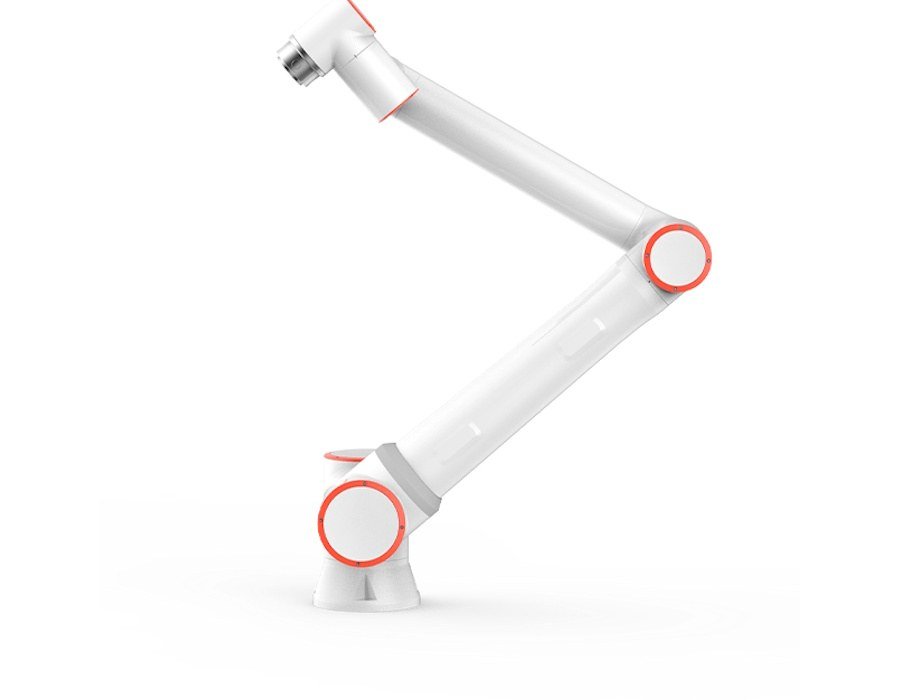
| Collaborative robot (cobot) | Articulated arm with force sensing | Packing, screwdriving, machine tending, quality checks | Fairino FR10 (€9,176) |
| SCARA | Four axes, horizontal plane | Fast assembly and pick-and-place | Electronics lines |
| Delta | Parallel arms from above | Very fast picking of light items | Food packing |
| Cartesian or gantry | Linear X, Y, Z axes | Palletising, CNC loading, large parts | Gantry palletisers |
| AMR and AGV | Wheeled mobile base | Moving materials between stations | warehouse robots |
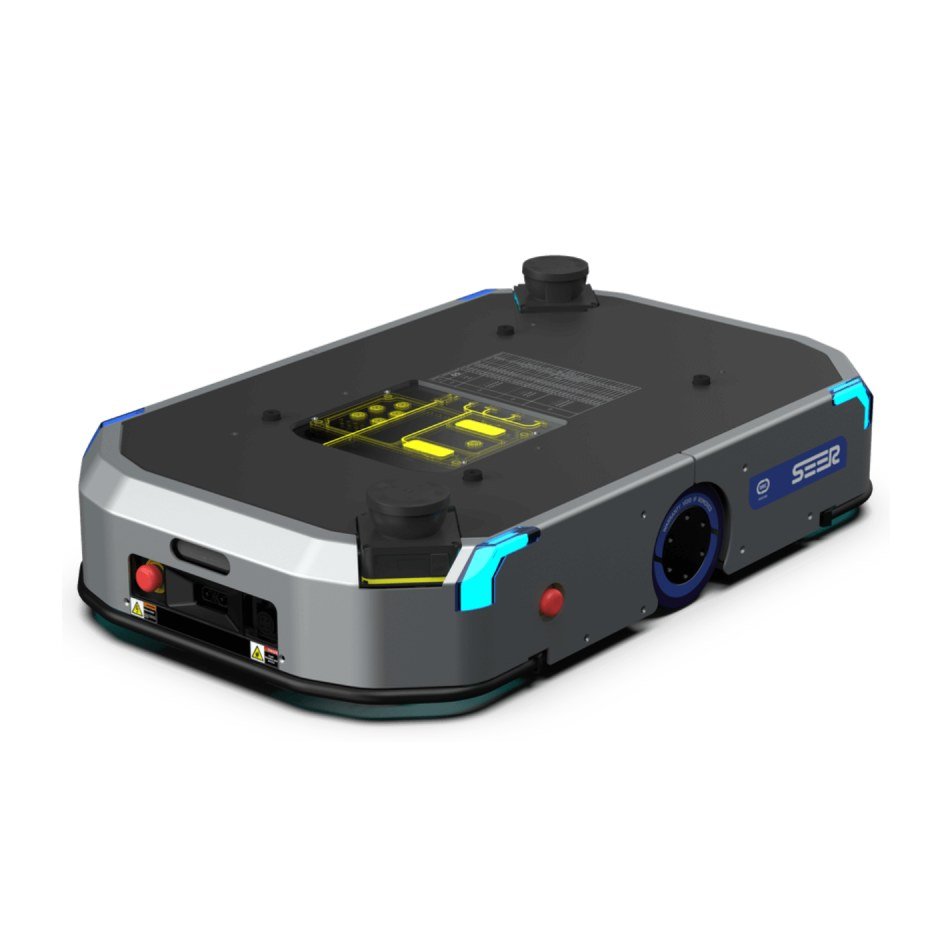
| Autonomous forklift | Self-driving forklift | Pallet transport and stacking | SEER SlimStack |
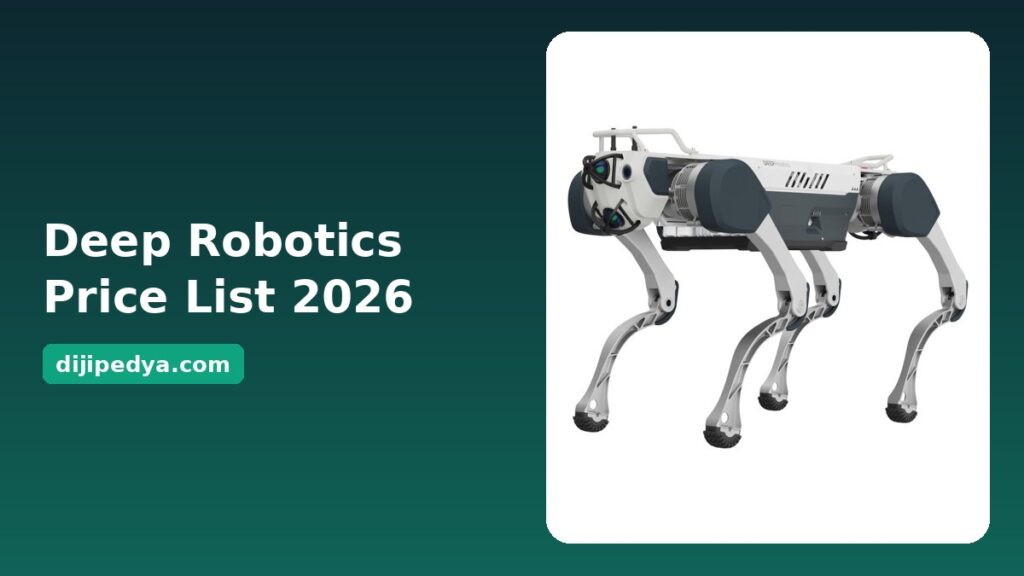
| Inspection robots | Legged, wheeled or crawling | Gauge reading, thermal checks, leak detection | Deep Robotics X30 |
Common jobs for industrial robots
- Welding: arc and spot welding were the first big robot jobs and still use a large share of installed robots.
- Material handling and machine tending: loading CNC machines, presses and injection moulding machines.
- Palletising and packing: stacking boxes and bags at the end of the line. See robotic palletizers.
- Assembly: screwdriving, inserting and gluing.
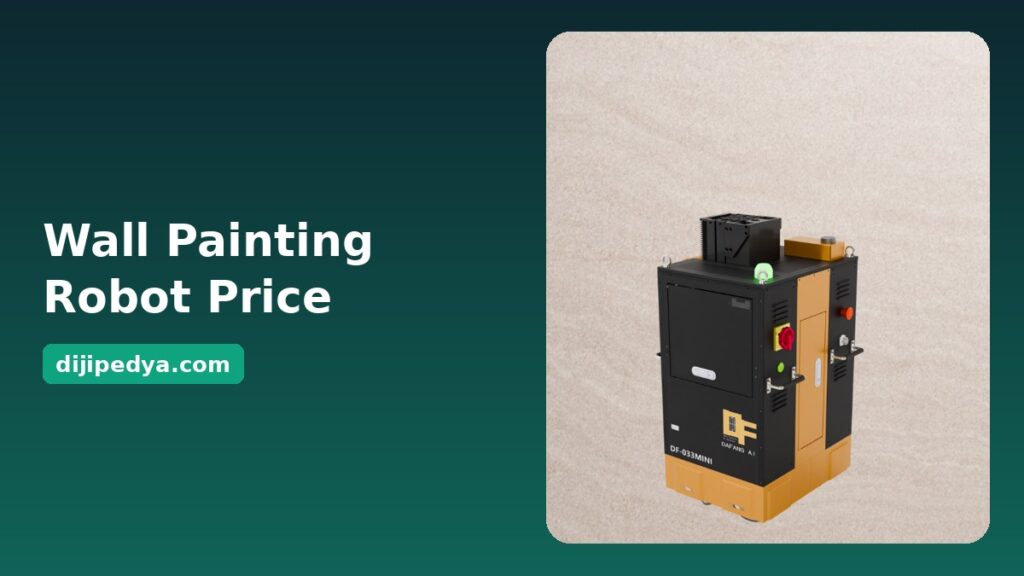
- Painting and coating: even layers and less exposure to solvents for workers.
- Grinding and polishing: force-controlled finishing of castings and welds.
- Intralogistics: AMRs and autonomous forklifts moving parts and pallets.
- Loading docks: unloading trucks and containers. See truck unloading robots.
Beyond the factory: field robots
Industrial robotics now reaches outside the factory walls. These guides cover each area in detail:
| Area | What robots do | Guide |
|---|---|---|
| Warehouses | Pallet transport, picking, loading | Autonomous forklifts, industrial delivery robots |
| Emergency response | Firefighting and hazardous-area scouting | Firefighting robots |
| Agriculture | Spraying, spreading, mapping | Agricultural drones |
| Construction | Concrete finishing, coating, facade work | Construction robots |
| Plants and utilities | Inspection rounds, gauge reading | Robot dogs for industrial inspection |
| Sports fields and parks | Mowing and line marking | Commercial robotic mowers |
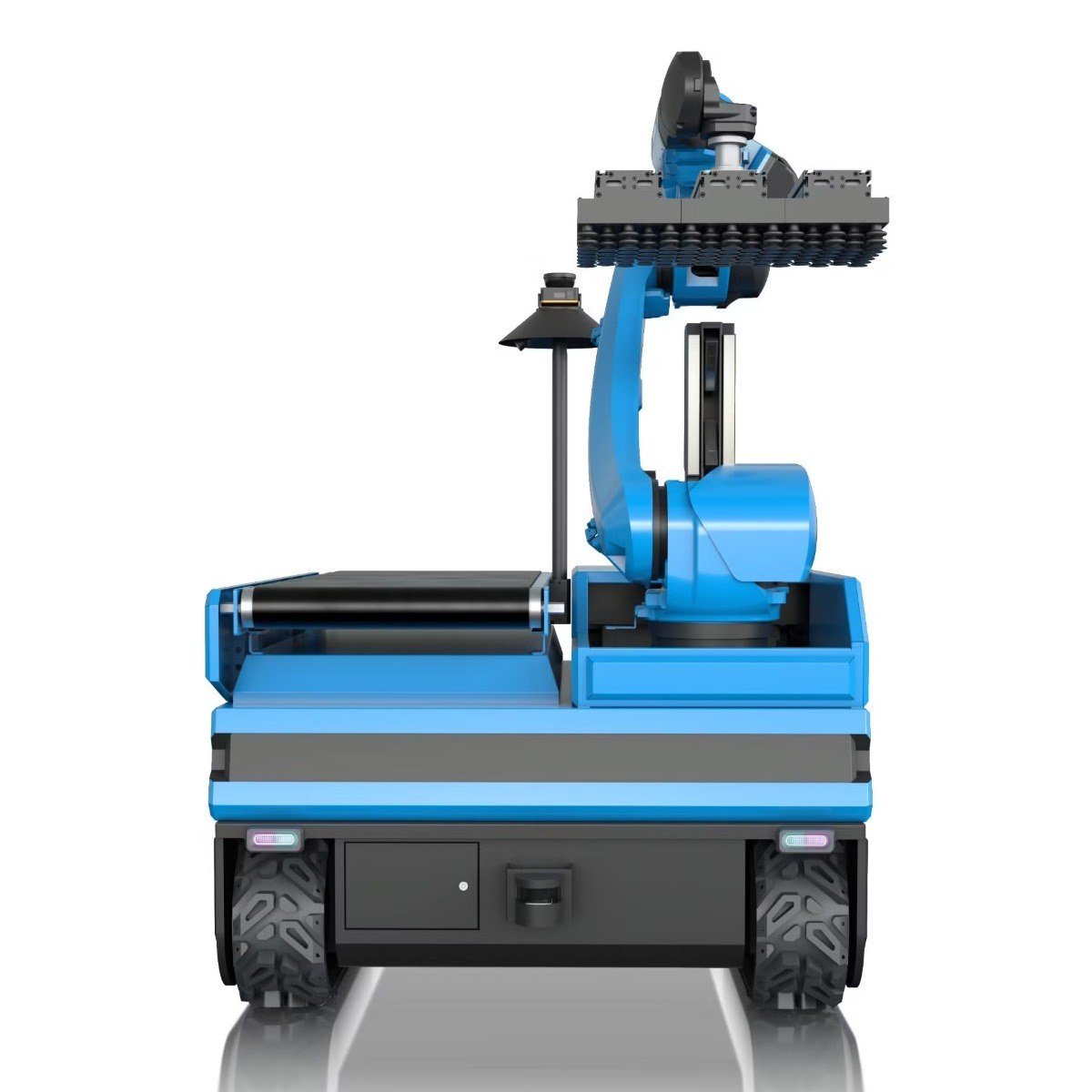
How much do industrial robots cost?
| Robot type | Typical price for the robot | Typical total project |
|---|---|---|
| Cobot (3 to 30 kg) | From €4,859 to €14,677 (Fairino list prices) | €25,000 to €80,000 with gripper and integration |
| Industrial arm (small) | €20,000 to €45,000 | €60,000 to €150,000 with cell and safety |
| Industrial arm (heavy payload) | €50,000 to €120,000 | €150,000 to €400,000+ |
| AMR or autonomous forklift | €25,000 to €120,000 per vehicle | Plus fleet software, site mapping and integration |
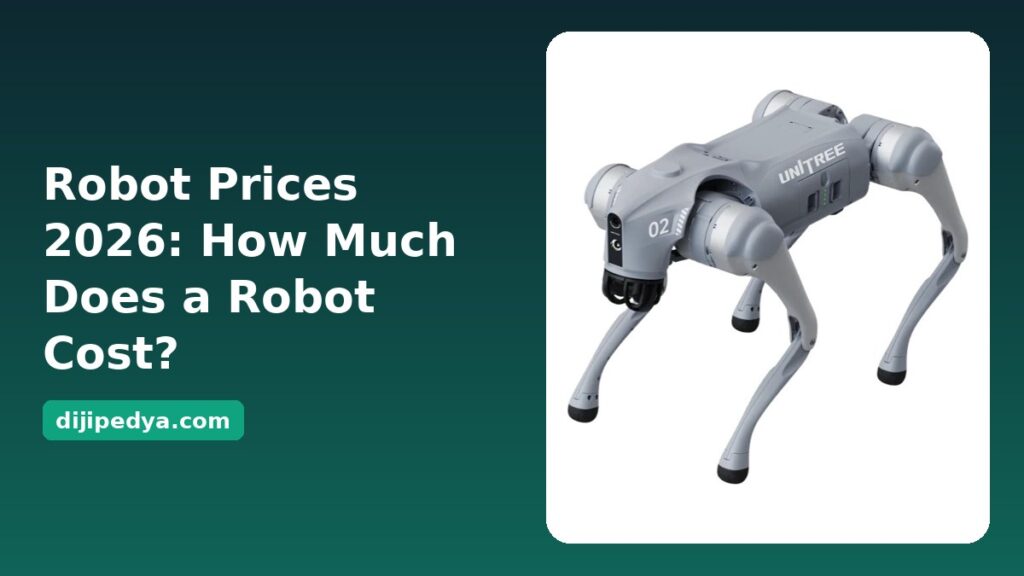
| Inspection robot dog | From €56,761 (Deep Robotics X30) | Plus sensor payloads and inspection software |
Payback is usually calculated from labour hours saved, scrap reduced and extra output per shift. Many small manufacturers target a payback of two to three years. Our commercial robot costs guide covers purchase, installation and maintenance in detail.
See industrial robots, cobots and warehouse robots with current prices for your region.
Product links go to Robots stores (Europe, USA and other regions) through our partner link. If you buy through them, Dijipedya may earn a commission at no extra cost to you.
How to start with your first robot
- Pick one repetitive, well-defined task with stable parts. Machine tending and palletising are classic first projects.
- Measure cycle time, part weight, reach and how many shifts the task runs.
- Decide between a cobot (simpler, near people) and an industrial arm (faster, guarded cell).
- Budget for tooling, safety and integration, not only the robot.
- Check local service, spare parts and training before you order. Use our warranty and support checklist.
- In Europe, the finished cell needs a CE conformity assessment under the Machinery Regulation; see buying a robot in Europe.
If you are comparing a humanoid with a mobile robot for factory transport, read humanoid robot or AMR. For arms specifically, our robotic arms guide explains payload, reach and programming.
Frequently asked questions
What is an industrial robot?
An industrial robot is an automatically controlled, reprogrammable machine used in manufacturing or logistics, most often a six-axis arm, but also cobots, SCARA, delta, gantry robots and mobile robots.
How do industrial robots work in factories?
A controller runs a program that moves servo motors in each joint to precise positions, while tooling such as grippers or welding torches does the work and sensors and safety devices protect people and parts.
How much does an industrial robot cost?
Cobots start at about €4,900 for the arm alone, small industrial arms cost about €20,000 to €45,000, and complete cells with tooling, safety and integration usually cost €60,000 to €150,000 or more.
What are the main types of industrial robots?
Articulated arms, collaborative robots, SCARA, delta, Cartesian or gantry robots, and mobile robots such as AMRs, AGVs and autonomous forklifts.
What is the difference between an industrial robot and a cobot?
A cobot is an industrial robot designed to work safely near people, with force sensing and limited speed. A traditional industrial robot is faster and stronger but normally works behind guarding.
Which industries use the most industrial robots?
Automotive and electronics are the largest users, followed by metal and machinery, plastics and chemicals, and food and beverage, with logistics growing quickly.
Related guides on Dijipedya
Sources: ISO 8373 robot vocabulary; International Federation of Robotics, World Robotics reports; Robots Europa product catalogue and price list (16 October 2026); manufacturer pages for SIASUN, Fairino, SEER Robotics, Senad and Deep Robotics.