Agricultural drones can spray, spread seed and fertiliser and map fields faster than a tractor on steep or wet ground, without compacting the soil. In parts of Asia they already cover millions of hectares. In Europe the picture is more complicated: the technology is ready, but spraying pesticides from the air is tightly regulated.
This guide starts with the rules, then compares XAG agricultural drones available from Robots Europa and explains where they can be used today. It is part of our industrial and field robots guide. It is general information, not legal advice.
Contents
The rules first: spraying from the air in the EU
Under the EU Directive on the sustainable use of pesticides (2009/128/EC), aerial spraying of plant protection products is prohibited as a general rule. Member states can grant derogations in specific cases, and several have used them, for example for steep-slope vineyards where ground machinery is dangerous. Conditions usually include approved products, buffer zones, notification and trained operators. The rules are under discussion at EU level and vary by country, so check with your national agriculture authority before planning any spraying.
Spreading seed or granular fertiliser and using drones for mapping are generally not covered by the aerial spraying ban, although aviation rules still apply.
Aviation rules for heavy drones
Large agricultural drones weigh well over 25 kg when loaded, which places them outside the EU “open” drone category. Under EASA rules they usually fall in the “specific” category, which requires an operational authorisation from your national aviation authority, typically based on a risk assessment, plus registration, insurance and pilot competence. Some countries offer standard scenarios or simplified procedures for agricultural work. Factor this into your timeline and cost.
What agricultural drones are used for
1Seeding and cover crops
Spreading cover crop seed into standing crops or wet fields where tractors cannot go.
2Fertiliser spreading
Granular fertiliser on small, irregular or steep fields, with variable-rate maps.
3Spraying where permitted
Under national derogations, for example steep vineyards, using approved products and conditions.
4Mapping and monitoring
Field mapping to plan variable-rate applications and track crop development.
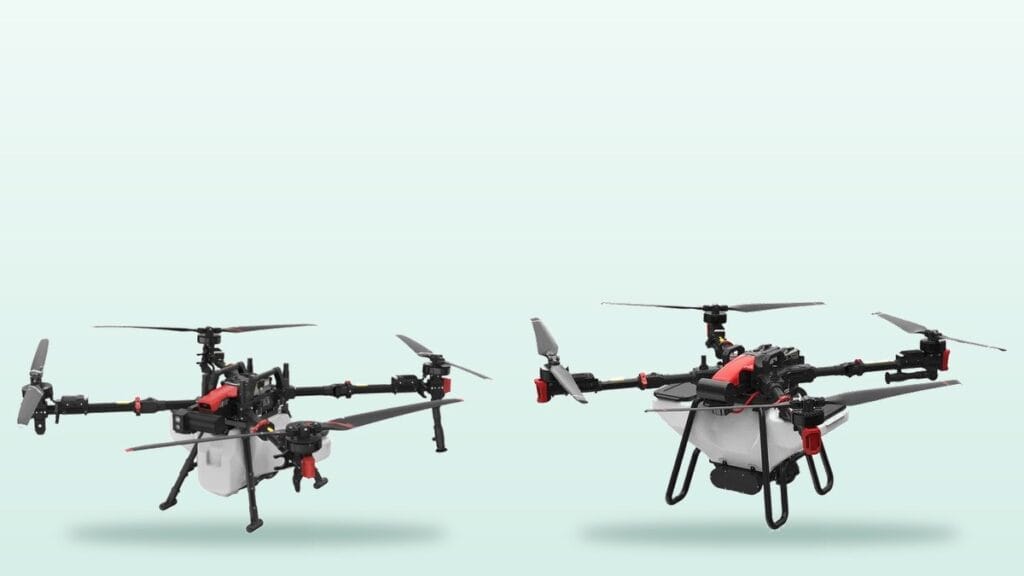
XAG drones compared
| Model | Max payload | Spraying | Spreading | Notes |
|---|---|---|---|---|
| XAG P100 Pro | 50 kg | Up to 22 L/min, 60 to 400 μm droplets | Up to 150 kg/min, 1 to 6 mm granules | Established platform, 60 L kits |
| XAG P150 | 70 kg | Up to 30 L/min, 5 to 10 m width, 60 to 500 μm | 115 L container, up to 280 kg/min | Larger capacity |
| XAG P150 Max | 80 kg | 80 L tank, 32 L/min (46 L/min with four-nozzle kit) | 115 L, up to 300 kg/min | Highest capacity in the range |
Figures are manufacturer specifications listed by Robots Europa; real work rates depend on field shape, wind, product and regulations.
The models in detail
XAG P100 Pro
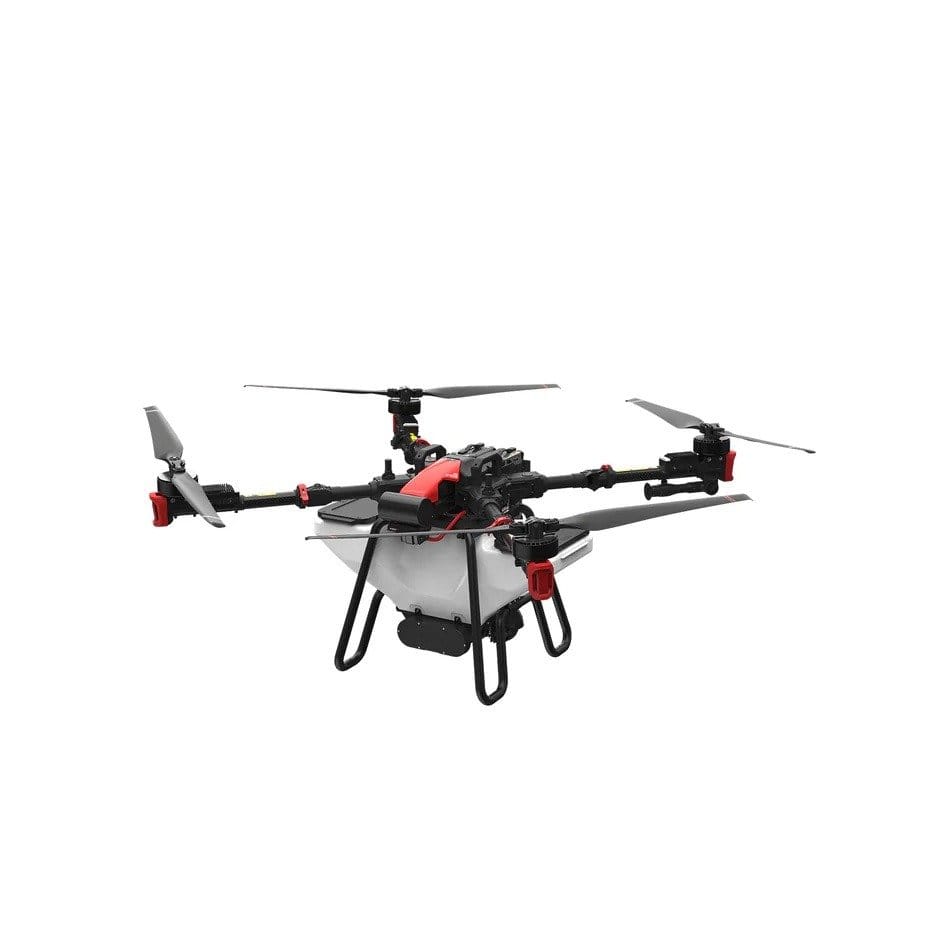
XAG P100 Pro carries up to 50 kg. With RevoSpray 3 it delivers up to 22 L/min with 60 to 400 μm droplets, and with RevoCast 3 it spreads up to 150 kg/min of 1 to 6 mm granules. Kits such as the P100 Pro Premium kit bundle extra batteries and chargers.
XAG P150 and P150 Max
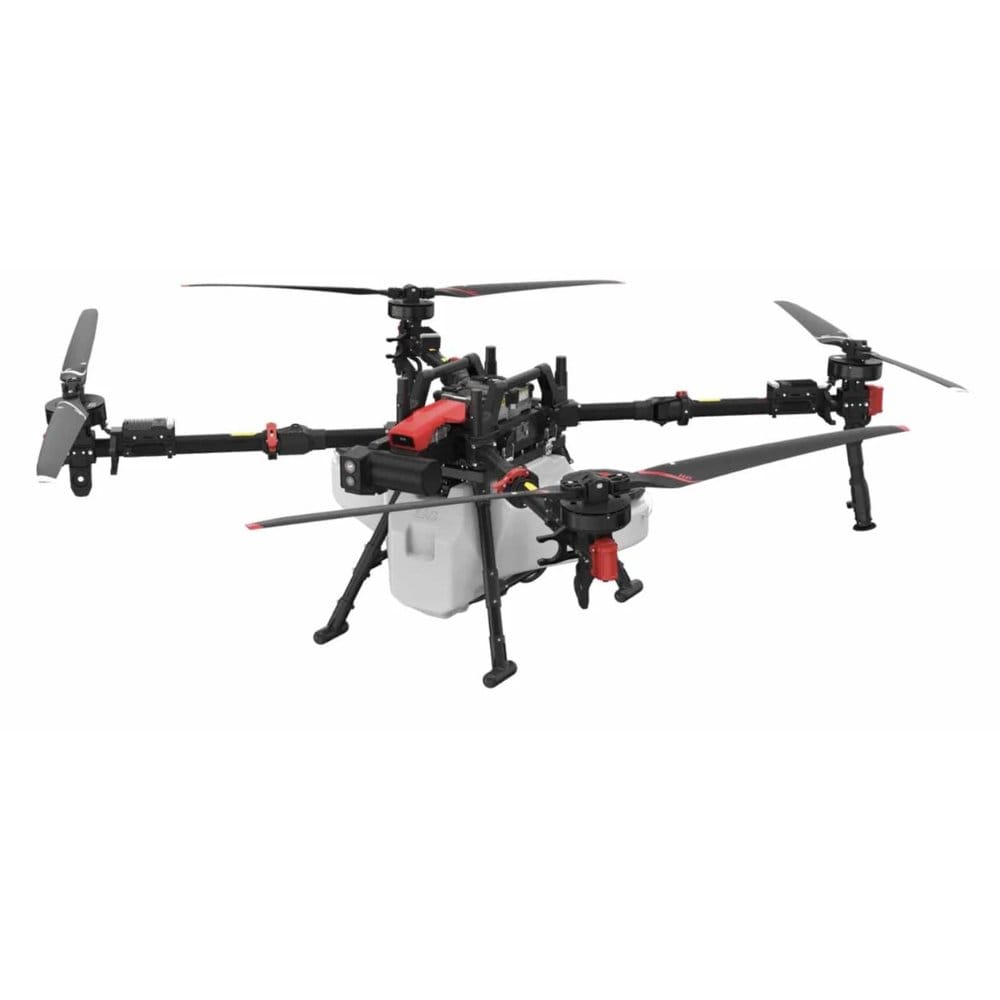
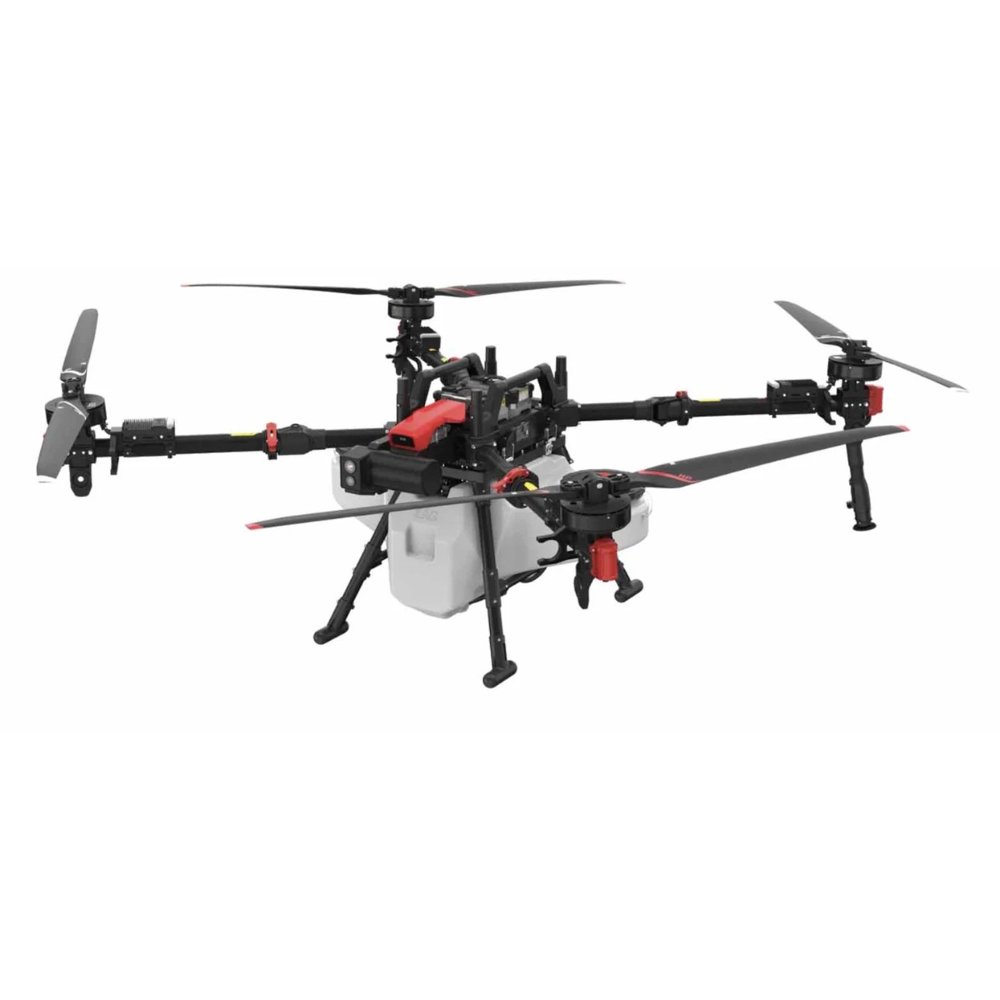
XAG P150 raises payload to 70 kg, with up to 30 L/min spraying across a 5 to 10 m width and a 115 L granule container spreading up to 280 kg/min. P150 Max goes to 80 kg with an 80 L tank, 32 L/min (46 L/min with the four-nozzle kit) and up to 300 kg/min spreading. Multi-battery kits such as the P150 Ultimate keep a drone flying through a working day.
Accessories that matter
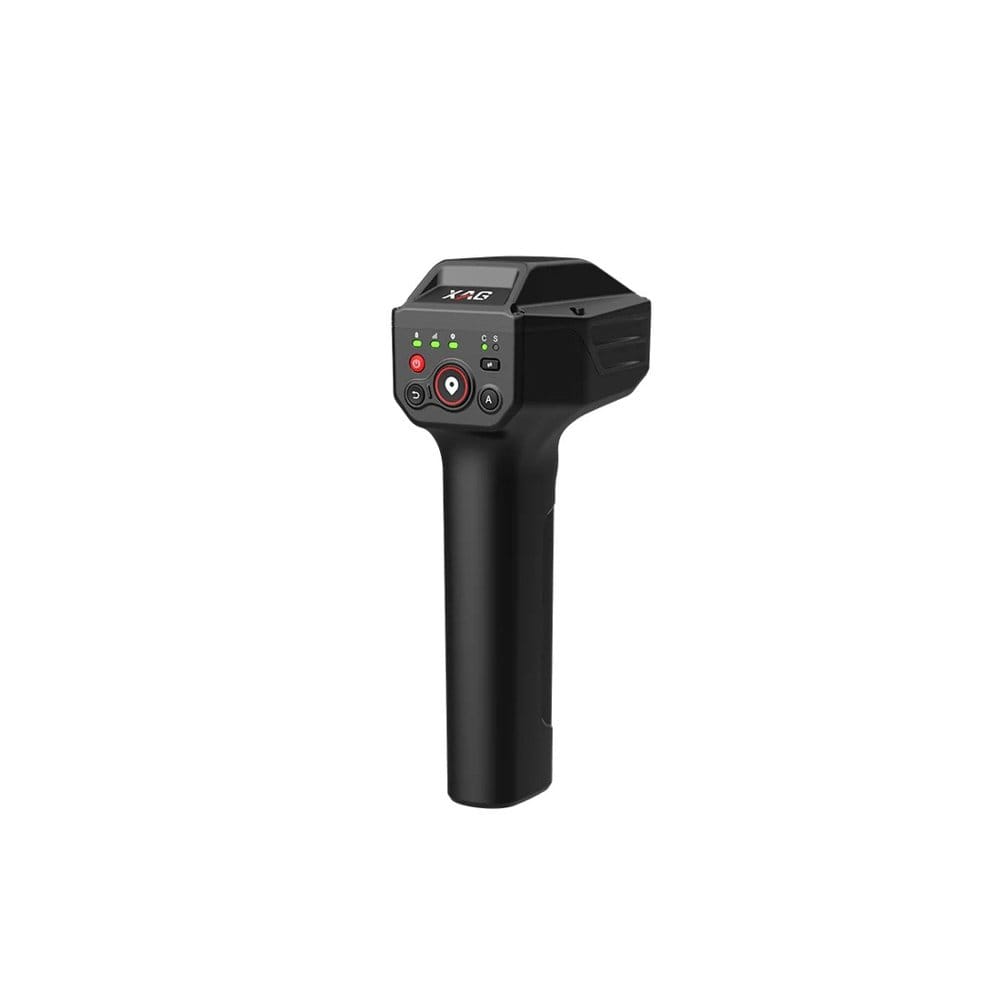
Precise flight lines need RTK positioning. The XAG XRTK7 mobile station supports network RTK, PPP and third-party CORS services, with 4G connectivity. Spare smart batteries, a fast charger and the SRC5 remote controller complete a working setup.
How to get started
1Check what is allowed in your country
Ask your agriculture authority about spraying derogations and your aviation authority about the authorisation route for heavy drones.
2Start with spreading or mapping
Seed and fertiliser spreading are usually easier to authorise than pesticide spraying.
3Plan batteries and logistics
Large drone batteries ship as dangerous goods and need generators or high-power charging in the field.
4Consider a contractor model
Agricultural contractors can spread the investment across many farms and hold the authorisations.
Battery shipping is explained in our battery shipping guide, and VAT and CE in our guide to buying a robot in Europe.
Referral note: When you request a quote from Robots Europa, mentioning Dijipedya and referral code 08AF5658 helps your enquiry be tracked correctly.
Frequently asked questions
Is drone spraying legal in the EU?
Aerial spraying of pesticides is prohibited as a general rule under Directive 2009/128/EC, with national derogations in specific cases. Check your country’s current rules.
Can I spread fertiliser or seed with a drone in Europe?
Generally yes, subject to aviation rules, because spreading granules is not covered by the aerial spraying ban.
Do I need a licence to fly an agricultural drone?
Heavy agricultural drones usually fall in the EASA “specific” category and need an operational authorisation, registration and a competent pilot.
How much can an XAG P150 Max carry?
Up to 80 kg, with an 80 L liquid tank or a 115 L granule container.
Compare XAG agricultural drones, kits and accessories and request a quote.
Affiliate link: we may earn a commission if you buy through it, at no extra cost to you.
More from Dijipedya English