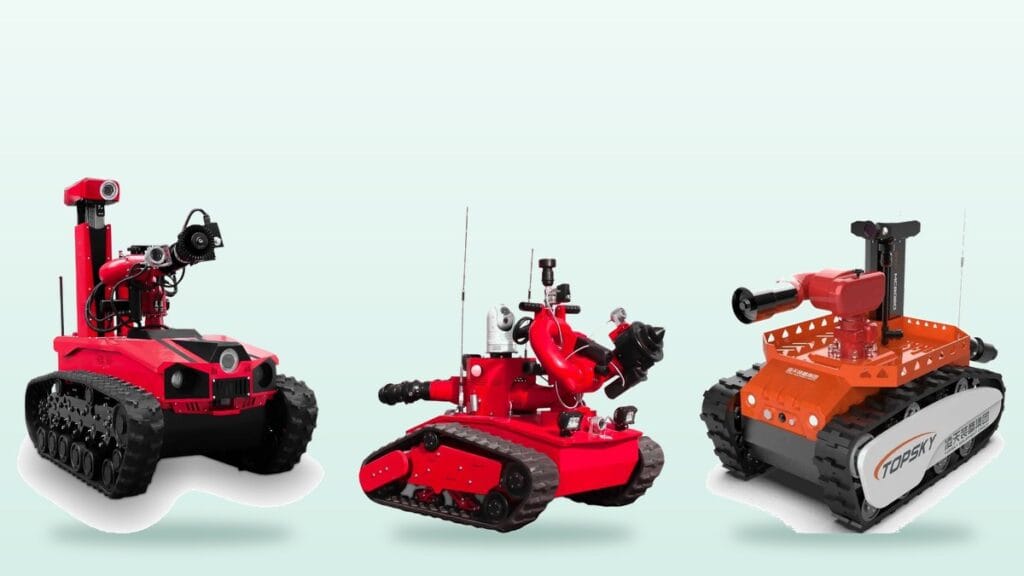
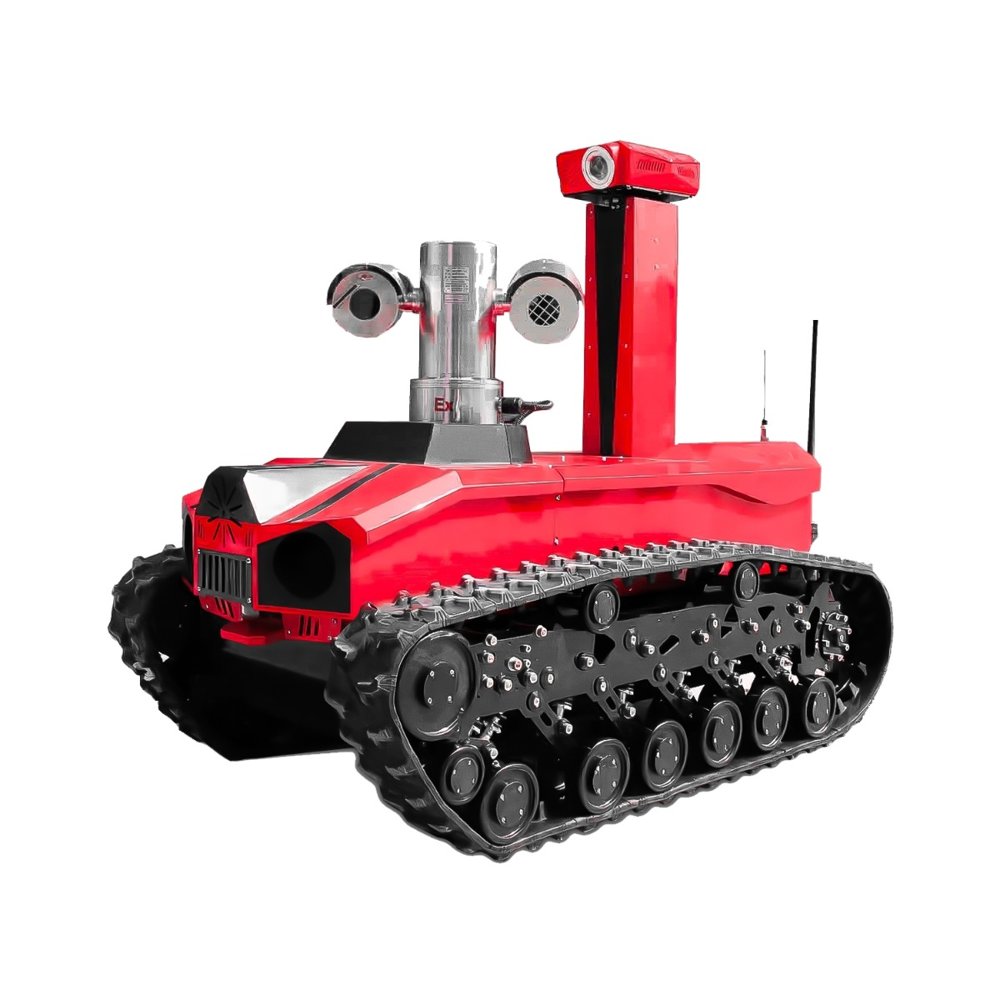
When a warehouse, tunnel or chemical plant is on fire, the most dangerous place for a firefighter is close to the flames. Firefighting robots are remotely operated, tracked vehicles that carry a water or foam monitor into heat, smoke, toxic gas and collapse risk, so crews can fight the fire from a safer distance. Europe saw a famous example in 2019, when the Paris Fire Brigade used a robot to help protect Notre-Dame Cathedral.
This guide explains what firefighting robots do and compares Guo Xing and Topsky models listed by Robots Europa, with particular attention to European explosion-protection rules. It is part of our industrial and field robots guide.
Contents
Why fire services and industry use robots
Large industrial fires can burn for many hours, with radiant heat, structural collapse, explosion risk and toxic smoke. A robot can sit in front of the fire with a high-flow monitor for as long as water and power last, while crews stay behind cover. Robots also carry cameras and gas sensors to scout a scene before people enter.
Typical users include municipal and industrial fire brigades, petrochemical plants, energy sites, tunnel operators, ports and large logistics centres.
What a firefighting robot does
1Fire suppression
A water or foam monitor delivers high flow over long distances from a tracked chassis that can climb debris and kerbs.
2Reconnaissance
Cameras, thermal imaging and gas detection give incident commanders information without exposing crews.
3Cooling and protection
Robots can cool tanks, cylinders or structures to prevent escalation.
4Smoke extraction
Some models combine water mist with large fans to clear smoke from tunnels and buildings.
Firefighting robots compared
| Model | Type | Key published specs | Typical use |
|---|---|---|---|
| Guo Xing RXR-M40D-880T | Firefighting robot | 40 L/s water or foam, 65 m range, IP67, 1,237 x 931 x 1,063 mm | Industrial and municipal fires |
| Guo Xing RXR-MC80BD | Explosion-proof extinguishing and reconnaissance | Designed to China’s GB3836 explosion-proof standard, up to 1,000 m remote range | Flammable, toxic or smoke-filled scenes |
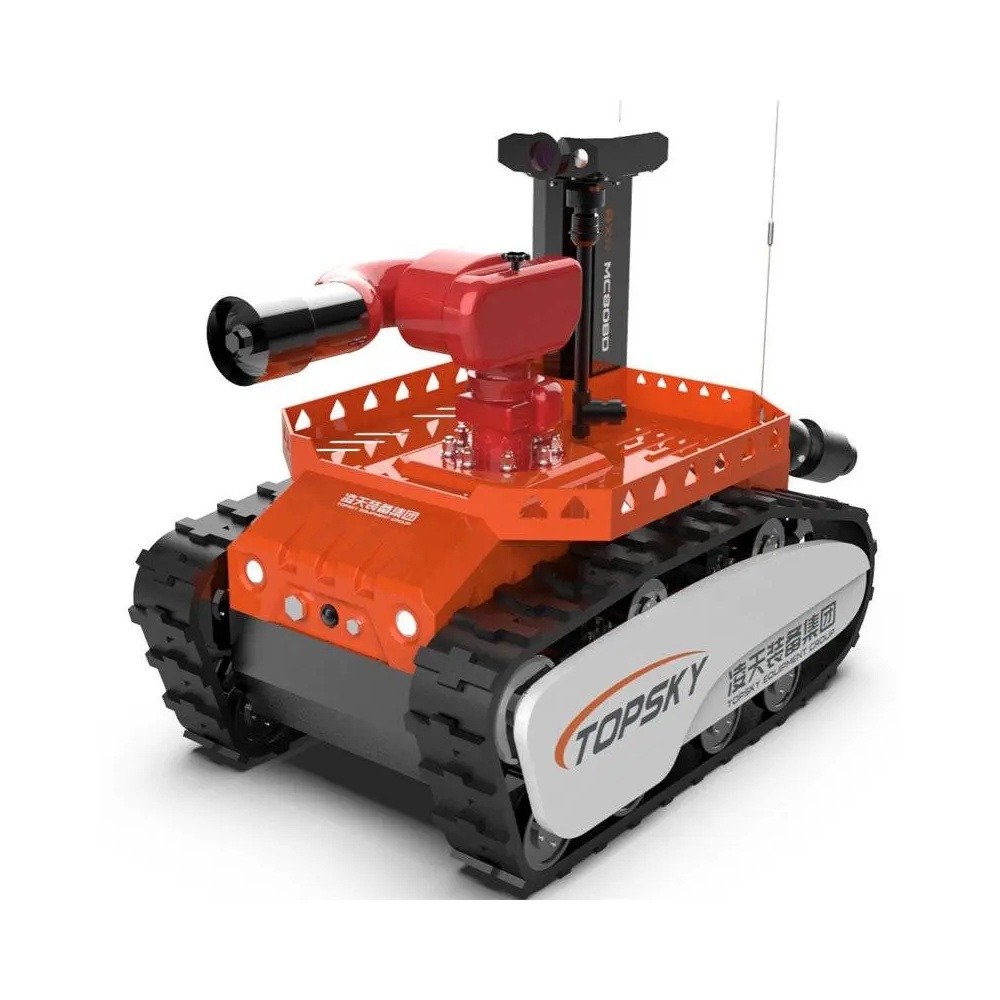
| Topsky Dragon Conquest D4 | Explosion-proof firefighting and scouting | Up to 1.81 m/s, 220 mm obstacles, 500 mm wading, about 40° climbing | Petrochemical and hazardous sites |
| Guo Xing RXR-YM100000D | Large firefighting robot | 3,160 x 1,830 x 2,500 mm, 5 km/h, 1,000 m remote, IP65 | Large industrial sites and yards |
| Guo Xing RXR-C6BD | Explosion-proof inspection and rescue | Marked Ex d ib IIB+H2 T6 Gb under GB3836, 360° camera | Reconnaissance before entry |
Specifications are taken from Robots Europa product pages and manufacturer listings; confirm the exact configuration on your quote.
The models in detail
Guo Xing RXR-M40D-880T
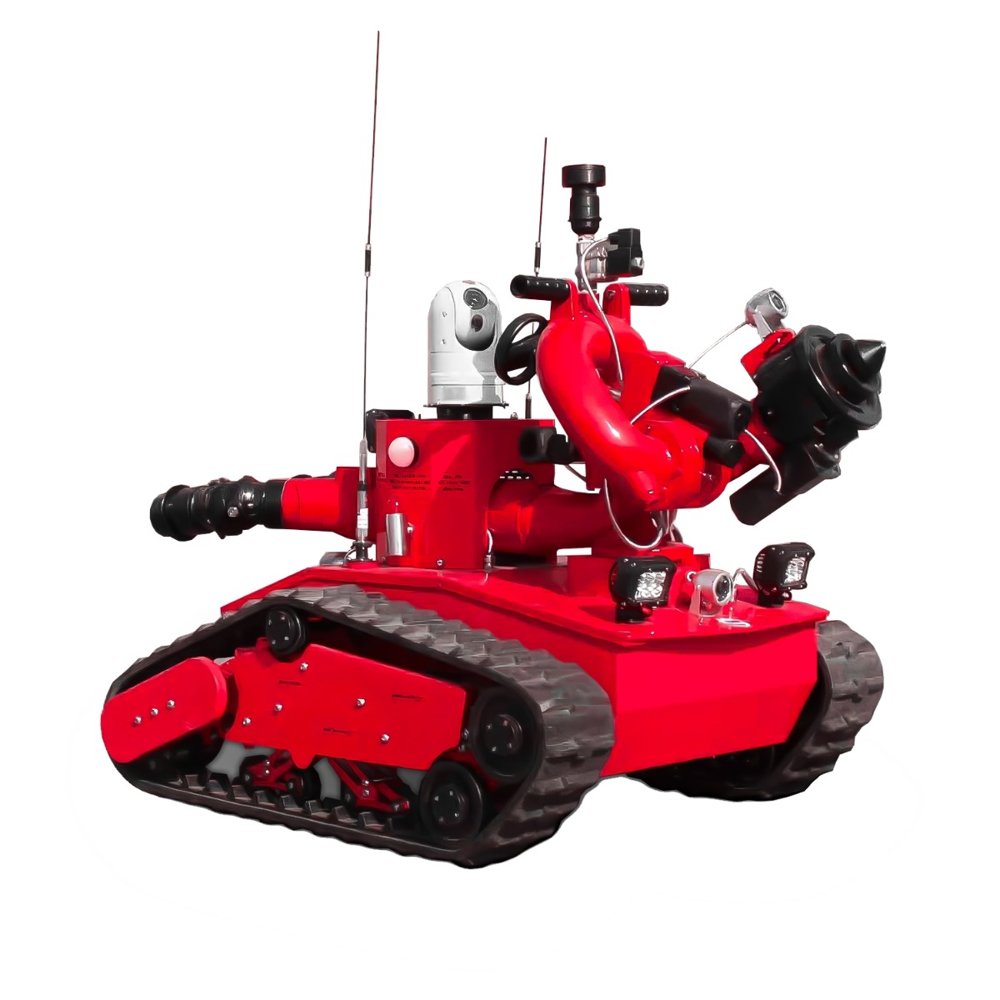
RXR-M40D-880T is a tracked firefighting robot with a 40 L/s water and foam monitor, a 65 m throw, IP67 protection and video transmission. Its size, about 1.2 x 0.9 x 1.1 m, keeps it manoeuvrable in industrial buildings and yards.
Explosion-proof robots: RXR-MC80BD and Topsky Dragon Conquest D4
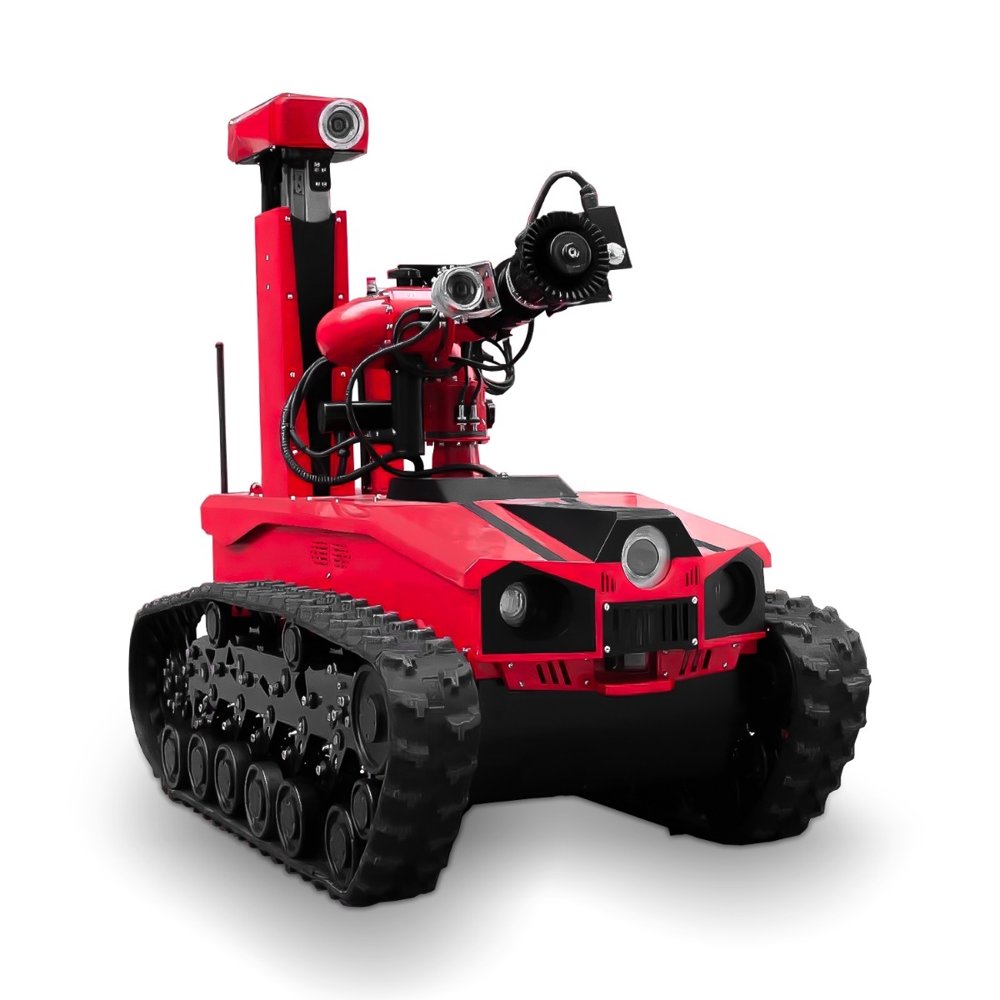
Guo Xing RXR-MC80BD is designed to the Chinese GB3836 explosion-proof standard for flammable, toxic, oxygen-deficient and smoke-filled scenes, with a remote control range listed at 1,000 m. Topsky Dragon Conquest D4 is a similar explosion-proof firefighting and scouting robot, listed at up to 1.81 m/s, 220 mm obstacle crossing, 500 mm wading depth and climbing of around 40 degrees.
Large and reconnaissance robots
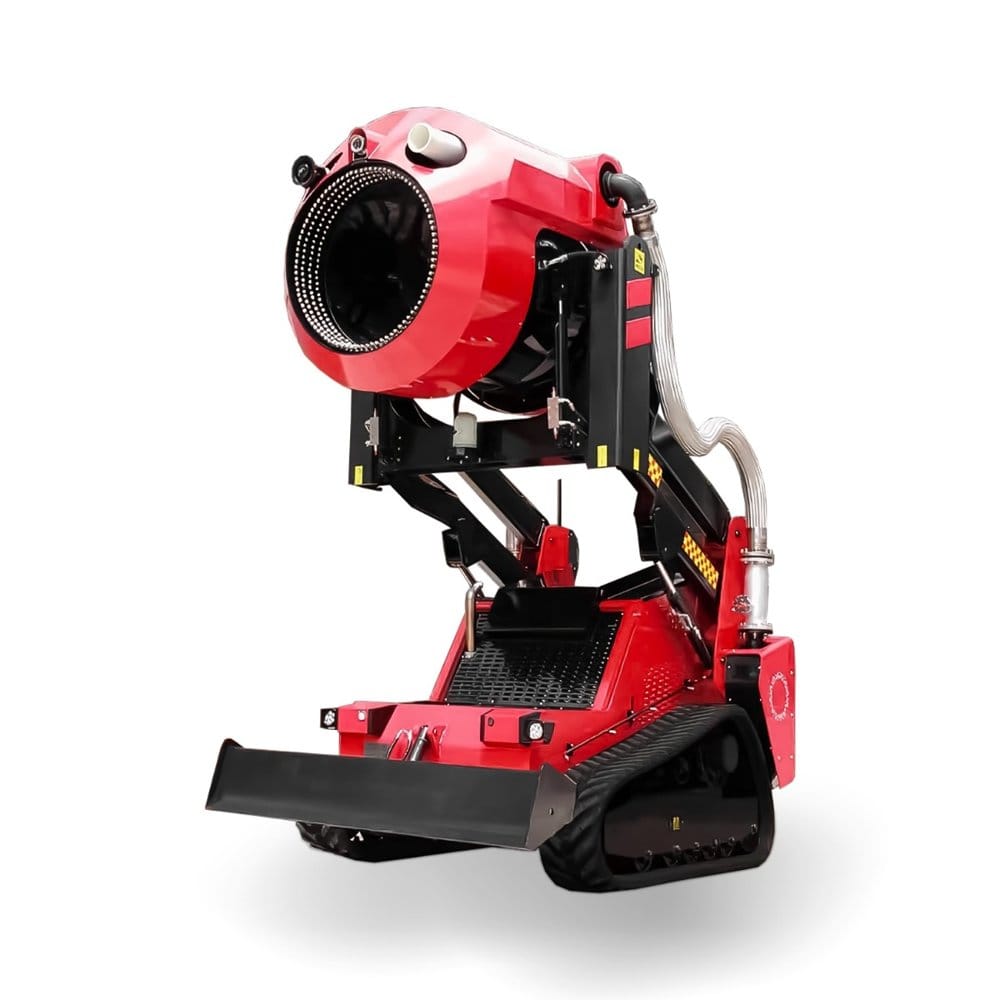
RXR-YM100000D is a large machine at about 3.2 x 1.8 x 2.5 m with a 1,000 m remote range, built for high-capacity intervention on large sites. RXR-C6BD is a smaller explosion-proof reconnaissance and rescue robot with a 360-degree camera, used to inspect a scene before crews enter. Other options include a 15 m high-reach firefighting robot and diesel-powered 4WD models for long operations.
Explosion protection: GB3836, ATEX and IECEx
Many of these robots are certified to China’s GB3836 explosion-proof standard. In the EU, equipment used in potentially explosive atmospheres must comply with the ATEX Directive 2014/34/EU, and international projects often reference IECEx. A GB3836 marking is not the same as ATEX conformity. If the robot will operate in classified hazardous areas, ask the supplier specifically for ATEX or IECEx certification of the exact configuration, and involve your safety officer before purchase.
For robots used outside hazardous zones, standard CE marking under the machinery and radio rules applies.
Buying for a fire service or industrial site
1Define the scenarios
Tunnel fires, tank farms, warehouses and chemical plants need different flow rates, sizes and protection levels.
2Check water supply and hoses
Flow rate is only useful if your hydrants, pumps and hose sizes can deliver it.
3Plan training and maintenance
Operators need regular training, and robots need maintenance between incidents to be ready when called.
4Follow procurement rules
Public fire services buy through public procurement procedures, so specifications, certifications and support terms must be documented. Our warranty and support checklist helps frame the questions.
For routine patrols and gas detection in plants, robot dogs may be a lighter option; see what robot dogs do in factories.
Referral note: When you request a quote from Robots Europa, mentioning Dijipedya and referral code 08AF5658 helps your enquiry be tracked correctly.
Frequently asked questions
What does a firefighting robot do?
It carries a water or foam monitor and cameras into dangerous fire scenes by remote control, so firefighters can work from a safer distance.
Are Chinese explosion-proof robots ATEX certified?
Not automatically. GB3836 is China’s standard. For use in EU hazardous areas, ask for ATEX or IECEx certification of the exact model.
How far can a firefighting robot be controlled from?
Several Guo Xing models list a remote control range of up to 1,000 m.
Who uses firefighting robots in Europe?
Municipal and industrial fire brigades, petrochemical and energy sites, tunnel operators and large logistics centres.
Compare firefighting and rescue robots and request a quote for your fire service or site.
Affiliate link: we may earn a commission if you buy through it, at no extra cost to you.
More from Dijipedya English