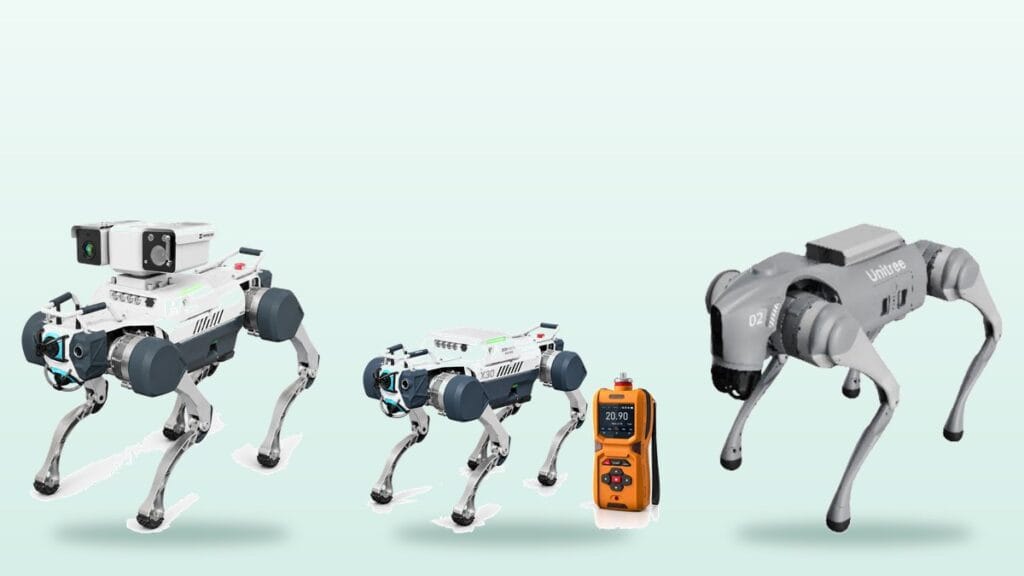
A large share of the price gap between robot dogs comes not from the body but from the sensors on top. The same platform can be affordable with a camera and LiDAR, and several times more expensive once a thermal camera, gas sensor, acoustic camera and RTK module are added. So the real question when buying a robot dog is which sensors you actually need.
This guide explains what LiDAR, cameras, thermal imaging, gas detection, acoustic imaging, RTK positioning and 3D scanning are for, and when each is worth paying for. For the inspection jobs themselves, see our guide to what robot dogs do in factories.
Contents
Sensors every robot dog has
1Camera
Every robot dog has one. It gives the operator a live view, records footage and reads gauges. Industrial models use cameras that cope with darkness and glare.
2LiDAR
LiDAR scans the surroundings with laser pulses to build a 3D map. It is the core sensor for obstacle avoidance, localisation and autonomous navigation. The Unitree Go2’s 4D LiDAR covers a 360 x 96 degree field of view; the Deep Robotics LYNX M20 carries two 96-line LiDARs.
3Autonomous navigation software
Not a sensor, but the layer that turns sensor data into useful work: mapping, route planning and returning to the charger. On some models it is sold as a separate navigation package. For routine patrols it is as essential as the camera.
Task-specific sensors
4Thermal camera
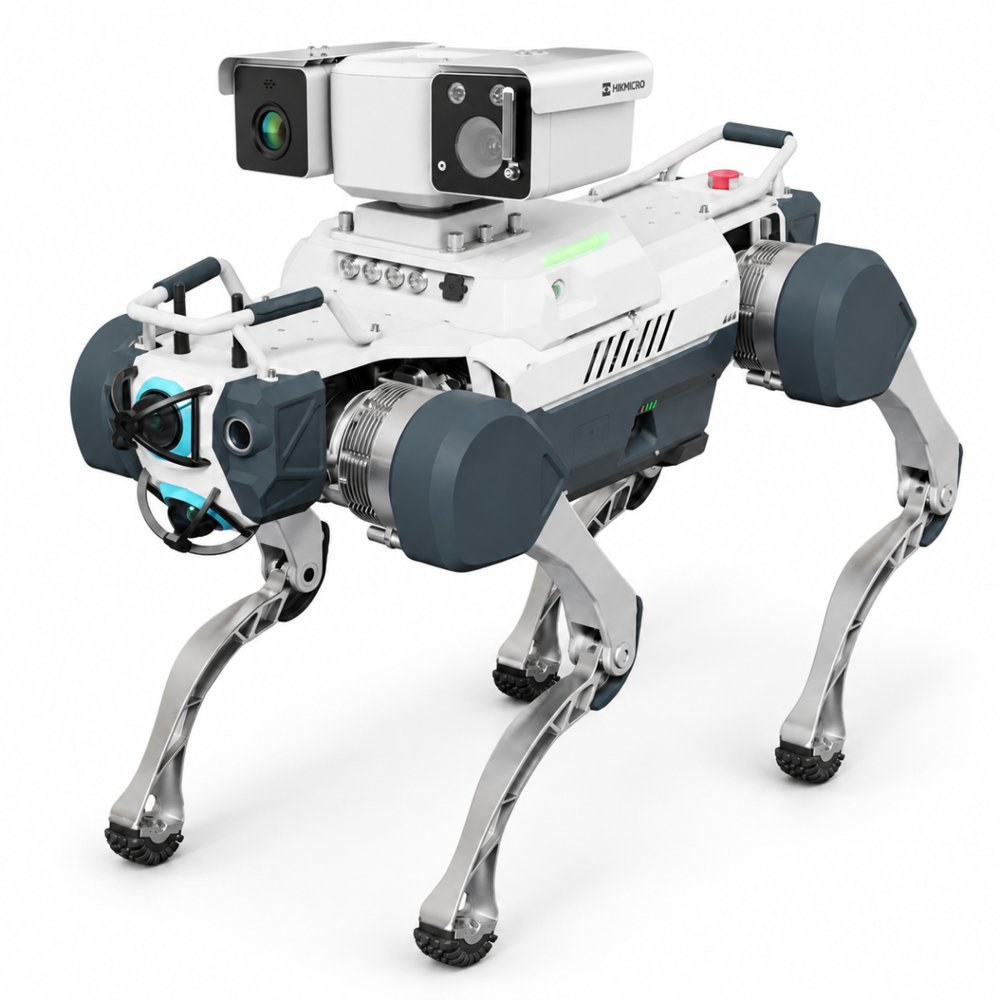
Measures surface temperature and reveals overheating motors, bearings and electrical connections before they fail. Industrial deployments favour PTZ cameras that combine thermal and visible imaging; the HIKVISION unit offered for the X30 has 32x optical zoom and threshold alarms.
5Gas sensor
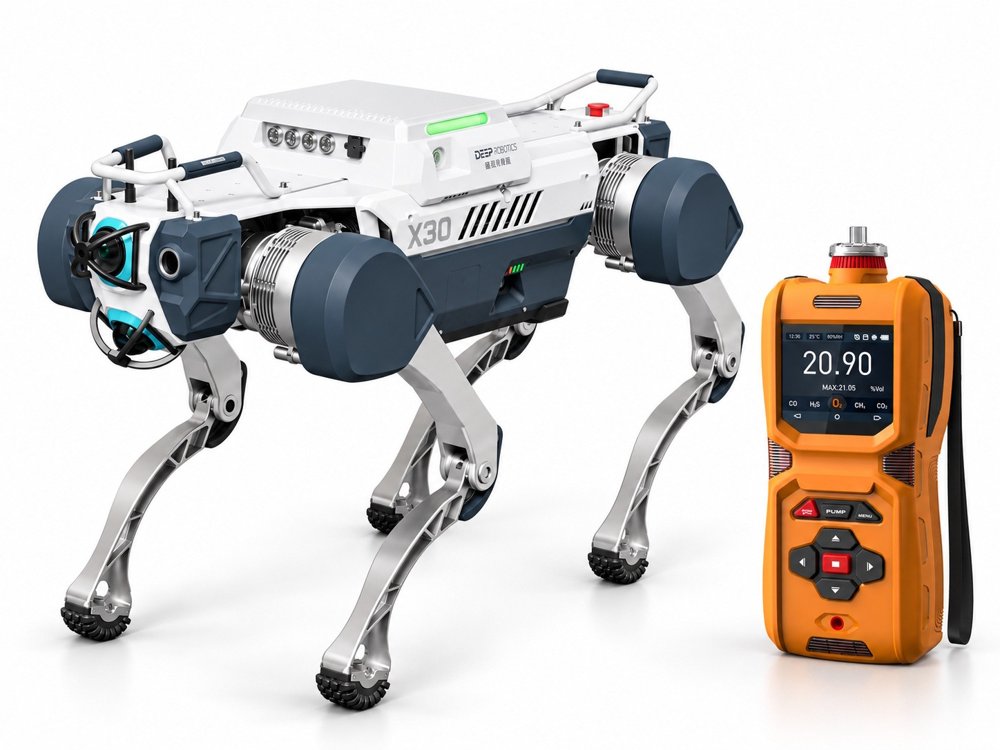
Measures toxic or flammable gas build-up in enclosed spaces and chemical sites. Multi-gas units such as the Eranntex MS600 measure carbon monoxide from 0 to 1,000 ppm and hydrogen sulphide from 0 to 100 ppm, and also monitor oxygen, combustible gas, carbon dioxide and nitrogen oxides. For a lighter platform there is the Go2 ENT Gas version.
6Acoustic camera
Shows where a sound comes from on a live image. It is used to find leaks in compressed air or gas lines and partial discharge in electrical equipment. The Lianfeng XS-SN-7FA13 uses a 128-channel microphone array and works from 0.5 to 50 metres.
7RTK positioning
Brings satellite positioning down to centimetre accuracy using GNSS signals, including Europe’s Galileo system. It is needed on large outdoor sites such as solar farms, quarries and substations where the robot must repeat a route precisely. Fixposition VRTK delivers 1 cm plus 1 ppm horizontal and vertical accuracy with an RTK fix. Indoors, RTK does not work and LiDAR-based localisation is enough.
83D laser scanner
Creates a detailed 3D model of a facility. Scanners such as the Qiyu K1 support digital twin, layout planning and construction progress projects.
Which sensor for which job?
| Task | Sensors you need | Usually unnecessary |
|---|---|---|
| Teaching, research, demos | Camera, LiDAR | Thermal, gas, RTK |
| Indoor security patrol | Camera, LiDAR, navigation package | Gas, RTK |
| Electrical panel and motor inspection | Thermal camera, camera, LiDAR | RTK |
| Chemical plant or wastewater site | Gas sensor, camera, LiDAR | 3D scanner |
| Substations and power lines | Thermal camera, acoustic camera | Gas sensor (site dependent) |
| Solar farm or large outdoor site | RTK, camera, thermal camera | Acoustic camera |
| Digital twin and mapping | 3D laser scanner, LiDAR | Gas sensor |
How to avoid paying for sensors you do not need
A common mistake for first-time buyers is adding every sensor for every possible scenario. Most industrial platforms are modular, so sensors can be added later. Start with the sensors for your most frequent task, run a pilot and add more once the need is proven.
Two European specifics are worth checking early. Standard robot dogs are not certified for explosive atmospheres; use in ATEX zones requires equipment certified under the ATEX Directive and a site safety assessment. And if cameras record people on site, GDPR applies, so agree retention and access rules with your data protection officer. Large sites may also need 5G modules or mesh relays for reliable data links.
Platforms that carry sensor payloads
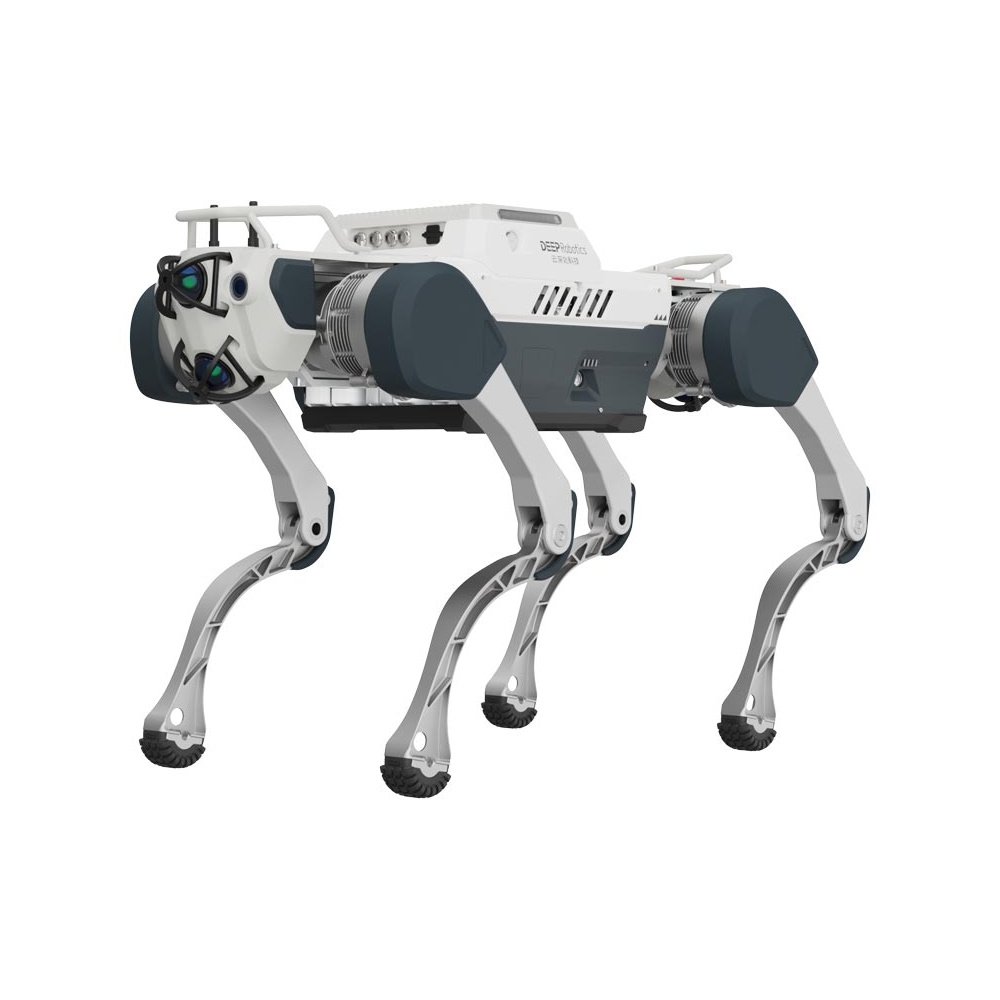
For heavy, multi-sensor payloads, Deep Robotics X30 Pro stands out with IP67 protection and a broad accessory ecosystem. Unitree B2 can walk with more than 40 kg, enough for heavy sensor packs. LYNX M20 combines a 15 kg payload with wheeled legs for fast patrols of large sites. For a lower-cost start with lighter sensors, Go2 ENT is the entry point. Consumer and research models are compared in our Go2 and Lite3 guide.
Referral note: When you request a quote from Robots Europa, mentioning Dijipedya and referral code 08AF5658 helps your enquiry be tracked correctly.
Frequently asked questions
Does every robot dog have LiDAR?
No, but most current models do. It matters for autonomous navigation and obstacle avoidance; simple remote-controlled models may not have it.
Can sensors be added later?
Most industrial models are modular and accept sensors later. Check which accessories are compatible with your platform.
Can a robot dog measure gas in an explosive atmosphere?
Standard robot dogs are not ATEX certified. Explosive atmospheres require specially certified equipment and a safety assessment.
Does RTK work indoors?
No. RTK relies on satellite signals, so it is used outdoors. Indoors, LiDAR and vision-based localisation are used.
Compare inspection robots and sensor payloads and request a quote for your site in Europe.
Affiliate link: we may earn a commission if you buy through it, at no extra cost to you.
More from Dijipedya English