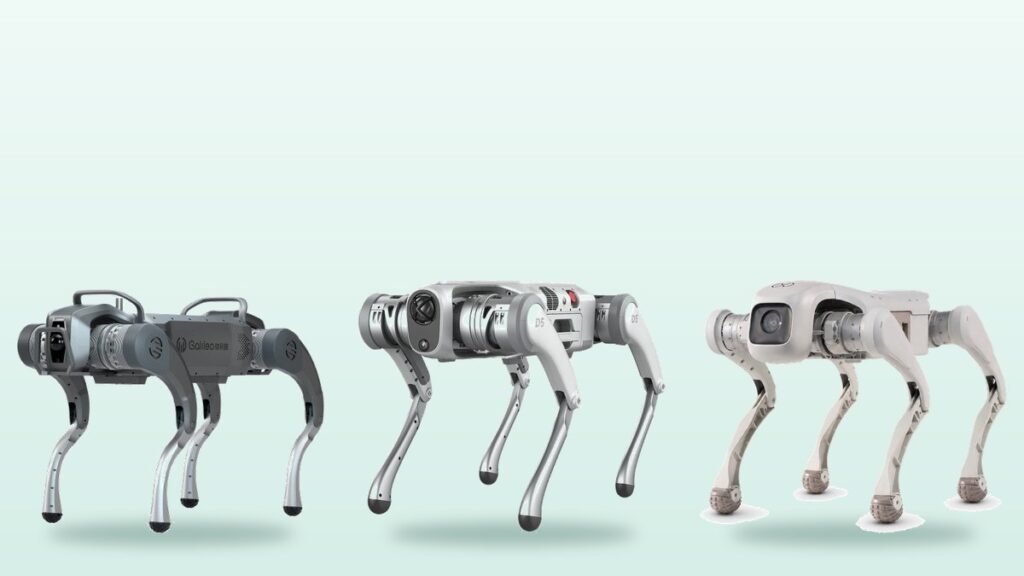
Unitree and Deep Robotics dominate the robot dog market, and we have compared their models in our Go2 and Lite3 guide and industrial inspection guide. But in 2026 European buyers can also choose from Galileo, PUDU and Faraday Future, with models ranging from compact patrol robots to 118 kg platforms that carry 100 kg.
This guide compares these alternatives on size, payload, protection and intended use.
Contents
Why look beyond Unitree and Deep Robotics?
Alternatives matter for three reasons: heavier payloads than mainstream models, specialised versions such as explosion-proof or wheeled designs, and a second source for fleets and long projects.
Robot dog alternatives at a glance
| Model | Class | Published highlights |
|---|---|---|
| Galileo C1 | Compact | 960 Wh battery, autonomous charging, long standby |
| Galileo E1 | Mid-size | Dual ARM and x86 computing, 1,440 Wh battery |
| Galileo E1-W | Mid-size, wheeled | Wheel-legged version of E1 |
| Galileo S1 | Heavy industrial | 118 kg, 100 kg walking load, up to 3.5 m/s, 3.5 to 5 h |
| Galileo EX-1 | Explosion-proof | 120 kg, 30 kg load, 2 h, 500 N·m joint torque |
| PUDU D5 | Industrial | 61 kg, IP67, -20 to 55 °C, 250 mm steps, 30° slopes |
| PUDU D5-W | Industrial, wheeled | Wheel-legged version of D5 |
| FX Aegis | Multi-purpose | Wi-Fi and 5G, battery swapping, patrol and follow modes |
Values come from Robots Europa product pages; check the exact configuration on your quote.
Galileo: from compact to heavy industrial
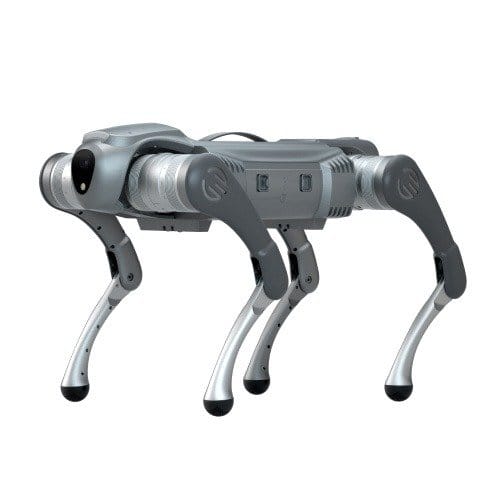
Galileo C1 is the compact model, with a 48 V, 960 Wh battery, autonomous charging and a low-power standby mode listed at a year or more, which suits remote patrols. Galileo E1 adds a dual computing architecture with ARM and x86 processors and a 1,440 Wh battery; E1-W puts wheels on its feet for faster travel on flat ground.
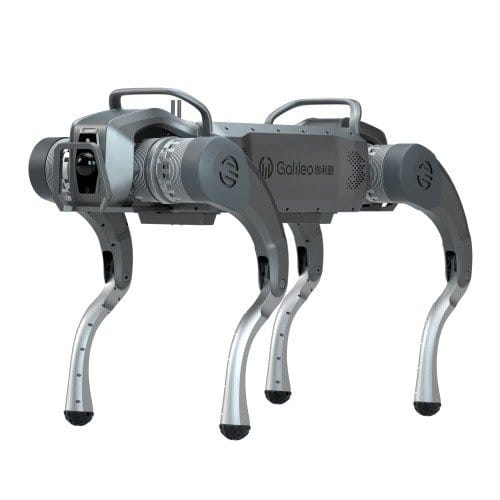
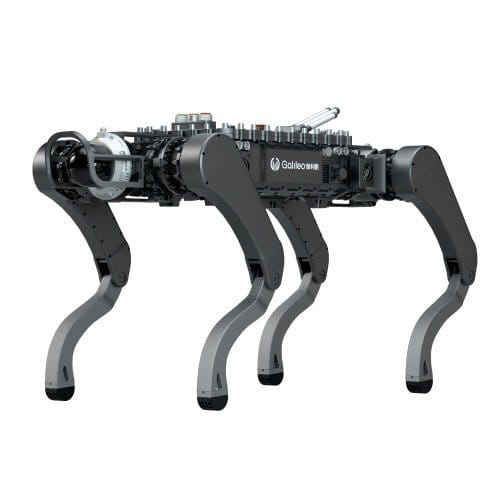
Galileo S1 is a heavy industrial platform: 1,200 x 550 x 650 mm, 118 kg, dual batteries totalling 3,540 Wh, speeds up to 3.5 m/s, slopes of at least 30 degrees, 3.5 to 5 hours of runtime and a continuous walking load of 100 kg. Galileo EX-1 is an explosion-proof version weighing 120 kg with a 30 kg load and 2 hours of runtime; for EU hazardous areas, ask for ATEX or IECEx certification of the exact model.
PUDU D5 and D5-W
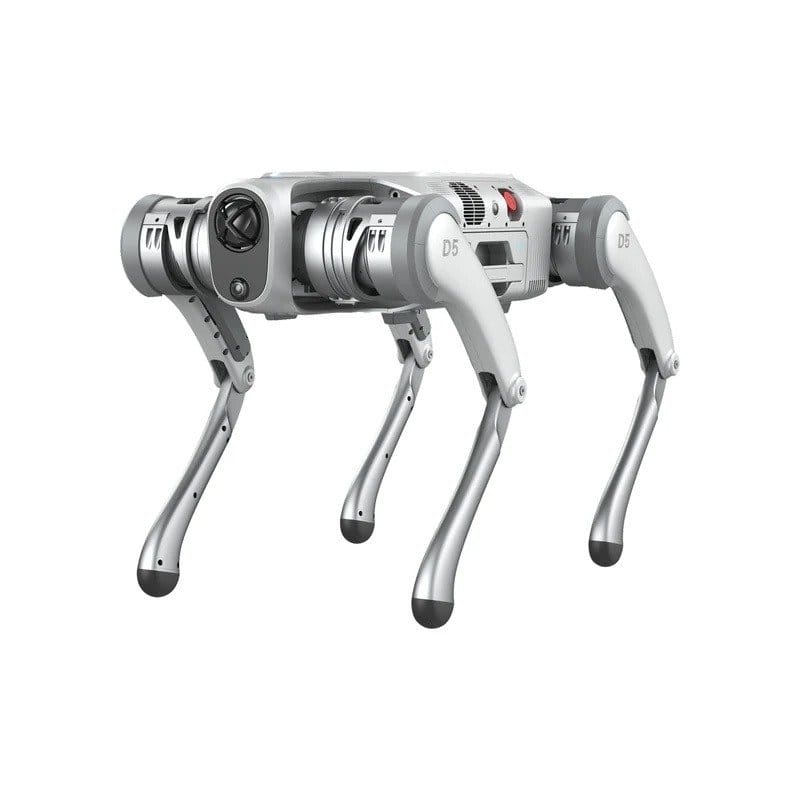
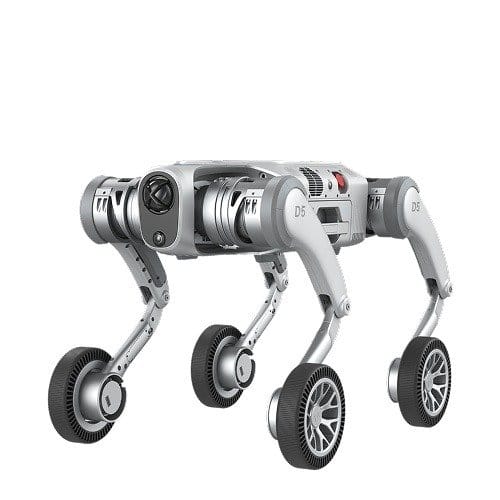
Better known for service robots, PUDU entered the industrial quadruped market with PUDU D5: 900 x 543 x 572 mm, 61 kg, IP67, an operating range of -20 to 55 °C, 250 mm steps and 30-degree slopes. D5-W is the wheel-legged version for large sites.
Faraday Future FX Aegis
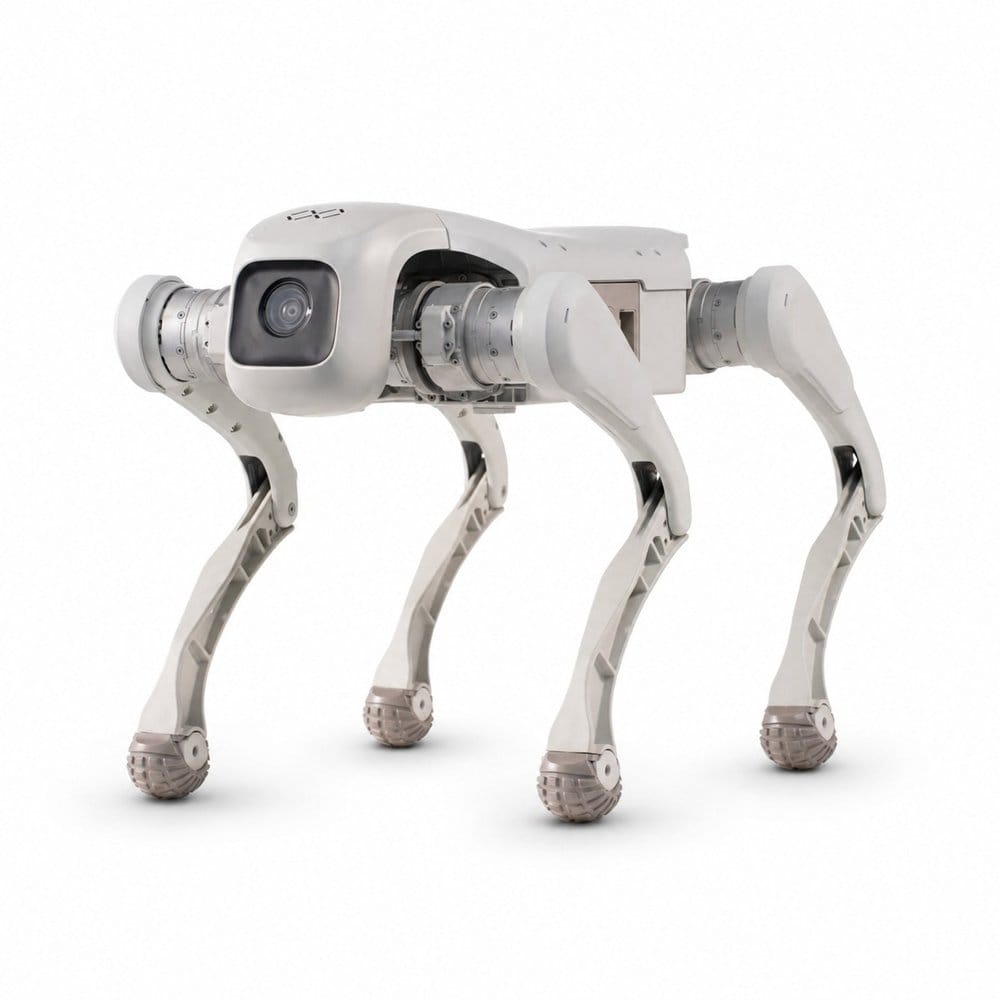
Faraday Future’s FX Aegis family targets security, education, research and companionship, with Wi-Fi and 5G, high-power drive modules, battery swapping and autonomous patrol and follow modes. The range spans Edu, Pro and Ultra versions plus wheel-legged models.
Which one for which job?
1Heavy payloads and long routes
Galileo S1, with a 100 kg walking load.
2Harsh outdoor conditions
PUDU D5, with IP67 and a wide temperature range.
3Large flat sites
Wheel-legged versions such as Galileo E1-W or PUDU D5-W.
4Security patrols and education
FX Aegis or Galileo C1. For sensors, see our robot dog sensors guide.
Referral note: When you request a quote from Robots Europa, mentioning Dijipedya and referral code 08AF5658 helps your enquiry be tracked correctly.
Frequently asked questions
What are the best alternatives to Unitree robot dogs?
Galileo, PUDU and Faraday Future offer models from compact patrol robots to heavy industrial platforms, depending on the job.
Which robot dog carries the most weight?
Among these, Galileo S1 lists a 100 kg continuous walking load.
Are there explosion-proof robot dogs?
Galileo EX-1 is an explosion-proof model. In the EU, ask for ATEX or IECEx certification before use in hazardous zones.
What is a wheel-legged robot dog?
A quadruped with wheels on its feet that rolls on flat ground and walks over obstacles and stairs.
Compare robot dogs from every brand and request a quote for delivery in Europe.
Affiliate link: we may earn a commission if you buy through it, at no extra cost to you.
More from Dijipedya English