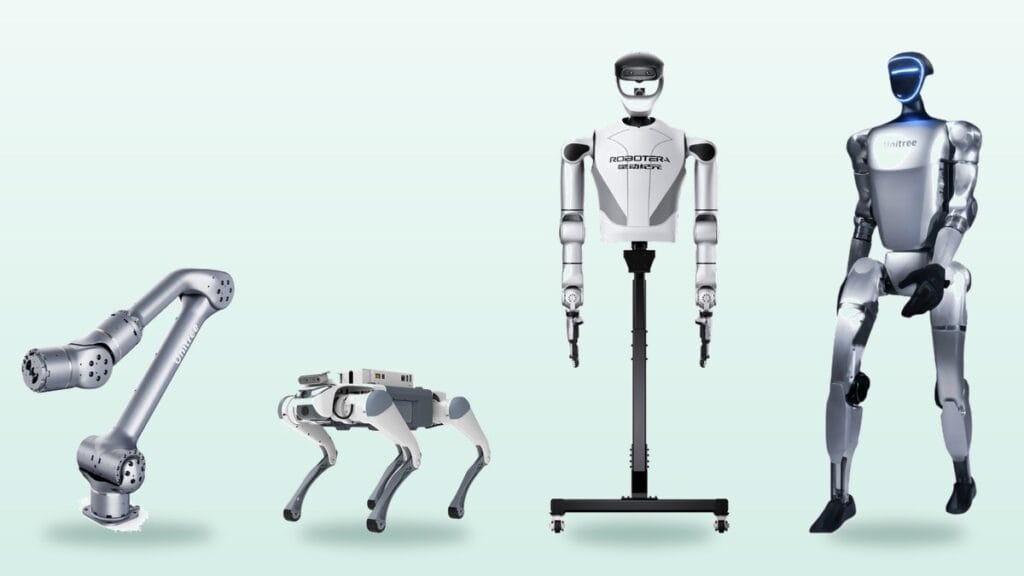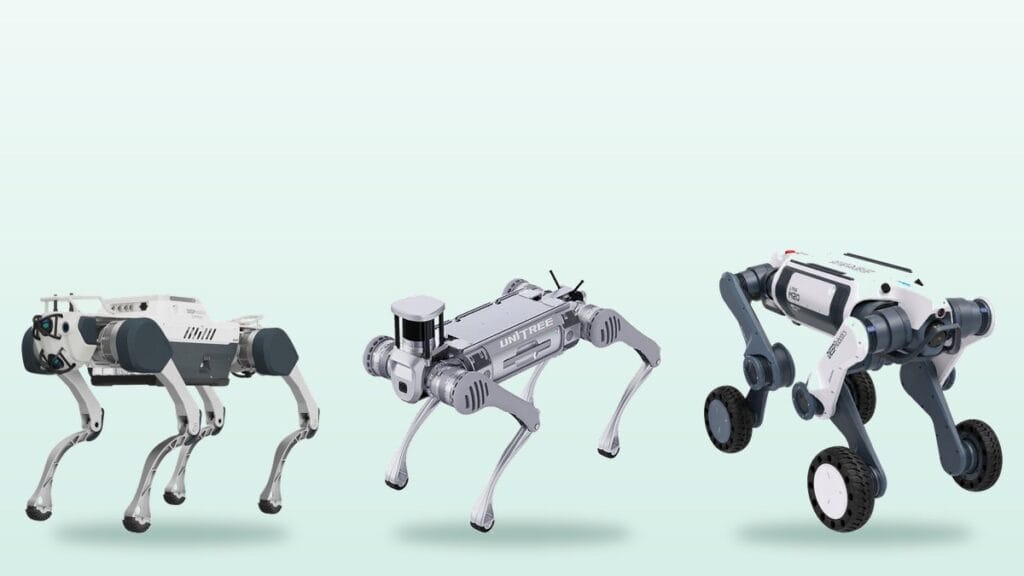
On social media, robot dogs dance and do backflips. In factories, substations and chemical plants they do something far less glamorous and far more valuable: they walk the same route every day, read gauges, measure temperatures, check for gas leaks and turn what they see into reports.
This guide explains which jobs robot dogs actually take on in industrial sites, which models are designed for them and where their limits lie. For the sensor side, see our robot dog sensors guide.
Contents
Why legged robots in industrial sites?
Industrial sites are not flat floors built for wheeled robots. Stairs, cable trays, grating, thresholds and narrow walkways stop wheeled inspection vehicles quickly. Four-legged robots can handle these obstacles and use the same routes as people, so autonomous patrols are possible without new infrastructure.
The other reason is repetition. Routine inspection rounds done several times a day take time and expose staff to risk in hazardous areas. With technical staff in short supply across much of Europe, a robot that completes the same route and stops at the same points every time frees people for maintenance and repairs, and produces data that is comparable over time.
Six jobs robot dogs do in factories
1Routine patrols and gauge reading
The robot follows a predefined route, stops at set points and records analogue gauges, valve positions and displays. Vision software reads the values and flags anything outside the normal range.
2Thermal inspection
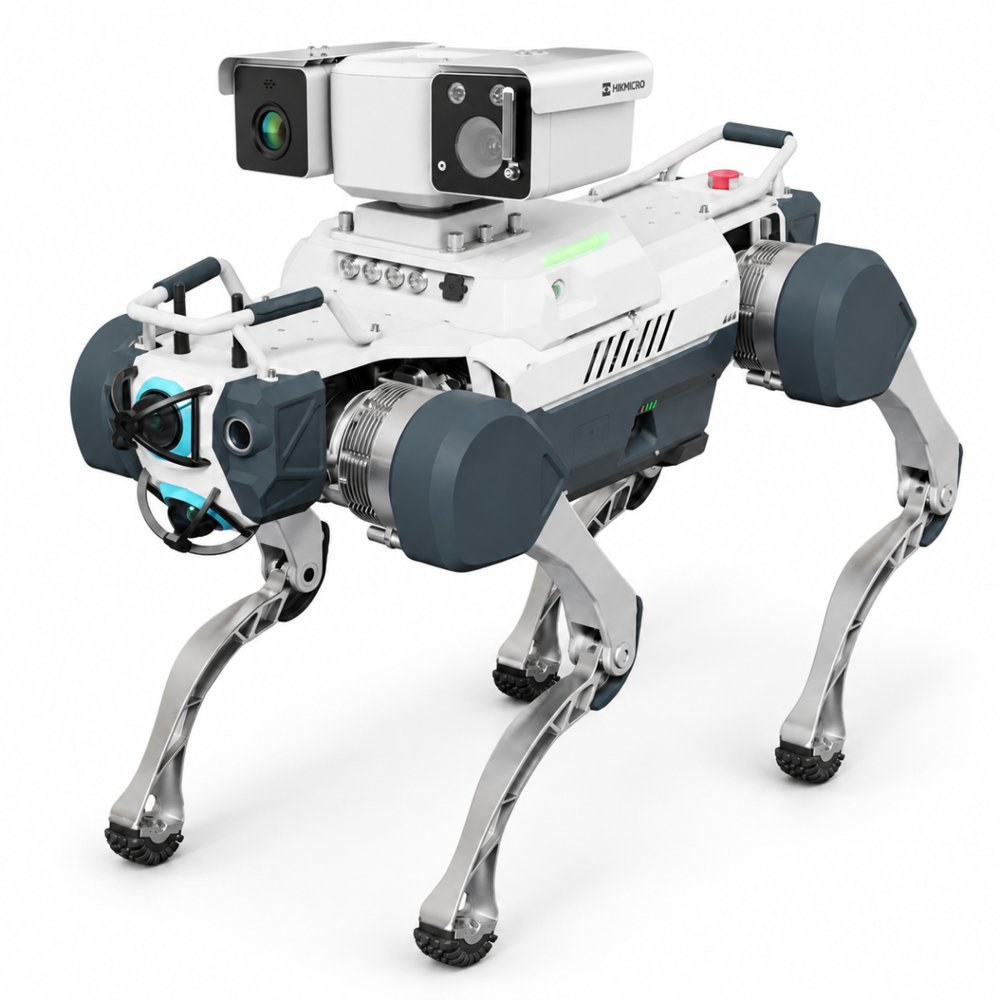
Overheating motors, bearings, panel connections and cables show up on a thermal camera before they fail. The HIKVISION thermal PTZ camera offered for the Deep Robotics X30 has 32x optical zoom and raises alarms above a set temperature.
3Gas leak detection
In chemical, energy and wastewater sites, a robot dog carrying a gas sensor checks areas where it is risky to send people. The Eranntex MS600 sensor for the X30 measures carbon monoxide, hydrogen sulphide, oxygen, combustible gas, carbon dioxide and nitrogen oxides. For a lighter platform there is Unitree Go2 ENT Gas.
4Acoustic inspection
Acoustic cameras turn sounds outside human hearing into an image, so leaks in pressurised lines and partial discharge in electrical equipment can be located from a distance.
53D scanning and mapping
A robot dog with LiDAR and a laser scanner can capture an up-to-date 3D model of the site for layout planning, digital twins and change tracking.
6Security and emergency support
Night patrols, intruder detection and first reconnaissance of an area before people enter are further uses. Unitree also offers dedicated fire and rescue versions of the B2.
Models built for industrial use
| Model | Key features | Best suited to |
|---|---|---|
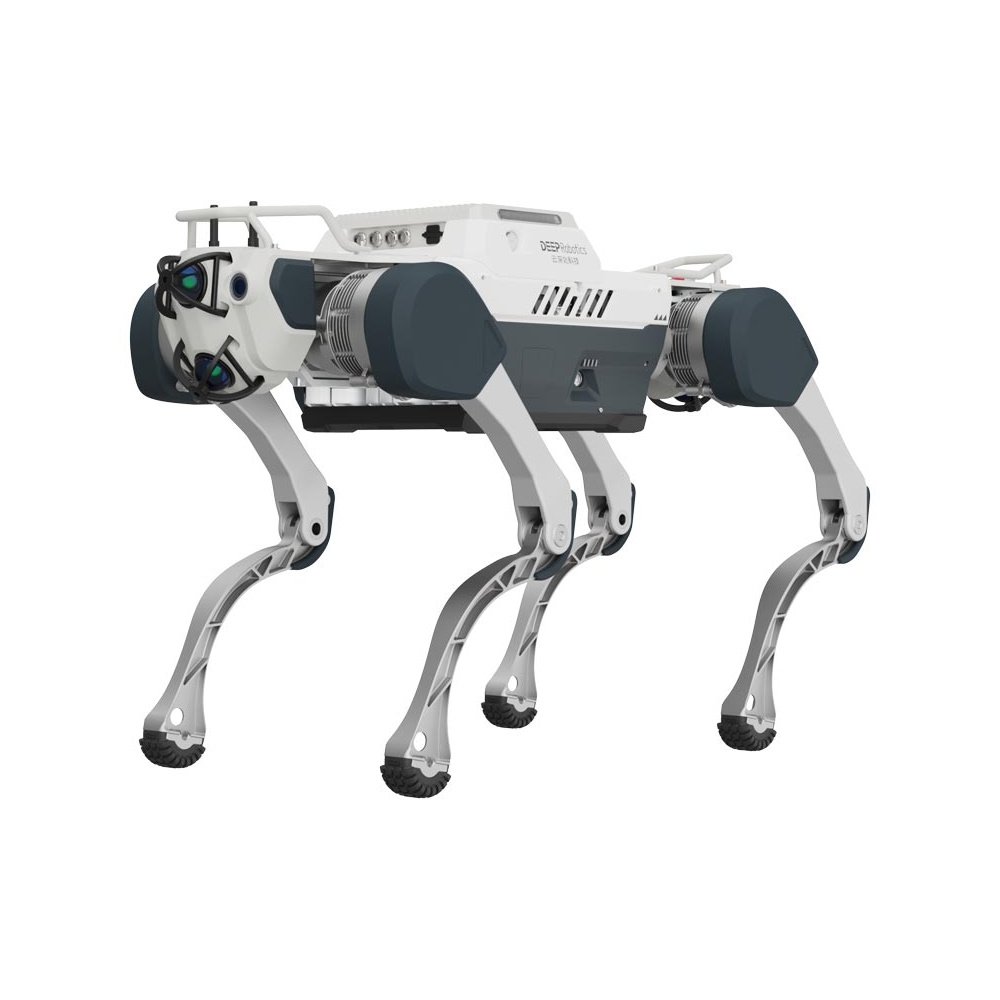
| Deep Robotics X30 Pro | IP67, -20 to 55 °C, 45° slopes, 20 cm obstacles, 2.5 to 4 h | Substations, energy sites, harsh outdoor environments |
| Unitree B2 | About 60 kg, over 40 kg walking payload, 2,250 Wh battery | Heavy sensor payloads, long routes, search and rescue |
| Deep Robotics LYNX M20 | Wheeled legs, 15 kg payload, about 15 km in 3 h, 25 cm steps | Fast patrols of large sites |
| Unitree Go2 ENT | 15 kg, 4D LiDAR, 4G | Pilots and light indoor inspection |
Figures come from retailer and manufacturer pages. Real runtime drops with heavy sensor payloads and rough terrain.
What robot dogs cannot do
Robot dogs are still very limited at physical intervention: opening doors, turning valves or replacing parts. Some models accept a robot arm, but these jobs remain largely human. The robot detects; people act.
Explosive atmospheres are a separate matter. Standard robot dogs are not certified for ATEX zones; use there requires equipment certified under the ATEX Directive and a site safety assessment. Weak Wi-Fi or mobile coverage may also call for extra communications infrastructure, and cameras recording staff bring GDPR obligations.
How to start a pilot
Pick one routine inspection round where people spend the most time or face the most risk. Define which data the robot must collect on that route, which sensors are essential and who receives the reports. A pilot of a few weeks shows clearly whether the robot saves time.
Plan technical support, spare batteries and delivery from the start; our guide to buying a robot in Europe covers VAT, CE and battery shipping. You can compare all industrial platforms in the inspection robot range.
Referral note: When you request a quote from Robots Europa, mentioning Dijipedya and referral code 08AF5658 helps your enquiry be tracked correctly.
Frequently asked questions
Can a robot dog work fully autonomously in a factory?
It can patrol pre-mapped routes autonomously. Operators step in for unexpected situations and any physical intervention.
Do robot dogs work in rain and dust?
Industrial models are designed for it; the Deep Robotics X30, for example, is IP67 rated. Consumer models are more sensitive to outdoor conditions.
How many people does a robot dog replace?
A simple ratio would be misleading. The robot takes over routine rounds so staff can spend more time on troubleshooting and maintenance.
Can robot dogs be used in ATEX zones?
Not standard models. Explosive atmospheres require ATEX-certified equipment and a safety assessment.
Compare industrial robot dogs and inspection payloads and request a quote for your site.
Affiliate link: we may earn a commission if you buy through it, at no extra cost to you.
More from Dijipedya English