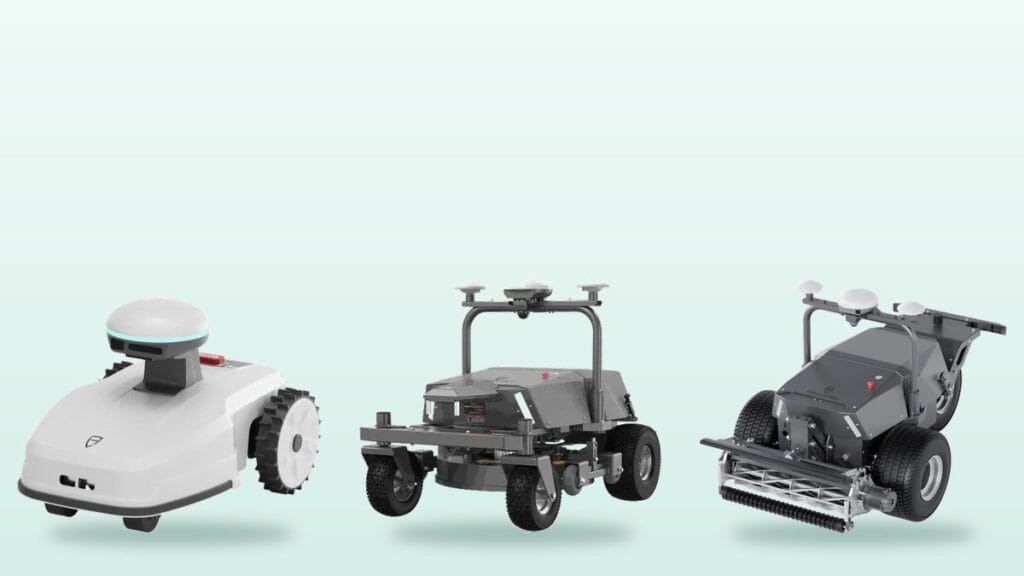
Grounds teams at golf clubs, football clubs, councils and hotel resorts across Europe have the same problem every spring: the grass grows faster than they can find staff to cut it. Commercial robotic mowers handle the repetitive cutting, often overnight and quietly, so greenkeepers can focus on the skilled work that really shapes turf quality.
This guide explains how commercial robotic mowers differ from garden models and compares FJ Dynamics (FJD) mowers, from 4,000 m² lawns to golf greens and full sports complexes. For other business robots, see our business robot buyer’s guide.
Contents
Who uses commercial robotic mowers?
1Golf courses
Fairways, roughs and driving ranges need frequent, consistent cutting; greens need tournament-grade reel mowing at very low heights.
2Football, rugby and hockey clubs
Pitches benefit from little-and-often cutting, and robots can also mark lines before match days.
3Councils and public parks
Large green spaces with predictable layouts suit scheduled autonomous mowing.
4Hotels, campuses and business parks
Grounds stay tidy without noisy daytime mowing near guests or staff.
How they navigate: RTK, LiDAR and vision
Garden robot mowers usually rely on a boundary wire. Commercial models increasingly use RTK satellite positioning, which corrects GNSS signals, including Europe’s Galileo system, down to centimetre level. Many add LiDAR or cameras to detect obstacles and handle areas under trees or near buildings where satellite signals weaken. The result is straight stripes, accurate edges and virtual boundaries drawn in an app instead of buried wire.
FJD robotic mowers compared
| Model | Coverage | Navigation | Cutting width | Best for |
|---|---|---|---|---|
| FJD Vela | Up to 4,000 m² per 24 h | LiDAR, virtual wire | 260 mm | Hotel lawns, villas, small grounds |
| FJD FV2000 | 2,000 m² recommended | RTK and vision | 260 mm | Complex lawns with obstacles |
| FJD FR4000 | 4,000 m² recommended | RTK, 33° slopes | 260 mm | Large lawns, small sports fields |
| FJD Rough Ranger | 12,000 m² per charge | Commercial autonomous platform | 635 mm | Golf roughs, driving ranges, sports fields |
| FJD RCM01 | 30,000 m² per day | RTK and LiDAR | 686 mm reel, 7 to 44 mm height | Golf fairways and tournament turf |
| FJD Titan | Up to 126,000 m² over 72 h | Commercial autonomous platform | 730 mm | Golf courses, large public green spaces |
Coverage and specifications are manufacturer figures listed by Robots Europa; real performance depends on terrain, grass growth and obstacles.
The models in detail
Vela, FV2000 and FR4000: premium lawns and small fields
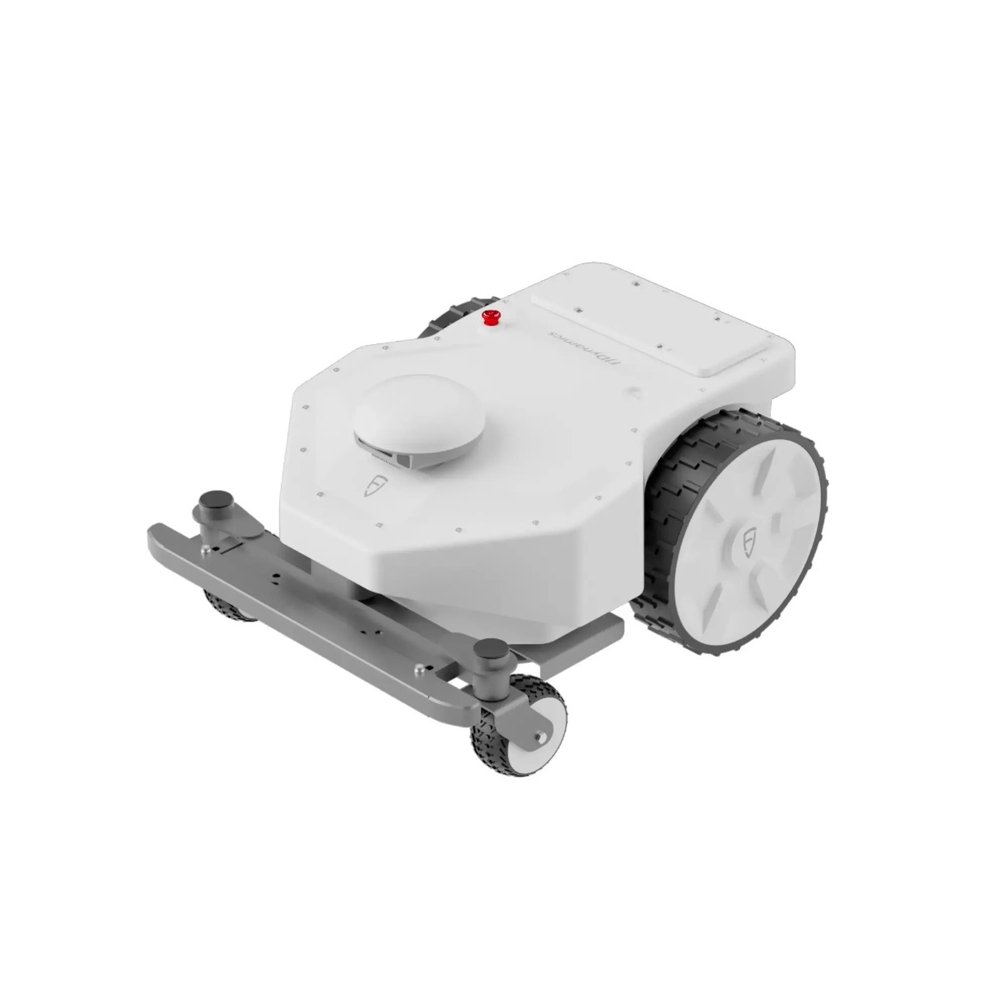
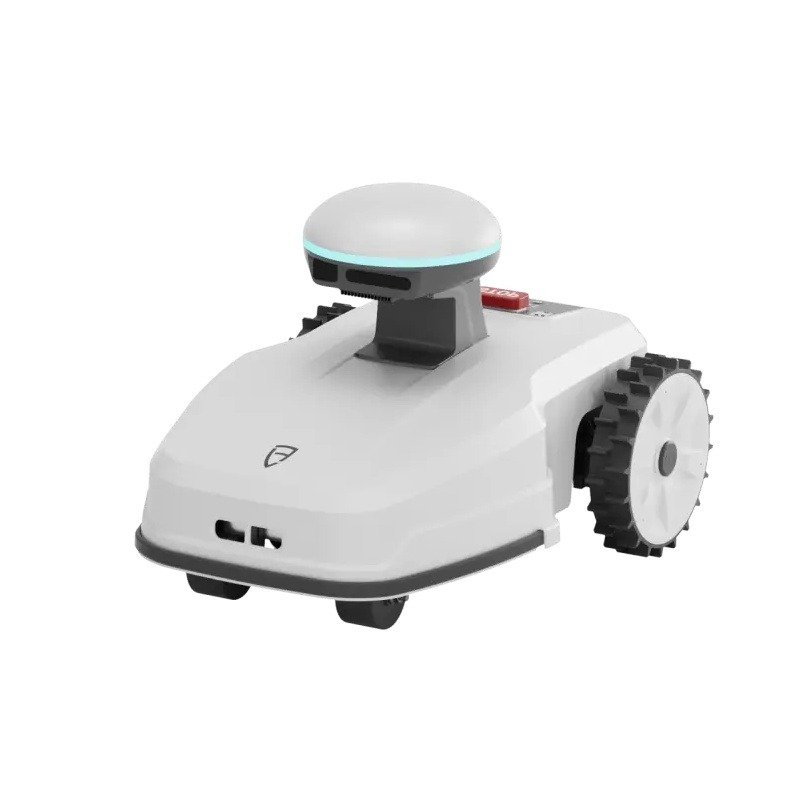
FJD Vela uses LiDAR and virtual wire to cover up to 4,000 m² a day with a 260 mm cut, multi-zone control, edge trimming, rain detection and anti-theft features. It is IPX5 rated. FR4000 swaps to RTK positioning and climbs 33-degree slopes, while FV2000 combines RTK with vision for lawns full of obstacles.
Rough Ranger: the multi-tool for sports turf
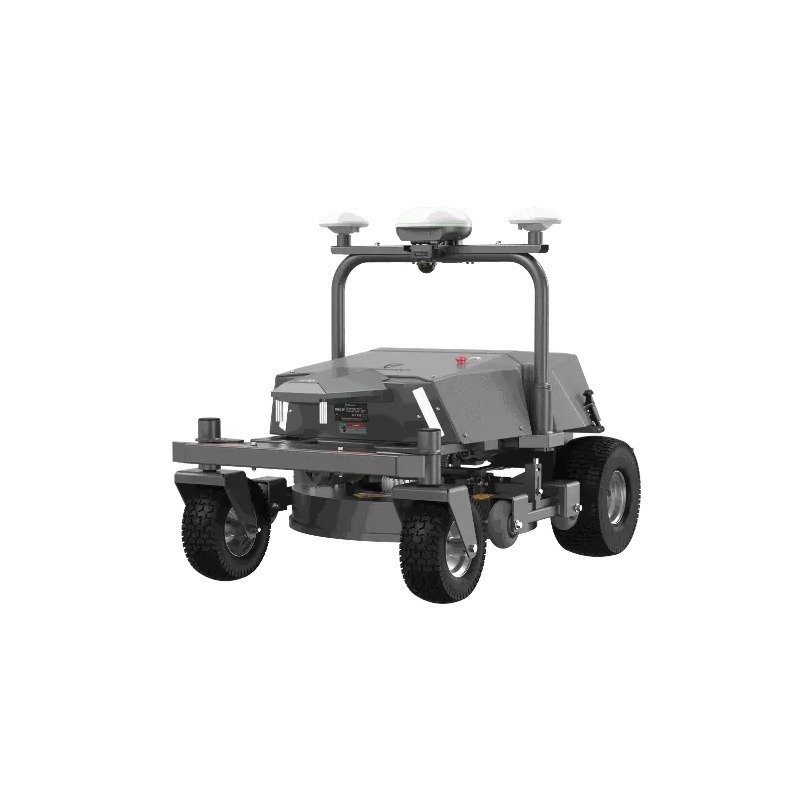
FJD Rough Ranger is a 170 kg professional platform with a 635 mm cut and a 4 kWh battery covering about 12,000 m² per charge. Interchangeable kits turn it into a ball picker, line marker, grass collector or dew brush, which makes it attractive for driving ranges and multi-pitch sports clubs.
RCM01 and Titan: golf-course scale
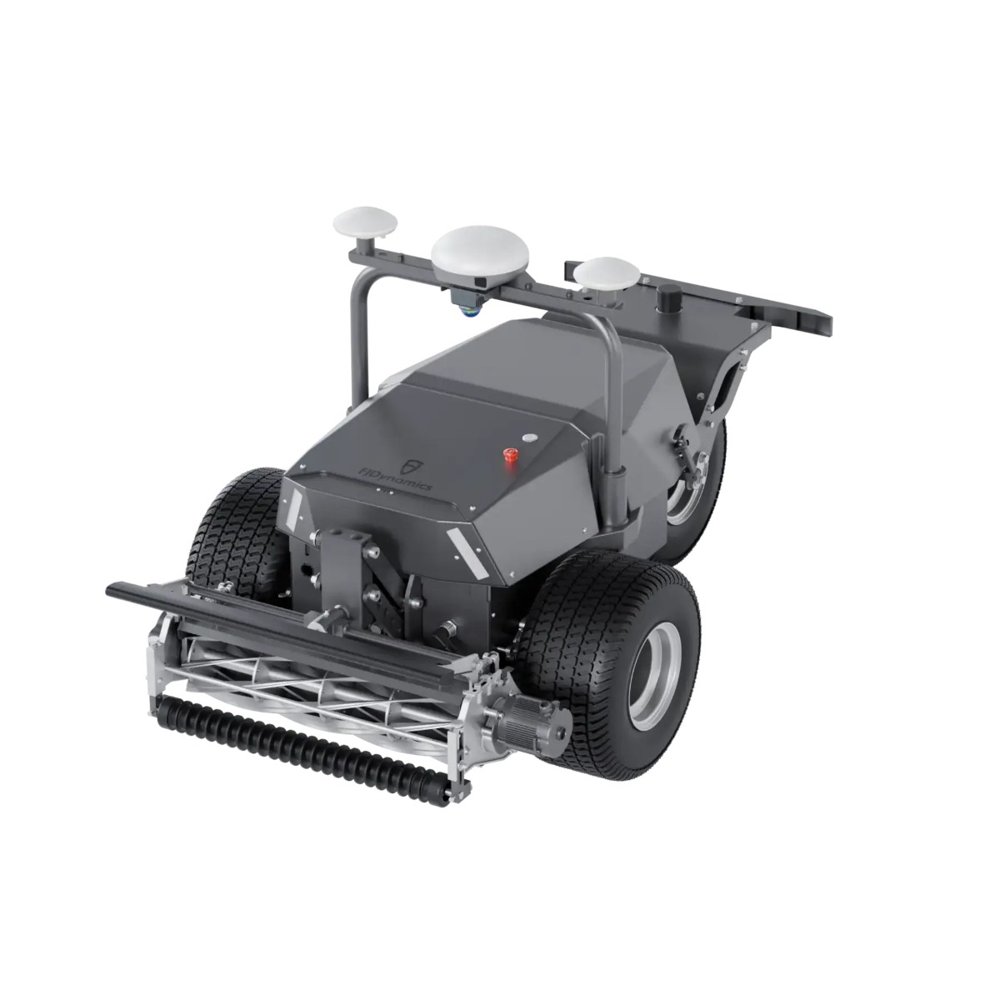
FJD RCM01 is a robotic cylinder (reel) mower for tournament-grade turf. With RTK and LiDAR navigation, a 686 mm cut, cutting heights from 7 to 44 mm and an 8 kWh battery, it can cover around 30,000 m² in a day. FJD Titan is the high-capacity option for large green spaces, with a 730 mm cut, up to 126,000 m² over 72 hours in fast-swap mode, and an optional line-marking kit.
Line marking robots for sports fields
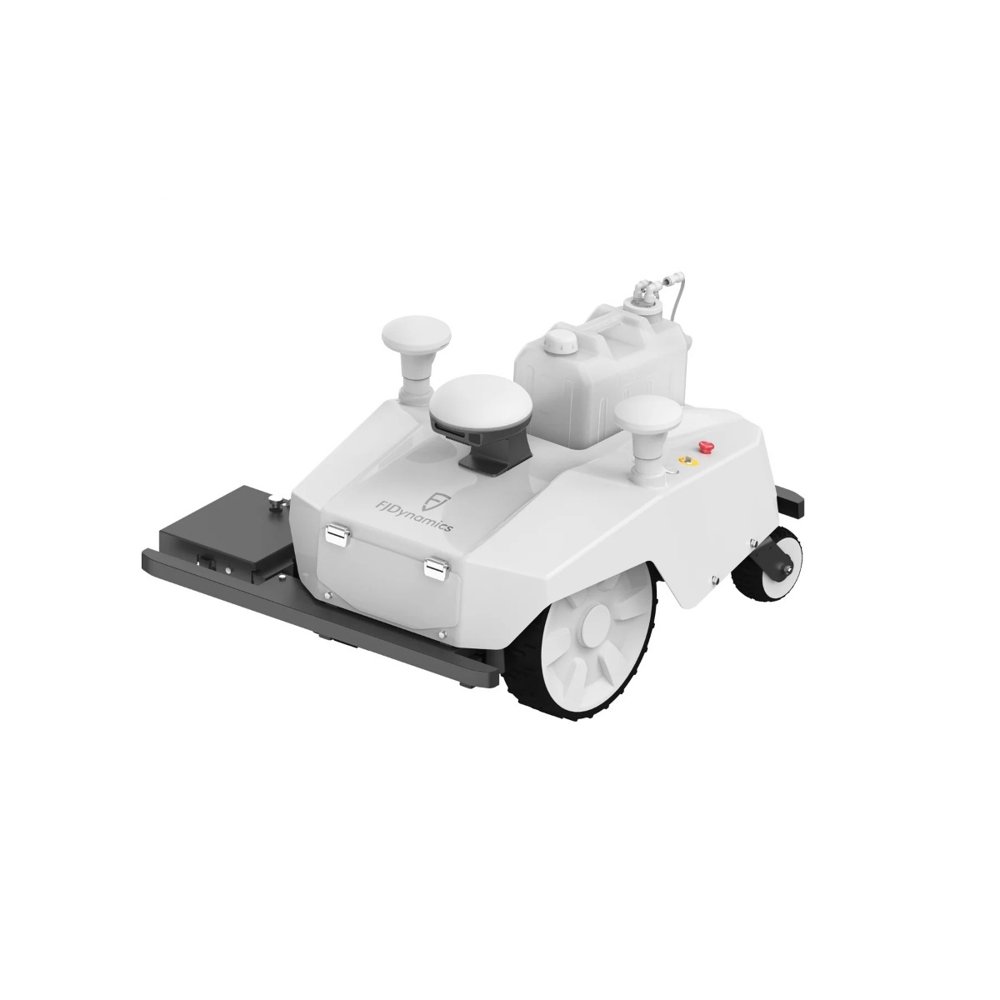
Marking pitches by hand takes hours each week. FJD PaintMaster Pro paints lines autonomously at 1 to 3 km/h with a 20 L paint bucket and adjustable 6 to 17 cm line width. A PaintMaster Mini suits smaller clubs, and PaintMaster Parking marks hard surfaces such as car parks.
Practical points for European sites
1Safety standards
Robotic lawnmowers sold in Europe must carry CE marking. EN 50636-2-107 is the main safety standard for battery-powered robotic mowers, and larger professional machines may also be assessed under the machinery rules. On public sites, add your own risk assessment, signage and rules for when people and pets are present.
2RTK coverage
Check whether the mower uses its own base station or a network correction service, and how it behaves under tree cover or near tall buildings.
3Noise and night mowing
Battery mowers are far quieter than petrol machines, which helps with local noise rules and mowing near hotels or homes. Check local regulations before scheduling night work.
4Seasonality and theft
Plan winter storage and battery care, and use the anti-theft, GPS tracking and PIN features on sites open to the public.
Delivery, VAT and battery shipping within the EU are covered in our guide to buying a robot in Europe.
Referral note: When you request a quote from Robots Europa, mentioning Dijipedya and referral code 08AF5658 helps your enquiry be tracked correctly.
Frequently asked questions
What is the difference between a commercial and a garden robotic mower?
Commercial mowers cover far larger areas, use RTK or LiDAR instead of boundary wire, cut wider and are built for daily professional use.
Can a robotic mower cut golf greens?
Greens need reel mowing at very low heights. Robotic cylinder mowers such as FJD RCM01 are designed for tournament-grade turf, with cutting heights from 7 mm.
Do RTK mowers need a boundary wire?
No. Boundaries are set virtually in the app, using centimetre-level satellite positioning.
Can one robot mow and mark lines?
Some platforms, such as FJD Rough Ranger and Titan, support line-marking kits. Dedicated line markers like PaintMaster Pro are faster for frequent marking.
Compare FJD robotic mowers and line markers and request a quote for your site.
Affiliate link: we may earn a commission if you buy through it, at no extra cost to you.
More from Dijipedya English