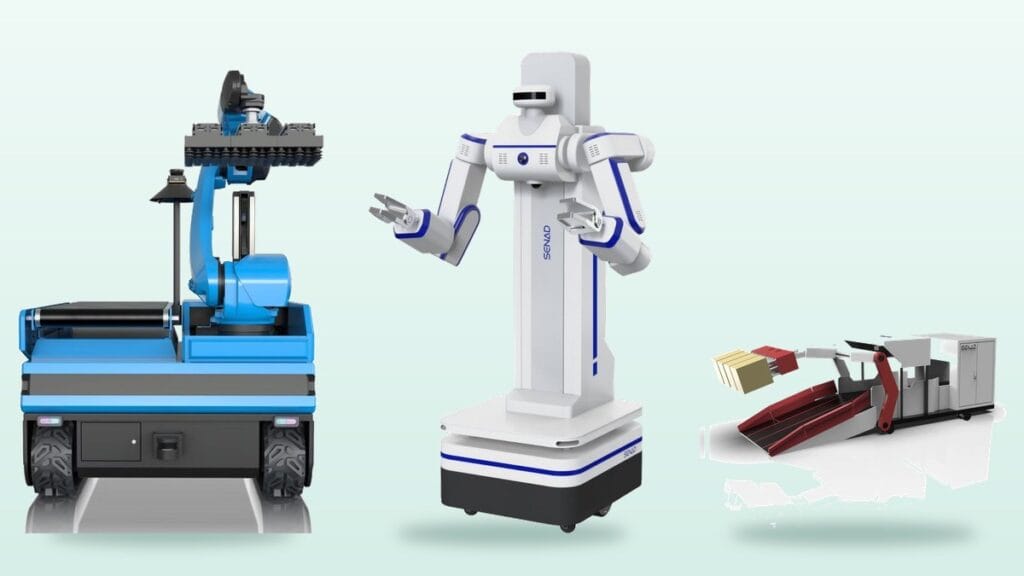
In many European warehouses and parcel hubs, the loading dock is the last stretch of manual, back-breaking work. Unloading a floor-loaded container of cartons can take a team hours of lifting, twisting and carrying, and it is one of the hardest roles to staff. Truck unloading robots aim to automate exactly that job.
This guide explains how these robots work, what Senad’s iLoabot range offers and how to tell whether your operation is ready. For the wider picture of logistics automation, see our humanoid vs AMR guide and our business robot buyer’s guide.
Contents
Why truck unloading is a bottleneck
Inbound containers are often floor-loaded to maximise space, especially for e-commerce and imported goods. Every carton has to be picked up by hand and placed on a conveyor. Turnover in these roles is high, and repeated heavy lifting is a well-known cause of musculoskeletal injury, which is why the EU’s manual handling rules require employers to reduce such risks wherever possible.
Docks are also where throughput is decided. If trucks wait at the gate because unloading teams are short, the whole warehouse slows down.
How truck unloading robots work
A truck unloading robot typically combines four elements: a mobile base that drives into the container or trailer, a 3D vision system that sees the wall of cartons and decides which one to pick next, a manipulator or suction gripper that removes each item, and a conveyor, often telescopic, that carries goods back into the warehouse. Software links the robot to the warehouse management system so goods are recorded as they arrive.
The hard part is variety: mixed carton sizes, bags, damaged boxes and items that shifted during transport. That is why vision and AI-based grasp planning matter as much as the mechanics.
Senad iLoabot robots
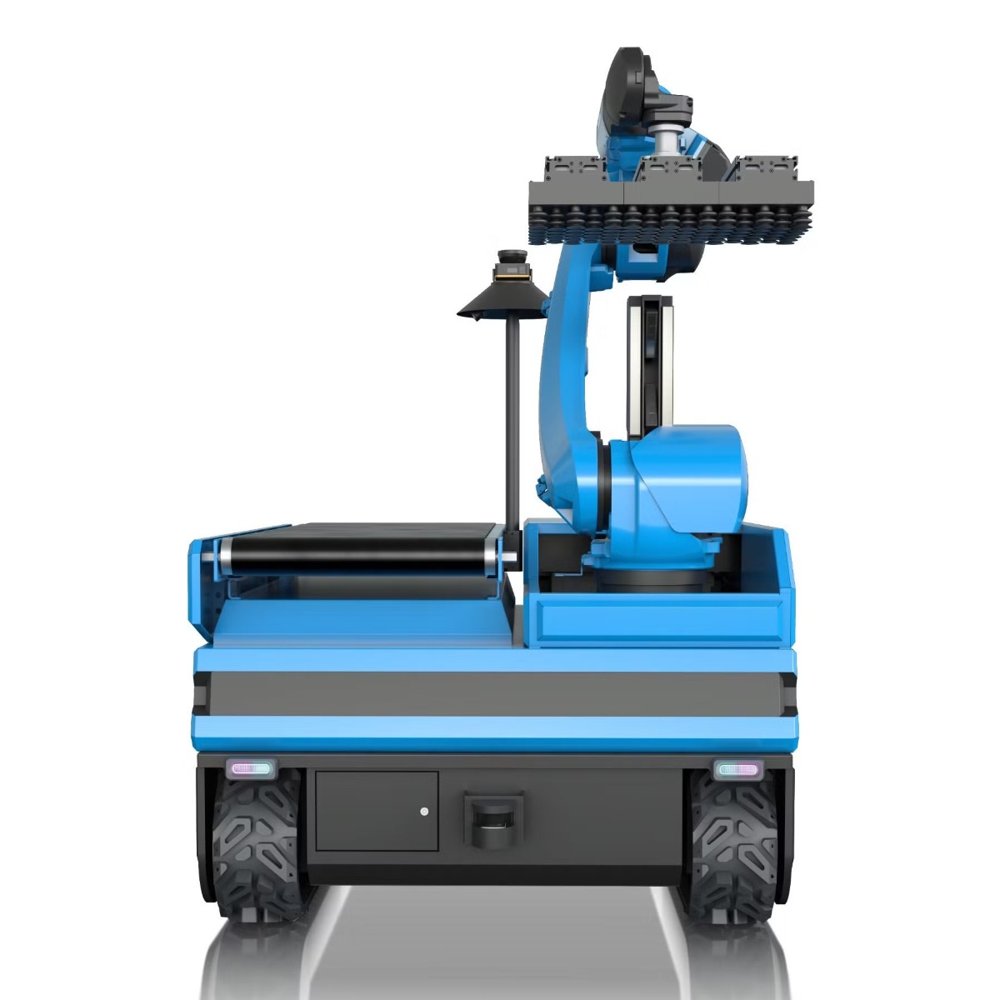
Senad iLoabot-M is an autonomous loading and unloading robot for containers, box trucks and trolleys. According to Senad, it handles both boxed and bagged goods and works with heavy-duty trucks without modifying the vehicle, an important point for operators who cannot redesign their docks or trailers.
Senad iLoabot-P combines SLAM-based autonomous navigation with LiDAR sensing and a 3D camera subsystem with a working distance of up to about 3 metres, and integrates with warehouse software for automated workflows.
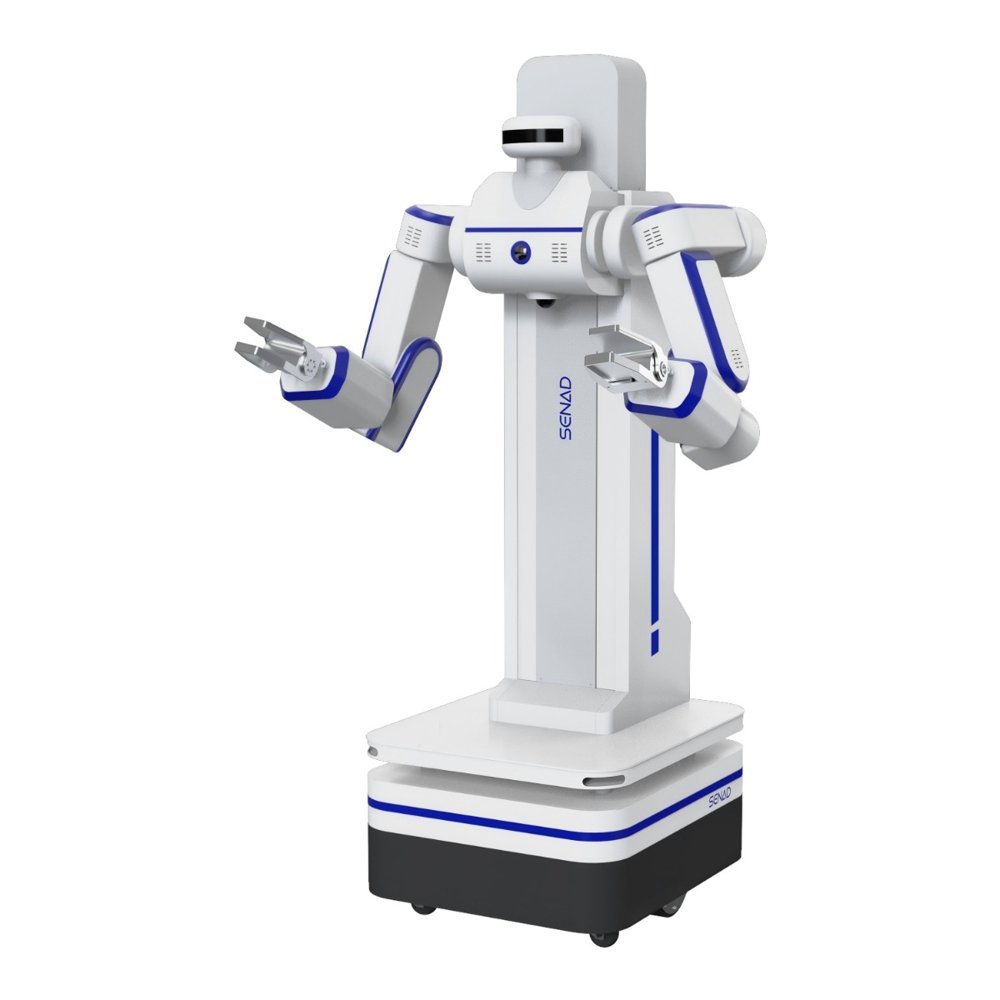
Senad iLoabot-X takes a newer approach: a heavy-duty wheeled humanoid for logistics, driven by what Senad describes as an end-to-end domain model and a multimodal vision-language-action model, with reinforcement-learning control for motion and manipulation. iLoabot Ultra targets bulk unloading and includes autonomous learning, improving with the number of tasks it performs.
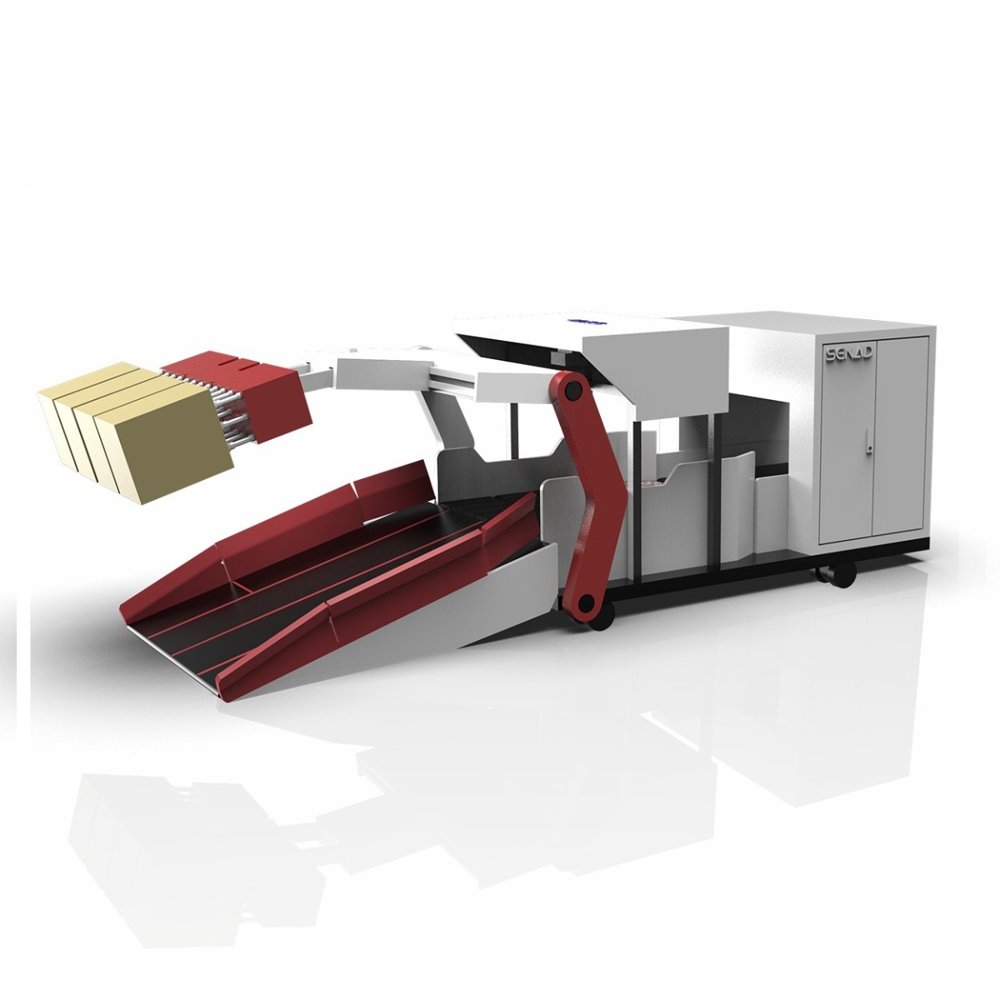
Detailed numeric specifications such as payload and cycle time are not fully published for every model. Ask for performance data on your own carton mix, ideally from a site test or video trial.
The rest of the system: conveyors and vision
An unloading robot rarely works alone. Senad also supplies telescopic belt conveyors that extend into the trailer, a 3D vision depalletising workstation for palletised goods, and dimensioning, weighing and sorting systems that capture data as parcels arrive. Planning the whole flow from dock to storage avoids building a fast robot that feeds a slow conveyor.
Is your operation ready?
1Volume
Unloading robots pay off with many floor-loaded containers or trailers per day. Palletised inbound freight is usually better served by forklifts or autonomous pallet trucks.
2Product mix
Uniform cartons are easiest. Bags, very heavy items or fragile goods need specific grippers and testing.
3Dock layout
Check dock heights, door widths, trailer types and space for a telescopic conveyor.
4IT integration
Decide how arrivals are recorded in your WMS and who owns the integration.
European considerations
Industrial logistics robots need CE marking and a site risk assessment under the machinery rules, with the EU Machinery Regulation applying from January 2027. Because these are high-value projects, ask for a pro forma, delivery and installation plan, on-site commissioning and a European support arrangement in writing.
Our guide to buying a robot in Europe covers VAT and CE, and our warranty checklist lists the support questions to ask.
Referral note: When you request a quote from Robots Europa, mentioning Dijipedya and referral code 08AF5658 helps your enquiry be tracked correctly.
Frequently asked questions
Can robots unload floor-loaded containers?
Yes. Truck unloading robots such as Senad iLoabot-M are designed for floor-loaded containers and box trucks, using 3D vision to pick cartons one by one.
Do I need to modify trucks or docks?
Senad states that iLoabot-M works with heavy-duty trucks without modifying the vehicle, but dock layout and conveyor space still need checking.
Can unloading robots handle bags?
iLoabot-M is described as handling both boxed and bagged goods. Test your specific products.
Is a truck unloading robot worth it for a small warehouse?
Usually only with a steady volume of floor-loaded inbound freight. For palletised freight, autonomous pallet trucks are often a better first step.
Explore Senad’s unloading robots and logistics systems and request a project quote.
Affiliate link: we may earn a commission if you buy through it, at no extra cost to you.
More from Dijipedya English