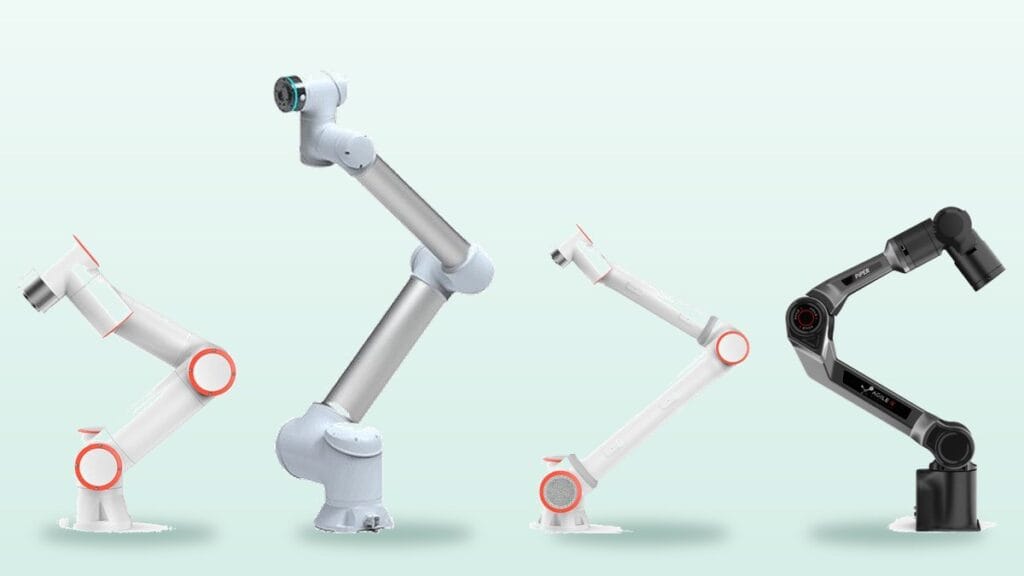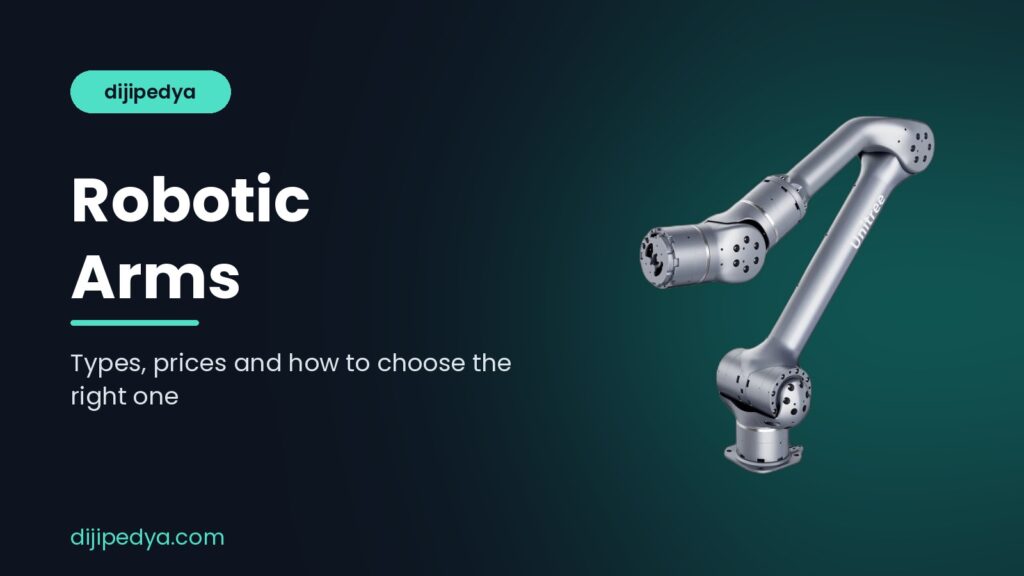
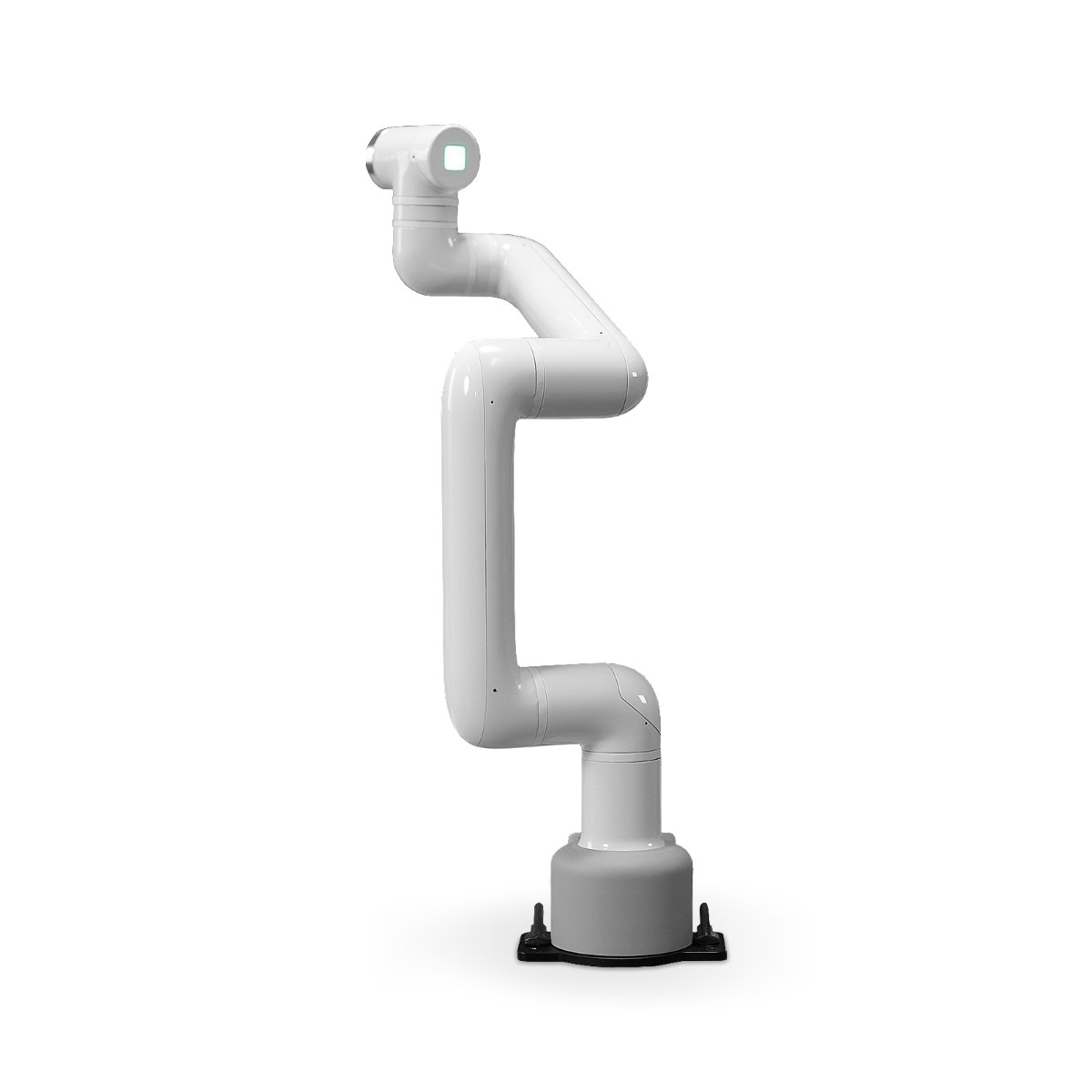
A robotic arm is a programmable machine that moves like a human arm. It has a base, a chain of rigid links connected by motorised joints, and a tool at the end called an end effector, which can be a gripper, suction cup, welding torch or camera. Robotic arms weld car bodies, pack boxes, pour coffee, assist surgeons and teach students to code.
This guide explains how robot arms work, the main types, the difference between industrial arms, cobots and desktop arms, and what each costs in 2026. Prices are Robots store list prices checked on 16 October 2026. Industrial models are often sold on quote, so we give typical ranges where no list price exists.
Contents
How robotic arms work
Each joint is driven by a servo motor with a gearbox and a position encoder. The controller calculates, many times per second, which angle every joint needs so that the tool reaches a target point at the right orientation. This calculation is called inverse kinematics. A six-joint arm can place its tool at any position and angle inside its working area, which is why six axes is the industry standard.
Around the arm sit three more pieces: the controller cabinet or built-in controller, a teach pendant or tablet for programming, and the end effector. On collaborative arms, torque sensors in the joints detect unexpected contact and stop the arm, which lets it work near people without a cage.
Specs that matter
| Spec | What it means | Why it matters |
|---|---|---|
| Payload | Maximum weight at the tool, including the gripper | Choose 20 to 30 percent above your heaviest part plus gripper |
| Reach | Distance from base centre to the farthest tool point | Decides which machines, pallets or conveyors the arm can serve |
| Degrees of freedom (axes) | Number of joints | 6 is standard; 7 adds flexibility around obstacles; 4 is common for SCARA |
| Repeatability | How precisely it returns to the same point | From about ±0.02 mm on industrial arms to ±0.5 mm on hobby arms |
| Speed | Joint and tool speed | Affects cycle time; cobots slow down near people |
| Software and SDK | How you program it | Python or ROS 2 access matters for research and custom tasks |
Types of robot arms
1Articulated arms
The classic robot arm with rotating joints, usually six. Flexible and used for welding, handling, machine tending and painting. Most cobots are articulated arms.
2SCARA robots
Four axes, rigid vertically and flexible horizontally. Very fast for pick-and-place and assembly on a flat table.
3Delta (parallel) robots
Three thin arms joined above the work area, built for extremely fast picking of light items such as food packs.
4Cartesian (gantry) robots
Move along straight X, Y and Z rails. Simple, precise and common in 3D printers, CNC loading and large palletising cells.
5Collaborative robots (cobots)
Articulated arms with force sensing and safety functions that let them share space with people. Our best cobots for small manufacturers guide compares models.
Industrial arm, cobot or desktop arm?
| Class | Payload | Typical price | Use |
|---|---|---|---|
| Desktop and education arms | 0.25 to 1.5 kg | €900 to €7,000 | Teaching, coding, research, light demos |
| Collaborative robots | 3 to 30 kg | €4,500 to €40,000 | Small factories, packing, machine tending, food service |
| Industrial robot arms | 4 to 500 kg | €20,000 to €150,000+ with cell | High-speed production, welding, heavy handling |
How much does a robot arm cost?
Here are list prices from the Robots catalogue, from desktop arms to cobots:
| Model | Class | Payload class | List price |
|---|---|---|---|
| Elephant Robotics ultraArm P340 | Desktop | Light | €917 |
| Elephant Robotics myCobot 280 Pi | Desktop | 0.25 kg | €1,008 |
| Elephant Robotics myBuddy 280 (dual arm) | Desktop | Light | €1,559 |
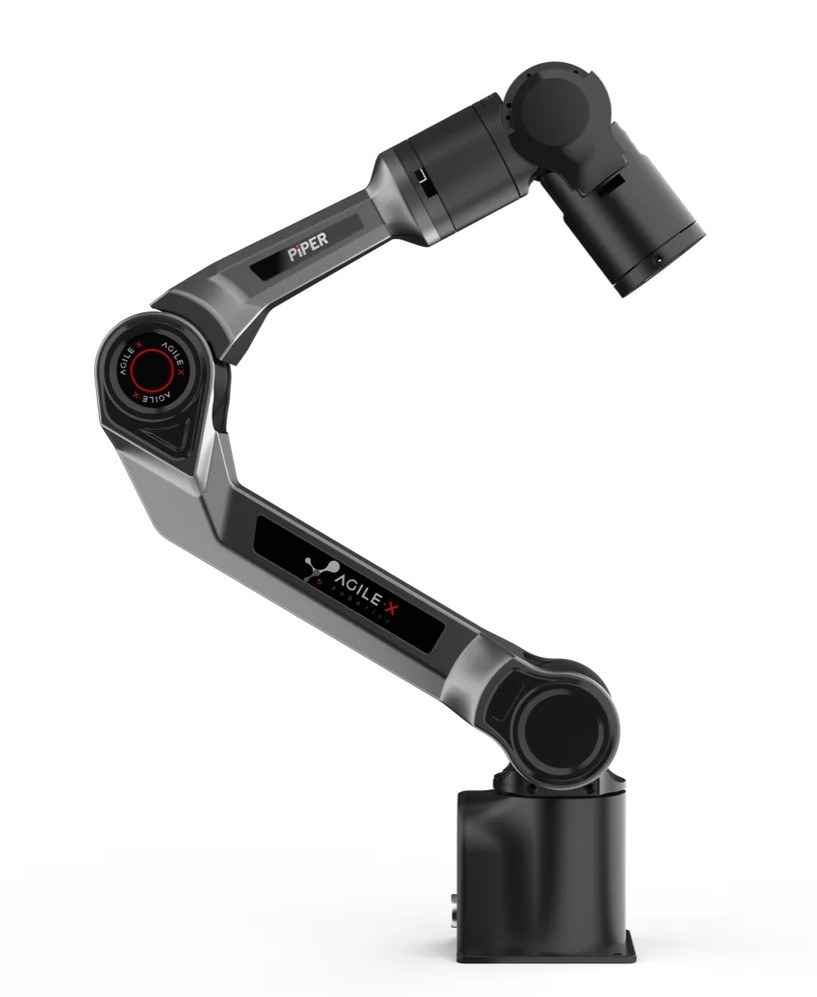
| AgileX PiPER | Research | 1.5 kg | €4,583 |
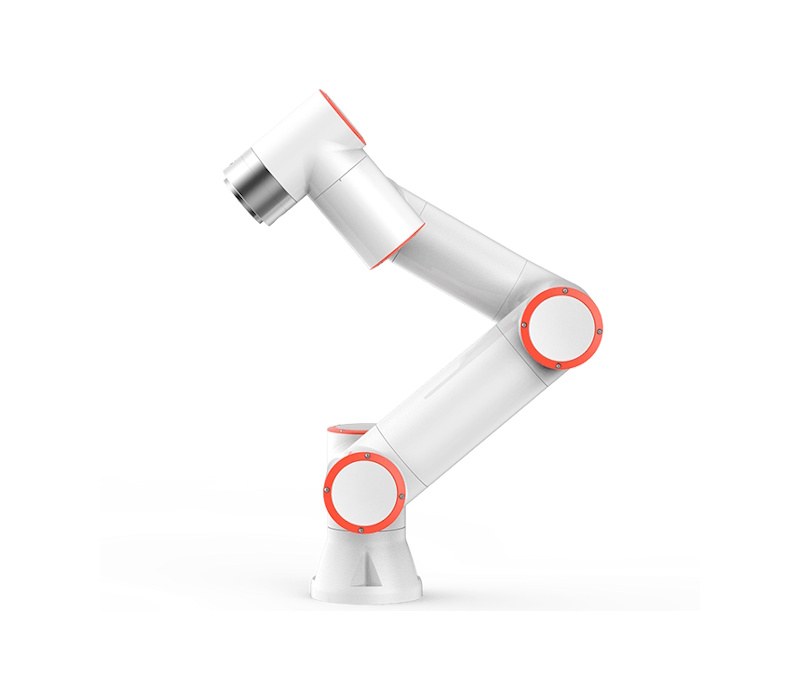
| Fairino FR3 | Cobot | 3 kg | €4,859 |
| Fairino FR5 | Cobot | 5 kg | €5,134 |
| Elephant Robotics myCobot Pro 630 | Light cobot | 2 kg | €6,422 |
| Fairino FR10 | Cobot | 10 kg | €9,176 |
| Unitree Z1 Air | Research | 2 kg | €10,920 |
| Fairino FR16 | Cobot | 16 kg | €11,007 |
| Unitree Z1 Pro | Research | 3 kg | €12,755 |
| Fairino FR20 | Cobot | 20 kg | €13,305 |
| Fairino FR30 | Cobot | 30 kg | €14,677 |
| SIASUN GCR5 | Cobot | 5 kg | On quote |
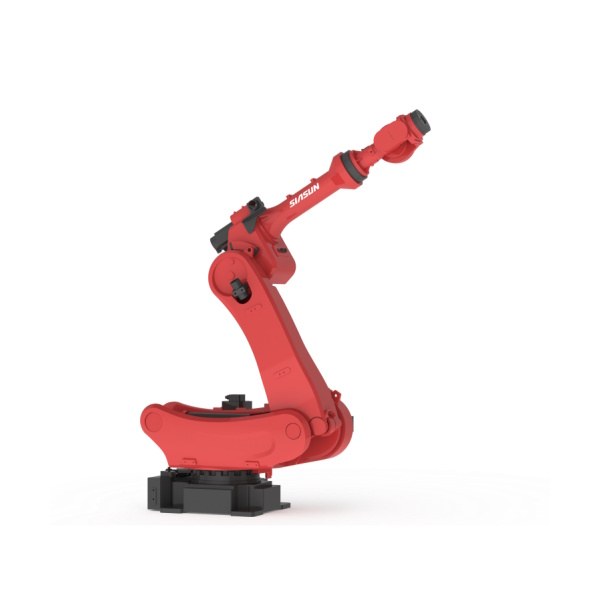
| SIASUN SR12A | Industrial | 12 kg | On quote |
| SIASUN SR210A | Industrial | 210 kg | On quote |
The arm is rarely the whole bill. A gripper costs €500 to €8,000, a safety assessment and guarding for industrial cells several thousand euros, and integration (fixtures, programming, commissioning) often matches the price of the arm. For a full cost breakdown see commercial robot costs.
Compare cobots and robot arms with current prices for your region.
Product links go to Robots stores (Europe, USA and other regions) through our partner link. If you buy through them, Dijipedya may earn a commission at no extra cost to you.
How robot arms are programmed
- Hand guiding: on cobots you move the arm by hand and record points. Easy for simple tasks.
- Teach pendant or tablet: graphical block programming. Fairino and most cobots work this way.
- Offline programming: the cell is built in simulation software and the program is downloaded to the robot.
- Code: Python, C++ or ROS 2 through an SDK. Desktop arms such as myCobot and research arms such as PiPER and Unitree Z1 are designed for this.
If you are starting from zero, a desktop arm with Python support is the cheapest way to learn. Schools and universities can compare options in education robot arms for schools and universities.
How to choose a robot arm
- Write down the heaviest object plus gripper weight, then add a safety margin to get your payload.
- Measure the farthest point the tool must reach and add room for approach angles.
- Decide whether people will work next to it. If yes, a cobot with a risk assessment is usually simpler than a fenced industrial cell.
- Check software: block programming for production, SDK and ROS 2 for research.
- Ask about the gripper, mounting, controller voltage and local service before you order. Our warranty and support checklist helps.
- For palletising tasks specifically, read robotic palletizers: cobot or industrial arm.
Frequently asked questions
What is a robotic arm?
A robotic arm is a programmable machine with motorised joints and a tool at the end that moves like a human arm to pick, place, weld, assemble or inspect.
How much does a robot arm cost?
Desktop education arms cost about €900 to €1,600, research arms €4,500 to €15,000, cobots about €4,900 to €15,000 for the arm alone, and industrial arms €20,000 or more before integration (Robots list prices, October 2026).
What is the difference between a cobot and an industrial robot?
A cobot has force sensing and safety functions so it can work near people, usually with lower speed and payload. An industrial robot is faster and stronger but normally works inside a guarded cell.
How many axes does a robot arm need?
Six axes let the tool reach any position at any angle, which covers most tasks. Four-axis SCARA robots are faster for flat pick-and-place work, and seven-axis arms help in tight spaces.
Can I program a robot arm without coding?
Yes. Most cobots support hand guiding and block programming on a tablet. Coding in Python or ROS 2 is optional and mainly used for research.
What is the best robot arm for beginners?
A desktop arm such as myCobot 280 is the cheapest way to learn programming. For real tasks with light parts, an entry cobot such as Fairino FR3 or FR5 is a common next step.
New robots, price changes and buying guides, once a week in your inbox.
Related guides on Dijipedya
Sources: Robots Europa product catalogue and price list (16 October 2026); manufacturer pages for Elephant Robotics, AgileX, Fairino, Unitree and SIASUN; ISO 10218 and ISO/TS 15066 for collaborative robot safety.