Search for an Emergent promo code and you will find pages promising 50%, 70% or even 100% off. We checked the official pricing page and Emergent’s site: there is no public coupon field advertised and no official discount code. The codes floating around belong to coupon sites and social media accounts, and we could not confirm that any of them work.
You can still pay less for Emergent. This guide covers the savings that are real, from annual billing to choosing the right hosting tier, plus a few habits that make credits last longer.
Contents
Emergent AI coupon code: what is verified in 2026?
If you searched for an Emergent AI coupon code, the useful question is whether a discount can actually be applied to your account today. We found no publicly listed universal promotional code on the official pricing page during our November 1, 2026 check. That does not prove private or time-limited offers cannot exist; it means we cannot responsibly promise a working code or advertise an unverified percentage off.
Avoid “100% off” claims unless the advertiser provides clear terms. A coupon directory may show a code without demonstrating a successful checkout. Even a real offer can be restricted to new users, particular plans, certain regions or an expiry date. The final checkout total and official terms are more reliable than a coupon page headline.
How to verify a discount safely
- Open Emergent’s official pricing page directly and compare monthly versus annual billing.
- Check your own account’s billing screen for an offer or redeem field; do not assume every account has one.
- Read restrictions such as plan, region, eligibility and renewal price.
- Confirm the final price before authorizing payment.
- Do not pay a third party for a “secret” code or share your password with a coupon site.
Referral credits are not the same as coupon discounts
Emergent documents a referral program in which eligible new users and their referrers may receive credits when the stated signup and paid-plan conditions are met. That is distinct from a public coupon code that reduces a listed subscription price. Its published terms describe a 5-credit benefit to an eligible referred user and a separate credit award for a qualifying paid referrer. Eligibility and program rules may change, so review the current official referral documentation before expecting any credits.
The bigger saving: avoid paying for unused app capacity
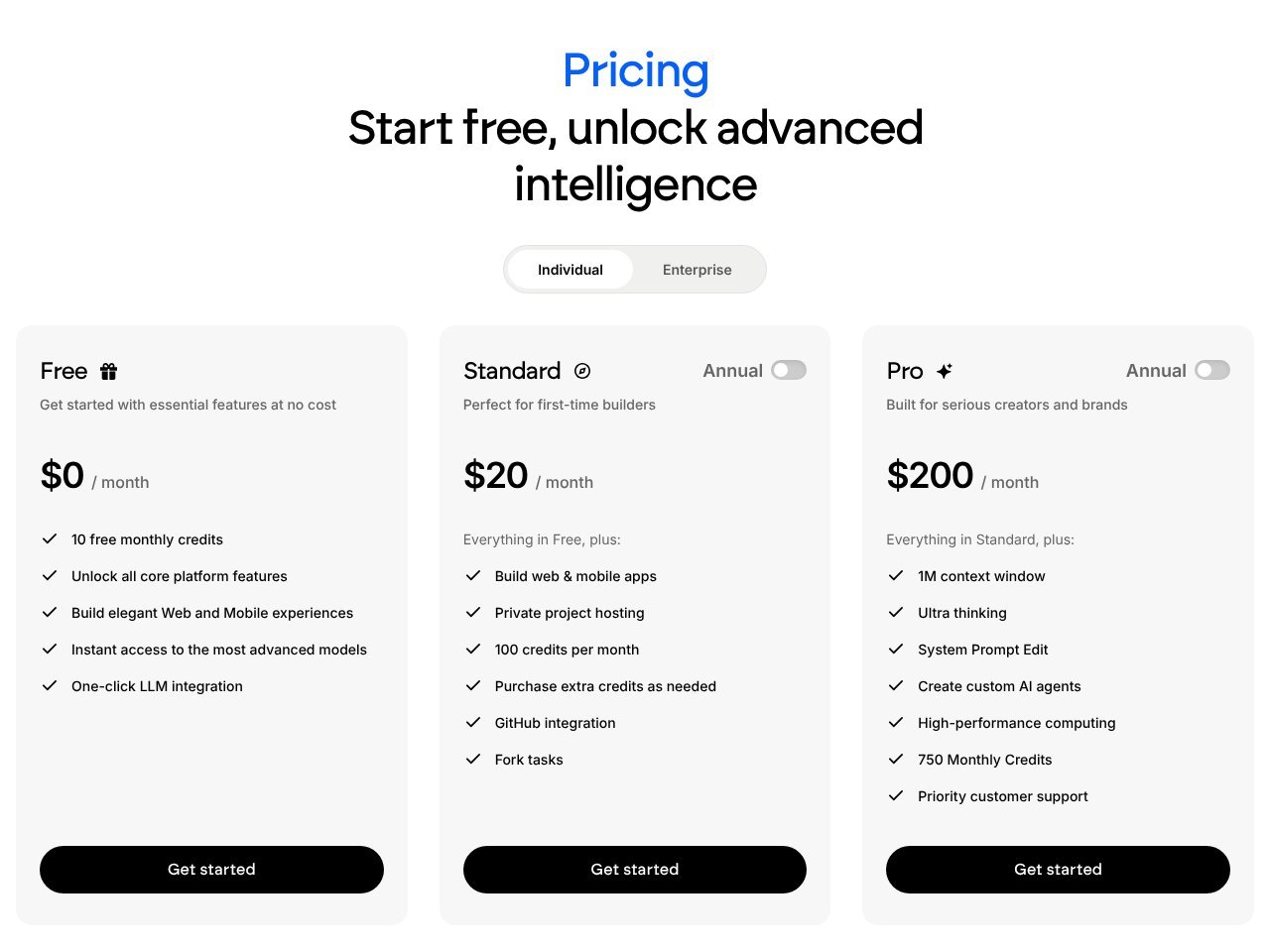
A modest coupon cannot compensate for the wrong plan or unnecessary live hosting. The Free plan is useful for early exploration. Standard provides 100 monthly credits, but a Starter published application consumes 50 credits per month. Someone who only wants to assess an idea should not pay for a production environment before it is needed. Likewise, a creator with one small application may not benefit from upgrading straight to Pro.
Review your credit consumption after each project milestone. Record the cost of creating the first version, implementing new features, fixing errors and keeping the app live. When you compare plans, use these figures alongside subscription rates. A cheaper monthly plan can still be expensive if it routinely forces extra credit purchases; a premium plan can waste money when its advanced features go unused.
For a full breakdown, our Emergent pricing guide explains the credit and publishing tiers. Check the official pricing and billing screen again before making a purchase, because these figures can change.
What about promo and invite codes?
1Promo and coupon codes
Coupon sites list plenty of codes for Emergent. Emergent does not list any of them on its own site, so there is no way to confirm the discount before checkout. Do not pay for a code, and be careful with pages that ask for your login.
2Invite codes
Emergent no longer needs an invite code. Anyone can sign up with Google, email or phone and start on the free plan.
3Student and nonprofit pricing
No student or nonprofit discount is listed on the pricing page at the time of writing. Larger organizations can ask for custom pricing through the Business and Enterprise plans.
Discount 1: annual billing
This is the only discount shown on Emergent’s pricing page, and it is a meaningful one.
| Plan | Monthly billing | Annual billing | Yearly saving |
|---|---|---|---|
| Standard | $20 / mo | $17 / mo | $36 |
| Pro | $200 / mo | $167 / mo | $396 |
Only commit to a year once you know your usage. A month on monthly billing tells you whether Standard’s 100 credits are enough or whether you need Pro.
Lock in Emergent’s yearly price
Switch the Annual toggle on the pricing page to see the discounted Standard and Pro prices.
Affiliate link. Dijipedya may earn a commission at no extra cost to you.
Discount 2: start on the free plan
The free plan gives you 10 credits every month with no card. Use it to check that Emergent understands your idea before spending anything. Our Emergent free plan guide explains exactly what those credits cover and what stays locked.
Discount 3: top-ups instead of Pro
If Standard’s 100 credits run out once or twice a month, buying top-ups is often cheaper than jumping to $200 Pro. Top-up credits cost about $0.20 each, start at 250 credits for $50, and never expire. Monthly plan credits, on the other hand, are lost at the end of each cycle.
Pro becomes the better deal when you regularly need more than about 500 extra credits a month, or when you need its features: the 1M context window, Ultra thinking and custom agents.
Discount 4: pick the right hosting tier
Each live app costs credits every month. A landing page or small internal tool runs fine on the Starter tier at 50 credits a month. Many people pick a larger tier than they need. Start small; switching tiers later is free. The full tier list is in our Emergent pricing guide.
Make your credits last longer
- Plan before you prompt. Write down pages, features and data in one clear message instead of adding them one by one.
- Keep requests small. One feature per prompt is easier for the agent and avoids long, expensive runs.
- Stop loops early. If the agent tries the same fix twice, pause and describe the problem differently instead of letting it keep going.
- Fork before big changes. On Standard you can fork tasks, so a failed experiment does not cost you a working version.
- Unpublish test apps. Apps you no longer use still consume hosting credits each month.
Comparing Emergent’s value against other builders? See Base44 vs Emergent and the Emergent, Bolt, Replit and Lovable comparison.
Start free, upgrade when you are ready
Create your Emergent account and use 10 free credits before paying anything.
Affiliate link. Dijipedya may earn a commission at no extra cost to you.
Coupon, annual billing or top-up: which one should you choose?
Consider three different scenarios. If you are just starting, the free account is the lowest-commitment way to understand the builder. If you expect to use the product consistently for a full year, annual billing may reduce the displayed monthly equivalent, but you should confirm renewal conditions and make sure the service actually fits your workflow. If you normally use Standard but occasionally need more capacity, a top-up may make more sense than moving to Pro for an entire billing cycle.
These options solve different problems. A coupon reduces a qualifying checkout price, annual billing trades commitment for a possible lower effective rate, and top-ups extend usable capacity. None automatically eliminates the credits required to keep a production app live. A useful comparison therefore starts with your estimated monthly activity, the number of published applications and the features you cannot do without.
For example, a freelance designer might prototype one client dashboard and shut it down after the demonstration. A small business might host the same dashboard continuously and make monthly changes. Their subscription and publishing needs will differ even if they initially build a similar feature. Estimate both first-month development and ongoing monthly operation before committing.
A note about affiliate links
The Emergent links in this article are affiliate links: Dijipedya may receive a commission if you subscribe through an eligible link, at no additional cost to you. An affiliate link is not itself evidence of a discount or special pricing. Compare the displayed checkout amount with the official pricing page and do not assume a bonus unless it is confirmed by Emergent for your account.
Frequently asked questions
Is there a working Emergent promo code?
Emergent does not publish public promo codes on its website. Codes promising 50% or 70% off come from third-party coupon sites and could not be verified. Annual billing is the reliable discount.
Do I need an invite code to join Emergent?
No. Sign-up is open to everyone with a Google account, an email address or a phone number, and the free plan does not require a card.
How much do I save with Emergent annual billing?
Standard drops from $20 to $17 a month, saving $36 a year. Pro drops from $200 to $167 a month, saving $396 a year.
Does Emergent offer student discounts?
Emergent does not list a student discount on its pricing page. Students can use the free plan, which includes 10 credits a month.
Can I get free Emergent credits?
The free plan gives 10 credits every month. Emergent also runs community events and AI contests; check its official channels for current offers.
More on AI App Builders
Sources: Emergent pricing page, UsagePricing: Emergent pricing history and publishing tiers. Prices were checked in October 2026 and can change; confirm the current numbers on each vendor’s pricing page before you buy.