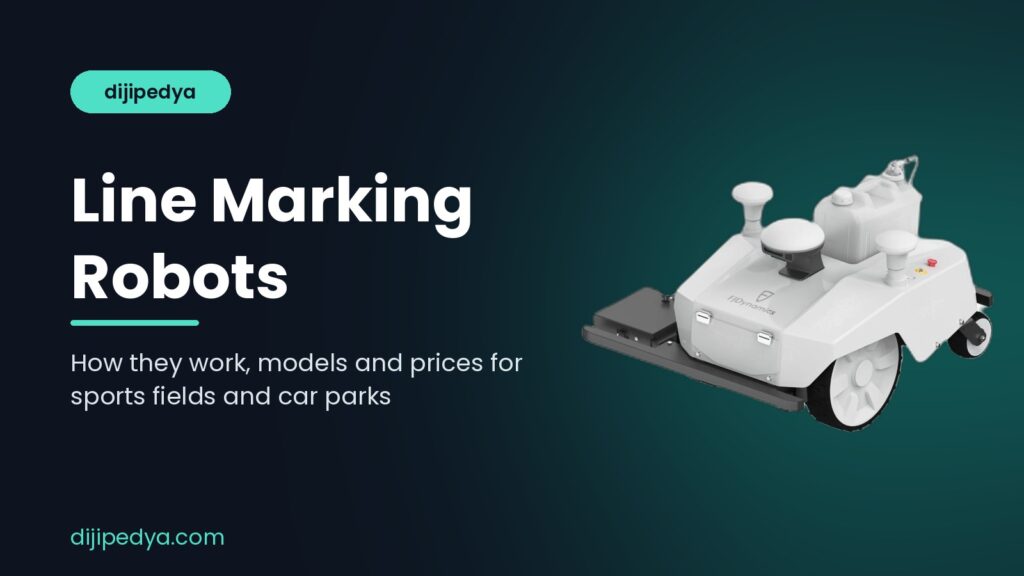
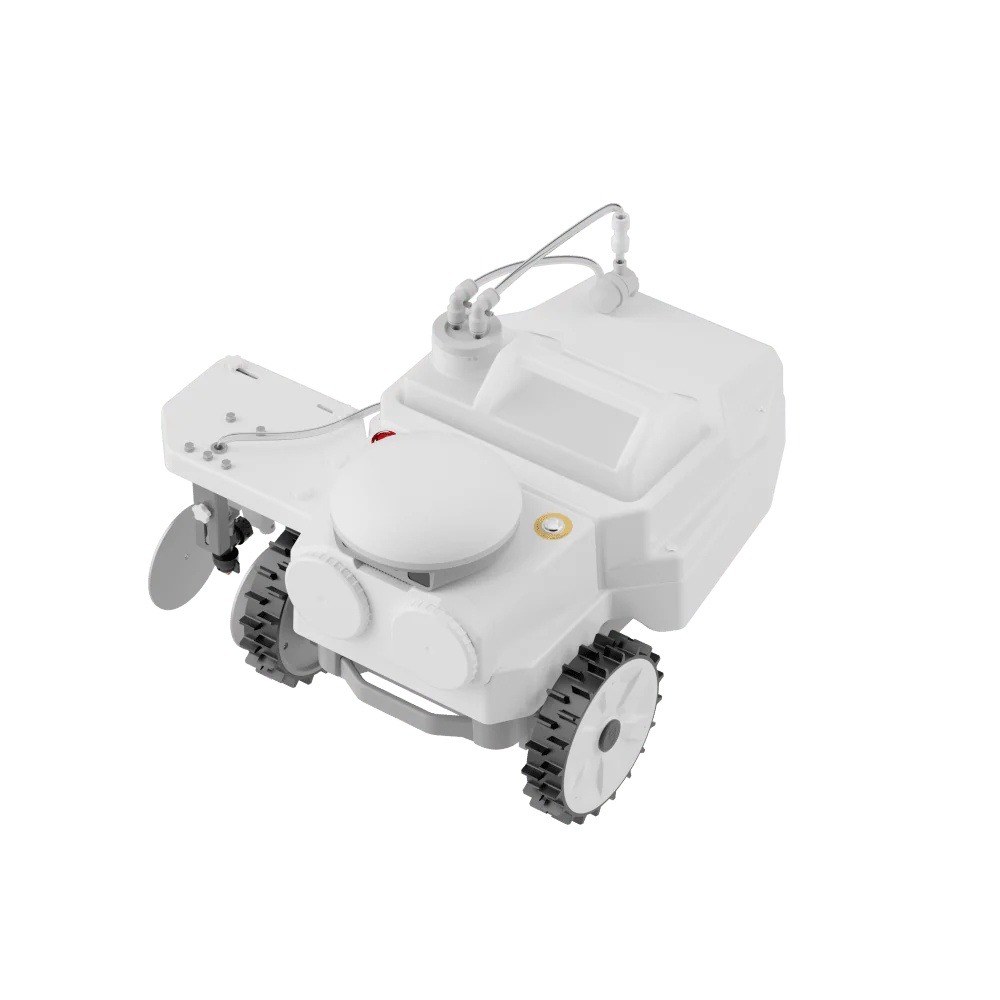
A line marking robot paints lines on its own. You choose a template on a tablet, such as a football pitch or a row of parking bays, and the robot drives the layout using satellite positioning, spraying paint as it goes. A job that takes a two-person crew most of a morning with tape measures and string can be done by one person supervising the robot in well under an hour.
This guide explains how line marking robots work, where they are used, which models exist and what affects the price. FJD PaintMaster models in the Robots catalogue are sold on quote, so we explain the cost drivers rather than invent a list price.
Contents
How line marking robots work
1Positioning
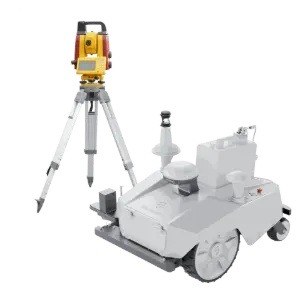
The robot uses GNSS with RTK correction, which improves satellite positioning from metres to about two centimetres. Some models also work with a total station for indoor or high-precision layout, where satellites are not reliable.
2Templates
The tablet app includes templates for football, rugby, athletics, tennis, baseball and other fields, plus custom drawings. For car parks, you draw bays, arrows and walkways.
3Painting system
A pump and spray nozzle apply paint while the robot drives. The width and amount of paint are set in the app, and the robot can repeat the same layout every week for re-marking.
4Supervision
One operator sets up the job, refills paint and watches the area. The robot stops when obstacles block its path.
Where they are used
- Sports fields: football, rugby, American football, lacrosse, athletics tracks and school fields that are re-marked every week in season.
- Car parks and roads: parking bays, arrows, hatching and pedestrian walkways.
- Construction and surveying: marking building layouts, utility routes and floor plans on site.
- Events: temporary layouts for festivals, fairs and outdoor exhibitions.
Grounds teams often pair line markers with robotic mowers. See commercial robotic mowers for golf courses and sports fields.
FJD PaintMaster models
| Model | Built for | Price |
|---|---|---|
| FJD PaintMaster Mini | Sports fields | On quote |
| FJD PaintMaster Pro | Sports fields and large layouts | On quote |
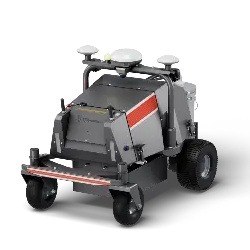
| FJD PaintMaster Parking | Car parks and roads | On quote |
| FJD PaintMaster Ultra | Construction layout with total station | On quote |
Other brands in this market include Turf Tank, TinyMobileRobots and Swinco, some of which sell through annual subscriptions that include the robot, software and support.
Request a quote for a line marking robot in your region.
Product links go to Robots stores (Europe, USA and other regions) through our partner link. If you buy through them, Dijipedya may earn a commission at no extra cost to you.
How much does a line marking robot cost?
Line marking robots are usually priced on quote because the final price depends on configuration. The main cost drivers are:
- Positioning hardware: an RTK base station or network subscription, or a total station for construction models.
- Paint system and capacity: larger tanks and multi-nozzle systems cost more but need fewer refills.
- Software and templates: some brands include them, others charge an annual licence.
- Purchase vs subscription: buying has a higher upfront cost; subscriptions spread it out and often include service.
- Training and support: on-site training and warranty extensions.
When you request quotes, ask for the total cost over three years including paint use, so you can compare buying and subscription offers fairly.
Robot vs manual line marking
| Manual marking | Line marking robot | |
|---|---|---|
| Crew | Two people for measuring and marking | One operator |
| Setup for a full-size football pitch | Measuring with tape and string, often 1 to 2 hours | Load template and start |
| Accuracy | Depends on the crew | About 2 cm with RTK |
| Paint use | Varies with operator | Consistent, often lower |
| Re-marking | Measure again each time | Repeats saved layout |
Clubs and councils that re-mark several pitches every week usually see the biggest savings in staff time. For a single pitch marked a few times a year, a subscription or contractor may be better value.
What to check before buying
- Which sports or layouts you need and whether templates are included.
- RTK coverage at your sites, or whether you need your own base station.
- Paint compatibility and tank size.
- Battery life and charging time for your busiest day.
- Local service, training and spare parts. Our warranty and support checklist helps.
- Total cost over three years for purchase vs subscription.
Frequently asked questions
What is a line marking robot?
A line marking robot is an autonomous machine that paints lines for sports fields, car parks or construction layouts using GNSS RTK positioning or a total station and saved templates.
How much does a line marking robot cost?
Most line marking robots are sold on quote or by subscription. The price depends on positioning hardware, paint system, software licences and support, so compare total cost over three years.
How accurate are line marking robots?
With RTK satellite correction, line marking robots typically place lines within about two centimetres.
How long does a robot take to mark a football pitch?
Times depend on the model and line widths, but a robot avoids most measuring work and usually marks a full pitch much faster than a manual crew.
Can a line marking robot paint car parks?
Yes. Parking versions such as FJD PaintMaster Parking mark bays, arrows and walkways.
New robots, price changes and buying guides, once a week in your inbox.
Related guides on Dijipedya
Sources: FJD Dynamics PaintMaster product pages; Robots Europa product catalogue (16 October 2026); manufacturer information from Turf Tank, TinyMobileRobots and Swinco.